
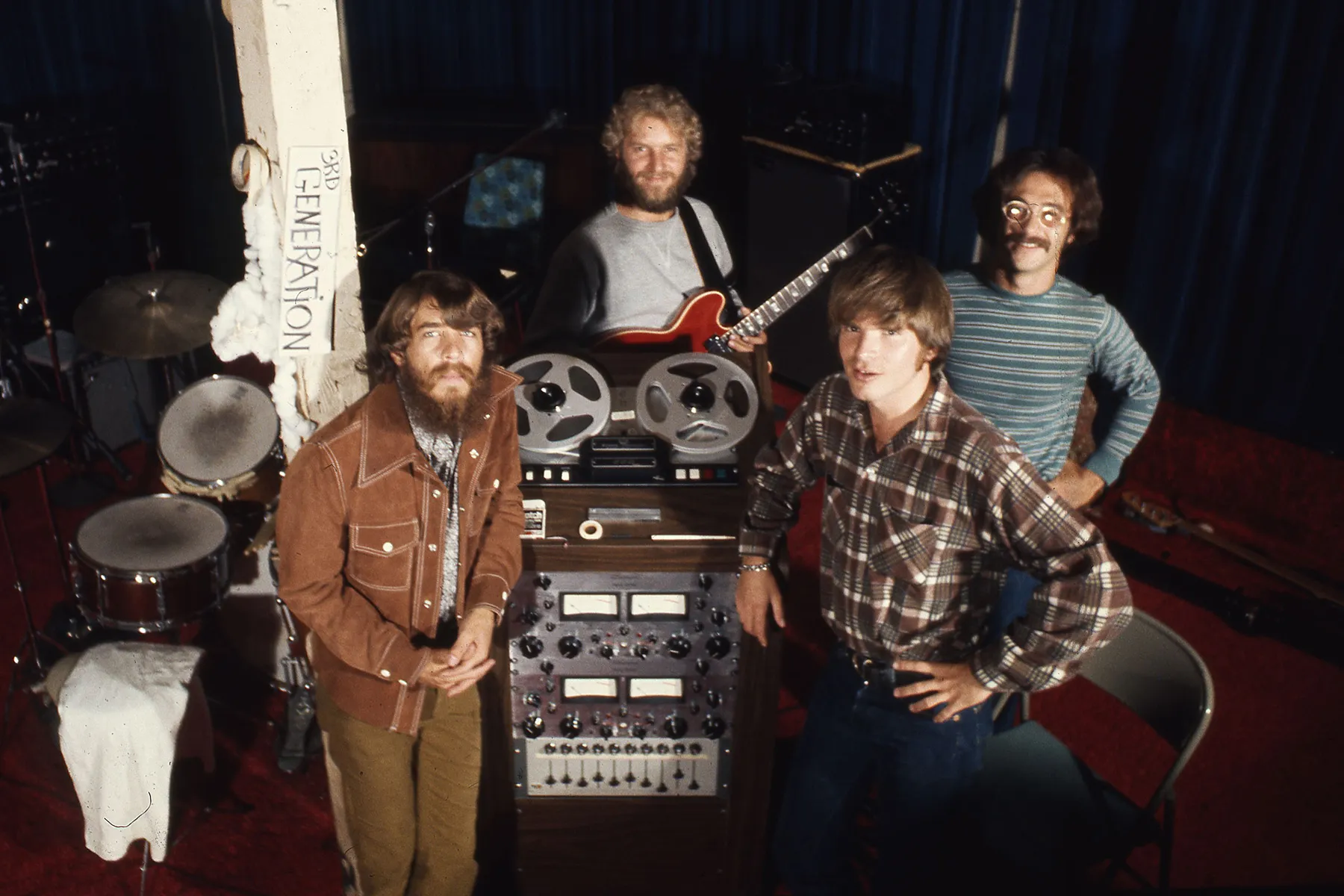
A rare Creedence Clearwater Revival performance led by Stu Cook, Take It Like a Friend reveals the grace of acceptance in a catalog better known for urgency, grit, and motion.
Released in April 1972 on Mardi Gras, the final studio album by Creedence Clearwater Revival, Take It Like a Friend stands as one of the most unusual and quietly revealing songs in the band’s history. It was written and sung by bassist Stu Cook, which immediately set it apart in a catalog so closely identified with the voice and songwriting of John Fogerty. That fact alone makes the song important. In chart terms, Mardi Gras reached No. 12 on the Billboard 200, proving that the group still commanded enormous attention, even in its closing chapter. But Take It Like a Friend was not one of the band’s major charting singles, and perhaps that is part of its lasting charm: it has survived not through saturation, but through rediscovery.
To understand the song, it helps to understand the moment around it. By the time Mardi Gras was made, Tom Fogerty had already left the group, and the remaining trio was working under a very different internal balance. Instead of another album shaped almost entirely by John Fogerty, the record gave more space to Stu Cook and Doug Clifford as writers and lead singers. For many listeners at the time, that change was jarring. Creedence Clearwater Revival had built its name on a remarkably consistent identity: concise songs, swampy grooves, sharp hooks, and the unmistakable authority of John Fogerty at the center. Take It Like a Friend, then, was never going to sound like Proud Mary or Bad Moon Rising. It belongs to a different emotional room entirely.
And yet that is exactly why it deserves attention. The song moves with an easy, unforced warmth, leaning more toward country-rock ease than the hard-driving pulse many fans associate with CCR. There is a relaxed, almost porch-light feeling to it, as if the band has stepped away from the highway for a moment and chosen conversation over momentum. Stu Cook does not sing with the rasping command of John Fogerty; instead, he brings a plainspoken sincerity that fits the material. The arrangement does not rush to overwhelm the listener. It lets the song breathe. And in that breathing space, the song finds something tender and unexpectedly durable.
The meaning of Take It Like a Friend lies in its title as much as in its tone. It is a song about receiving life with a certain measure of grace, about accepting what comes without turning every disappointment into bitterness. That may sound simple, but simple songs often carry the deepest wisdom. There is a maturity in the phrase itself. To “take it like a friend” suggests patience, generosity, and emotional steadiness. It implies that not every hurt must become a spectacle, and not every difficult turn must harden the heart. In the world of classic rock, where grand gestures often claim the spotlight, this kind of emotional restraint can feel especially moving.
What gives the song even more resonance is the setting in which it appeared. Heard within the context of Mardi Gras, Take It Like a Friend feels almost symbolic. Here was a band at the end of its recording life, sounding less unified than before, yet still capable of producing moments of humanity and softness. Many listeners have long treated Mardi Gras as a flawed farewell, especially when placed beside the extraordinary run of albums that came before it. But history can be kinder than first impressions. When one returns to this record years later, without the burden of old expectations, songs like Take It Like a Friend begin to glow in a different way. They may not carry the thunder of the classics, but they offer something gentler: personality, vulnerability, and the sound of musicians trying to speak in their own voices.
There is also something deeply American in the song’s understated character. Creedence Clearwater Revival always had a gift for making records that felt lived-in, even when the storytelling was broad and cinematic. Here, that gift narrows into something more intimate. The song does not chase grandeur. It settles for honesty, and that honesty becomes its strength. For listeners who have spent years with the better-known hits, hearing Take It Like a Friend can feel like opening a side door into the band’s legacy and finding a room that was always there, just rarely visited.
It is worth remembering, too, that Mardi Gras still arrived during a period when CCR remained commercially powerful. The band had recently placed Sweet Hitch-Hiker at No. 6 on the Billboard Hot 100, and Someday Never Comes, another song from the final album, would reach No. 25. Against those more visible markers, Take It Like a Friend became the sort of song that devoted listeners keep for themselves. Not a headline song, perhaps, but a companion song. The kind that returns in quieter seasons and says a little more each time.
That may be the truest legacy of Take It Like a Friend. It reminds us that not every important song in a legendary catalog has to be a giant hit. Some songs endure because they reveal character. Some endure because they sound like people rather than monuments. And some endure because, beneath all the history surrounding them, they offer a simple human instruction that never really grows old: meet life with a softer hand when you can. In that sense, this overlooked Creedence Clearwater Revival track is not merely a curiosity from the final album. It is a small, gracious lesson set to music.