
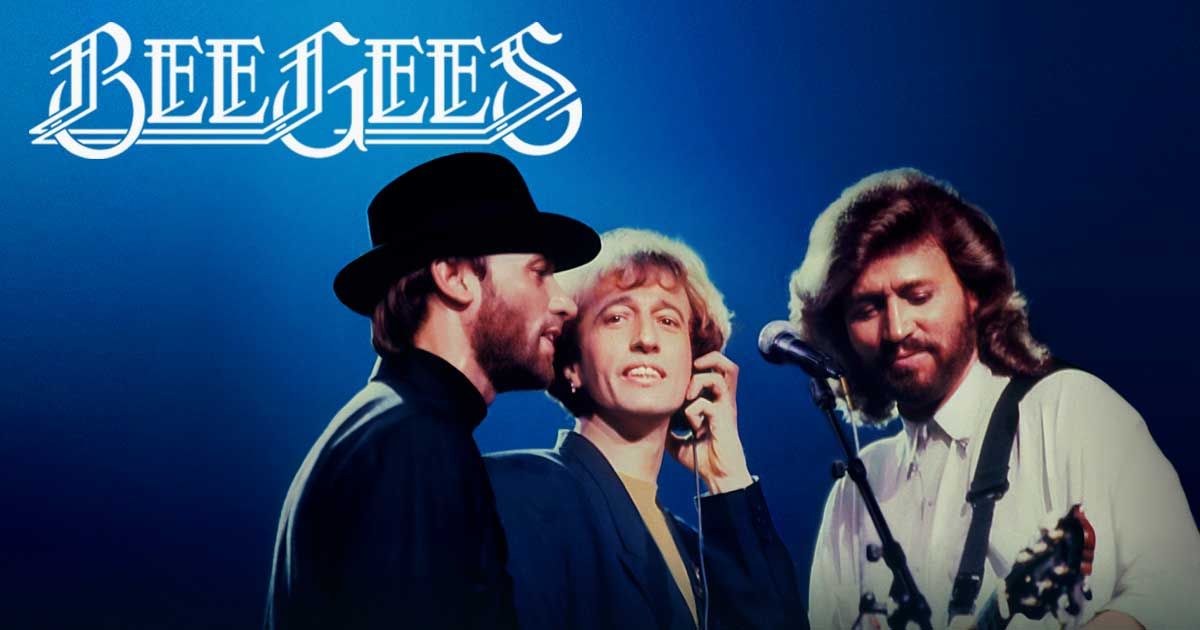
“Give Your Best” is the Bee Gees reminding us—gently, almost stubbornly—that decency is a daily craft: you don’t feel your way into a better life, you work your way there.
There’s a special kind of intimacy to “Give Your Best”—not the intimacy of a love confession, but the intimacy of a principle spoken quietly, as if it’s meant for the listener alone. It lives inside Odessa (released February 1969 in the U.S. and March 1969 in the U.K.), the Bee Gees’ lavish, restless double album that now stands as one of their most significant statements of the 1960s. In that grand, crimson-fuzzed universe—full of orchestral drama, sea-spray romanticism, and brotherly tension—“Give Your Best” arrives like a plain-spoken friend who refuses to let you sink too far into your own fog.
A few facts matter immediately, because they clarify how this song entered the world. “Give Your Best” was not released as a single, so it had no separate “debut chart position.” It was meant to be discovered the old way—by staying with the album, letting the needle travel, letting the quieter tracks earn your trust. On Odessa, it appears on Side Three (the “third act” of the double LP), credited to Barry, Robin, and Maurice Gibb, with Barry on lead vocal, and it runs about 3:26 on the original track listing. The album itself, however, did chart strongly—reaching the UK Top 10 and the US Top 20—which means “Give Your Best” wasn’t hiding in obscurity; it was tucked inside a widely heard, heavily discussed release.
The backstory of Odessa gives “Give Your Best” an added poignancy. The album was recorded between July and December 1968, and it became entangled in disagreements about direction and even which song should represent the project as a single—tension that contributed to Robin Gibb temporarily leaving the group in 1969. Against that fracturing backdrop, “Give Your Best” feels like a song trying to hold a center: a moral posture offered in the middle of a band’s shifting emotional weather. It’s as if the brothers—consciously or not—were writing a small instruction to themselves: when the room gets crowded with ambition and hurt feelings, return to effort, return to decency, return to the simple discipline of doing your part well.
Musically, it’s also one of Odessa’s charming curveballs. Critics have often pointed out that “Give Your Best” (alongside “Marley Purt Drive”) is a surprising country hoedown—a reminder that the Bee Gees, before disco brilliance, were fearless about letting genre be playful, even mischievous. That country flavor matters: it grounds the song. Where the album’s orchestral pieces can feel like ocean liners—beautiful, imposing—“Give Your Best” feels like boots on wooden boards, the human scale of a tune that can be sung without velvet curtains behind it. Even the title has the plain, hardworking ring of folk wisdom: no grand philosophy, just the daily insistence that character is built one decision at a time.
And that’s the song’s meaning—its quiet durability. “Give Your Best” doesn’t ask you to become perfect. It asks you to stay sincere. It’s about showing up with what you have, even when what you have is modest. It’s the opposite of the glamorous lie that talent alone saves you. Instead, it suggests something older and sturdier: effort is a kind of love—love for your work, love for the people depending on you, love for the self you’re trying to become.
Hearing Barry Gibb deliver that message in 1969 is especially moving, because the Bee Gees at that moment were young men carrying enormous expectations—industry pressure, public perception, and the internal tug-of-war that comes when three gifted brothers share one spotlight. Odessa was ambitious, sometimes unruly, and in places heart-achingly beautiful. “Give Your Best” functions like a small lamp inside that ambition: not dazzling, but steady.
If you return to it now, it doesn’t feel dated—it feels useful. A lot of pop songs promise escape. “Give Your Best” promises something quieter and, in the long run, more comforting: the idea that life can still be shaped by ordinary integrity. Not tomorrow. Not when you’re finally “ready.” Today—by giving your best, and then, when the day is done, forgiving yourself for being human and doing it again.