
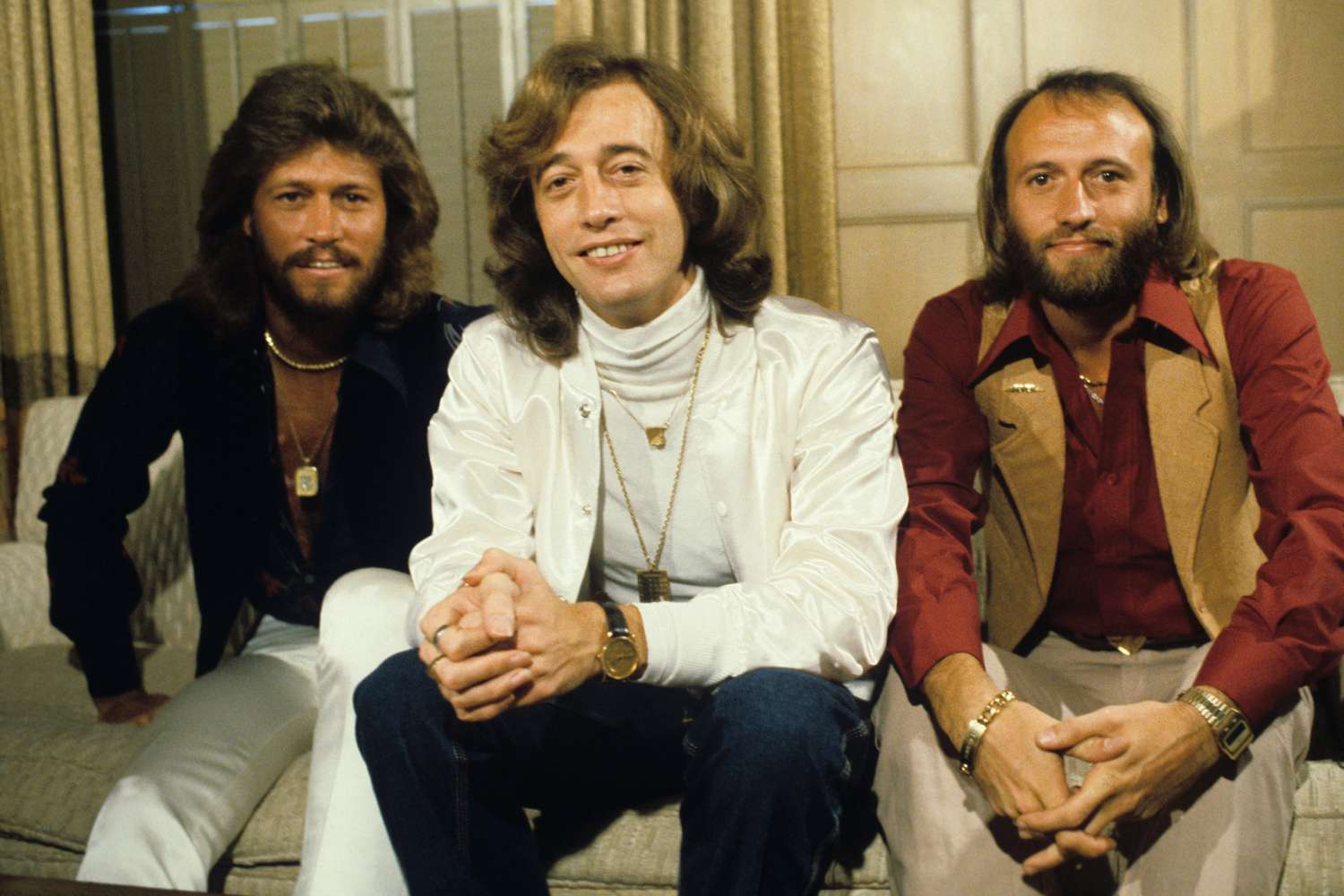
“Kung Fu Fighting” may get mislabeled as Bee Gees online, but its real magic is a 1974 disco lightning-bolt by Carl Douglas—a playful anthem that turned a movie craze into pure pop momentum.
Now and then, the internet plays its own little tricks on music history. “Kung Fu Fighting” is one of those songs that gets casually mis-tagged under bigger names—sometimes even Bee Gees—because it feels like it could belong to that mid-’70s dancefloor universe. But the record that conquered the world is unmistakably Carl Douglas: written by Douglas himself and produced by Biddu Appaiah (usually credited simply as Biddu), released in August 1974 at the exact moment martial-arts cinema had become a global fever.
And what a strange, perfect pop storm it was. “Kung Fu Fighting” didn’t begin its life as an obvious smash. Accounts of its early run describe it as initially struggling—no radio love at first—until the clubs embraced it and the song began to move like a rumor through the night. In the UK, it first entered the singles chart on 17 August 1974 (starting at No. 42), then sprinted to No. 1, a rise that felt like the whole country joining in on the same joke at once. The kind of joke that isn’t cruel, only communal: a chorus you can shout with strangers and feel, for a moment, like you all belong to the same room.
In America, the record’s “arrival date” on top is just as concrete. Billboard’s Hot 100 shows “Kung Fu Fighting” at No. 1 on the chart dated December 7, 1974—a snapshot of the moment the song officially became more than a novelty and turned into a national obsession. That’s the thing about certain pop singles: they don’t merely chart, they take possession of a season. The year turns, the radios turn, and suddenly that one rhythm is everywhere—shopping malls, car speakers, kitchen radios, skating rinks—like a catchy spell nobody can resist.
Musically, the genius is its shameless simplicity. It’s disco, yes—bright, bouncing, irresistibly physical—but it’s also built like a cartoon with a perfect grin: punchy groove, singable hook, a chorus that practically choreographs itself. The lyric leans into the era’s “chopsocky” fascination (that joyful Western slang for kung fu film mania) and turns it into sound: not authenticity, not documentary, but fantasy—pop culture wearing a costume and dancing in it.
And yet, underneath the playful surface, the song carries something oddly timeless: the human need for harmless ritual. Every era has its dancefloor password, its silly refrain that frees people from self-consciousness. “Kung Fu Fighting” is that kind of password. It doesn’t demand you be cool; it invites you to be in. It makes room for laughter inside the beat, and that laughter—especially in retrospect—feels almost tender. The track’s famous “Oriental riff” signifier is very much of its time, a blunt shorthand that pop used often in the 20th century; hearing it today can feel like opening an old scrapbook where some images are charming and some are complicated. But the song’s emotional function remains clear: it’s a celebration of momentum, of bodies moving together, of the ordinary week briefly turning into a party.
So if you came looking for Bee Gees, it’s worth saying plainly—because accuracy is its own kind of respect—this hit belongs to Carl Douglas. But if what you were really chasing was the feeling—the glittering, Saturday-night pulse of the mid-’70s—then you’re still in the right neighborhood. “Kung Fu Fighting” is one of those rare records that doesn’t need to be deep to be enduring. It survives because it remembers what pop music can do at its best: take a passing cultural craze, boil it down to three minutes, and leave behind a chorus that still makes people smile like they’ve just stepped back into a brighter room.