
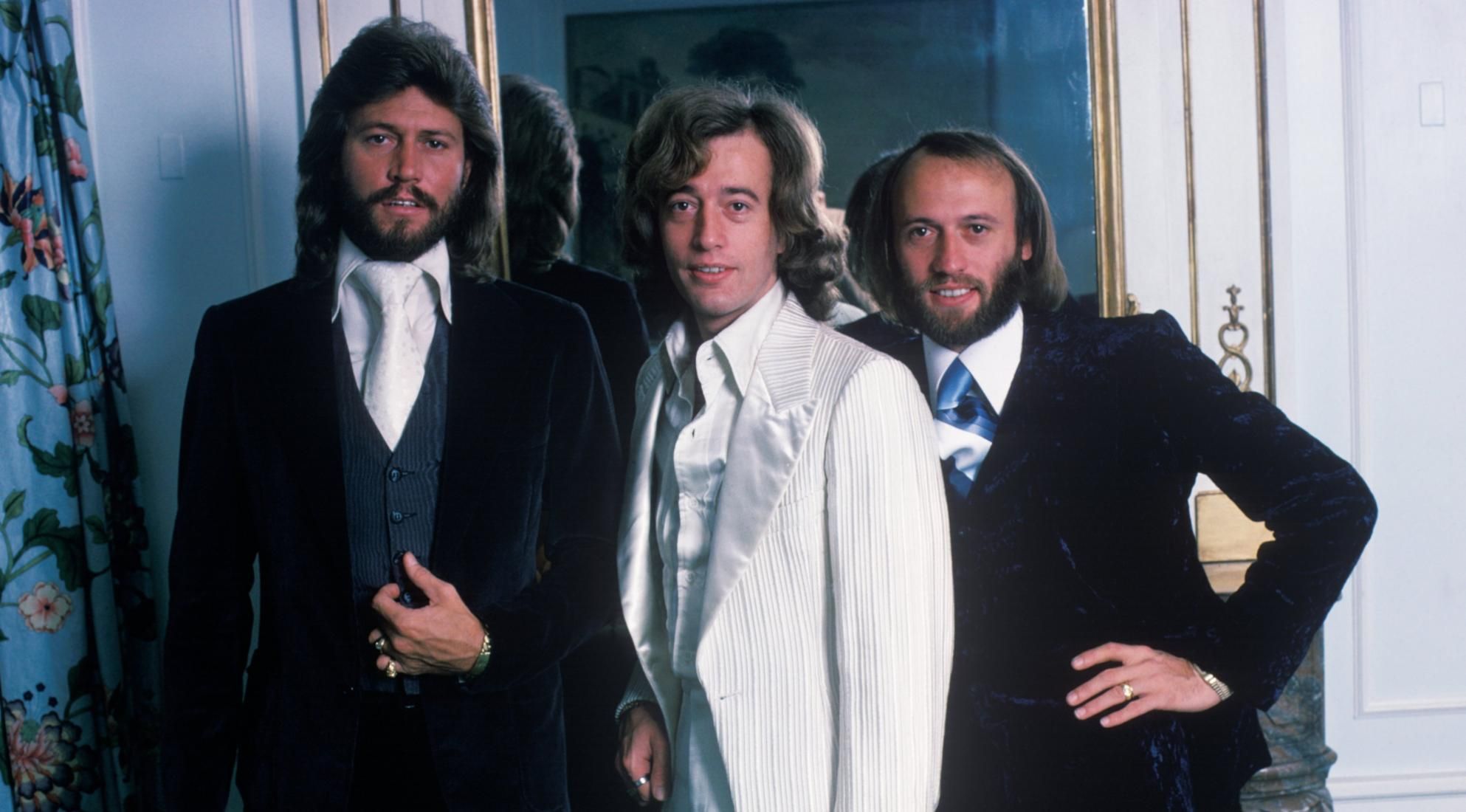
“More Than a Woman” isn’t just disco romance—it’s devotion made physical, the kind of love that turns a crowded room into one private promise.
The most important context sits right in the groove: “More Than a Woman” was written by the Bee Gees—Barry Gibb, Robin Gibb, and Maurice Gibb—specifically for the film Saturday Night Fever, and it lives on the era-defining album Saturday Night Fever: The Original Movie Sound Track (RSO, released November 15, 1977). That soundtrack didn’t merely succeed; it dominated, spending 24 consecutive weeks at No. 1 on the Billboard 200 in 1978—an achievement that turned a set of songs into a cultural climate. Within that storm, “More Than a Woman” became one of the record’s most enduring heartbeats: not necessarily the loudest headline, but one of the deepest imprints.
Here’s the chart nuance, told plainly: the Bee Gees’ own recording of “More Than a Woman” was not released as a single in the U.S. or the UK, even though it became a radio staple and a fan essential. In some territories, however—most notably Italy and Australia—it was issued as a single in 1978, and it reached No. 31 in Australia. In the U.S., its measurable chart footprint came through format-specific airplay, peaking at No. 39 on Billboard’s Adult Contemporary chart. Meanwhile, the soundtrack also features a separate version by Tavares, and that rendition was pushed as a single, reaching No. 32 on the Billboard Hot 100 and No. 7 on the UK Singles Chart. Two versions, two commercial strategies—one shared legacy.
The story behind the song is inseparable from the film’s mythology. When producer Robert Stigwood brought the project to the Bee Gees, the group were already masters of melody, but Saturday Night Fever asked them to distill something bigger than a hit: it demanded atmosphere, motion, a soundtrack that could make the body believe before the mind caught up. “More Than a Woman” was shaped during those 1977 sessions that moved across studios—work begun in France at the Château d’Hérouville, continued in Miami at Criteria, and finished in Los Angeles at Cherokee. You can almost hear that geography in the track: cosmopolitan sheen, humid rhythm, and a final polish that makes every downbeat feel inevitable.
What’s most fascinating is how “More Than a Woman” balances two emotional worlds at once. On the surface, it’s classic Bee Gees sensuality—soft focus, velvet harmonies, a pulse that invites closeness. But underneath, the lyric isn’t really about conquest or nightlife brag. It’s about elevation. The title draws a line: you are not an accessory to my life; you are the life itself. That’s why the phrase lands with such force. It doesn’t say “I want you.” It says, in effect, I recognize you as essential.
That difference is everything.
Disco is often remembered as glitter, but its best records aren’t shallow—they’re physical poems. “More Than a Woman” is built like a slow sunrise over a dance floor. The rhythm doesn’t rush; it persuades. The vocal is intimate without being fragile: Barry’s lead carries that unmistakable Bee Gees ache—sweetness edged with urgency—while the harmonies wrap around him like a second pulse. The arrangement is sleek, yes, but it’s not cold. It’s warm in the way a memory is warm: precise in detail, softened by feeling.
In the film, the song’s presence reinforces its meaning. Saturday Night Fever isn’t only about dancing; it’s about longing—for escape, for dignity, for a future that feels larger than the neighborhood boundaries. In that world, “More Than a Woman” becomes the sound of a private vow inside a public spectacle. The dance floor may be crowded, but the song insists on focus: one person, one gaze, one choice. It’s romance framed not as fantasy, but as a lifeline.
Part of the song’s lasting magic is that it refuses to age into parody. Even decades later, when “disco” is used as shorthand for kitsch, “More Than a Woman” still feels sincere. That sincerity comes from the Bee Gees’ particular gift: they could make desire sound tender rather than hungry, and confidence sound grateful rather than arrogant. The narrator isn’t simply intoxicated by attraction—he’s humbled by it. He’s saying: you change the scale of things. You make the world feel worth surviving.
So yes, the official chart story is complicated—split between versions, territories, and formats. But the emotional ranking is simple: “More Than a Woman” sits among the Bee Gees’ most beloved creations from their imperial late-’70s run, a song that proved disco could hold real devotion without losing its shine. It’s the kind of record that doesn’t just play—it moves, and in moving, it reminds us of an old truth: sometimes love isn’t a dramatic speech. Sometimes it’s a steady beat under your feet, telling you that what you feel is bigger than the room you’re standing in.