
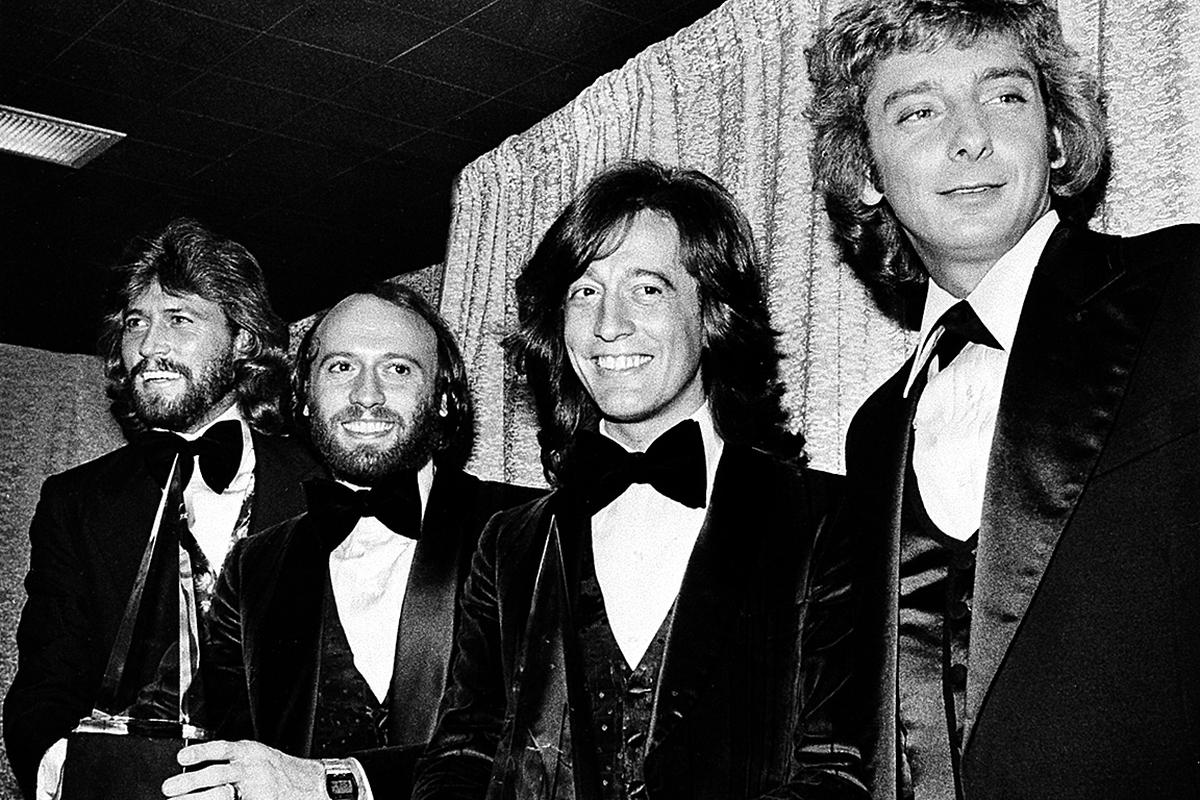
“Sacred Trust” is the Bee Gees’ late-career love vow—tender but unshakeable—where devotion isn’t shouted from a disco balcony, but spoken like a promise you’ve had to keep through weather.
The most important facts belong up front, because “Sacred Trust” sits at a very specific—and often misunderstood—point in the Bee Gees timeline. The song appears on Bee Gees’ 22nd and final studio album, This Is Where I Came In (released 2001), and the album itself marks the last time Barry Gibb, Robin Gibb, and Maurice Gibb released new studio work together as a group. Most importantly for accuracy: the album’s documentation notes that “Sacred Trust” was recorded in early 1998 in Miami Beach, years before the album finally arrived—one reason the track carries a slightly different emotional temperature than some of the later sessions.
There’s also a quietly revealing “behind-the-scenes” thread: credible Bee Gees discography research records that “Sacred Trust” was originally made with the Backstreet Boys in mind—a song shaped for the era’s harmony-pop landscape, then kept available when that path didn’t happen. When the Bee Gees ultimately claimed it for themselves, they didn’t try to imitate a boy-band vocal relay. The account notes Barry sings lead throughout, letting the song land as something intimate and direct rather than “shared” in the modern pop sense.
In chart terms, “Sacred Trust” was not pushed as a major, era-defining single campaign the way their classic hits were; its primary “arrival” is album-shaped—heard in sequence as part of This Is Where I Came In. Yet the song did gain a fascinating second life in the public imagination almost immediately, because it became the foundation for a very visible pop moment: in December 2002, British boy band One True Voice released “Sacred Trust” / “After You’re Gone” as a double A-side, and it debuted at No. 2 on the UK Singles Chart in the famous Christmas-week chart battle. Billboard even noted at the time that One True Voice’s version was a cover of a song that originally appeared on the Bee Gees’ album This Is Where I Came In.
That strange symmetry—an elder group writing a modern harmony-pop ballad, then watching it cycle back through a younger generation—adds a layer of meaning you can’t really separate from the listening experience anymore. Because “Sacred Trust” doesn’t feel like a “comeback” flex. It feels like a man looking across years, saying: I meant what I said, and I still mean it now.
Musically, it belongs to that late Bee Gees space where the brothers stop chasing zeitgeist and start chasing emotional clarity. The title phrase—“Sacred Trust”—is not romantic decoration. It’s a moral idea. Trust, in most love songs, is assumed. Here, it’s consecrated. The word “sacred” suggests something you don’t toy with, something you guard not because you’re afraid, but because you finally understand what it costs to lose it. And the Bee Gees, by 1998–2001, had lived enough life—personal upheavals, reinventions, decades of touring and recording—to make that single phrase sound less like poetry and more like testimony.
That’s the emotional story behind the record: commitment as endurance. Not the bright, early promise of love, but the later, deeper version—the one you arrive at after disappointment has tried to bargain you down. In Barry Gibb’s lead, you can hear the Bee Gees’ most underrated late-career strength: the ability to sound vulnerable without sounding weak. The melody carries that familiar Gibb lift—sweetness in the line, ache in the harmony—yet the sentiment refuses melodrama. It’s a vow written with calm hands.
And then the wider Bee Gees narrative quietly frames it: This Is Where I Came In is their final studio statement as a trio, and “Sacred Trust” sits inside that closing chapter like a small candle. A song about trust, preserved from 1998, finally released in 2001—almost like a message delayed in the mail, arriving when you least expect it, but saying exactly what you needed to hear.
If you listen now, long after the charts have moved on and the headlines have faded, “Sacred Trust” doesn’t feel like a relic. It feels like a private room in the Bee Gees house—one you don’t stumble into on the first tour, but one you return to when you want to remember that pop music can still speak quietly, with dignity, about the hardest thing love asks us to do: believe—again—without becoming naïve.