
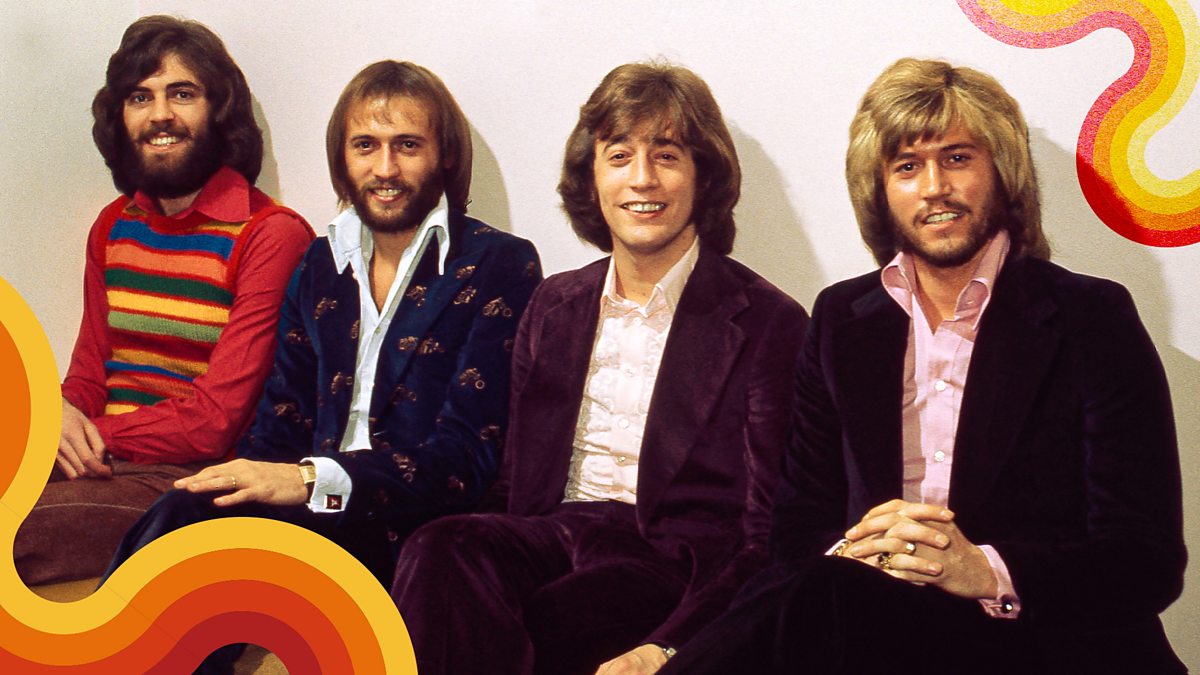
“I Am the World” is an early, almost hidden Bee Gees confession—Robin Gibb stepping forward in a small, baroque-pop room and discovering how big a quiet song can feel.
Some songs arrive like headlines. “I Am the World” arrived like a note slipped under the door—private, slightly mysterious, and easy to miss unless you were the kind of listener who always flipped the record over. Officially, it began life as the B-side to “Spicks and Specks”—released in Australia on September 22, 1966, and later issued in the United Kingdom in February 1967. That matters right away for any talk of “chart position,” because “I Am the World” didn’t chart on its own as an A-side at the time; its public chart footprint is inseparable from the success of “Spicks and Specks.” And that single did very well: it reached No. 4 on the Go-Set Australian National Top 40, and later hit No. 28 in Germany, No. 2 in the Netherlands, and No. 1 in New Zealand after its wider international release.
Yet the real story is not statistics—it’s identity. “I Am the World” is written and sung by Robin Gibb, and it’s noted as one of the first songs he wrote alone, without the usual shared credits that would come to define so much of the brothers’ early catalog. If “Spicks and Specks” is the band’s bright, urgent plea to be heard, “I Am the World” feels like the moment one brother turns inward and says, I need to be understood. It’s not the kind of line you deliver with swagger. It’s the kind you deliver because you can’t keep it inside anymore.
Recorded during the June–July 1966 sessions that produced the Spicks and Specks material, the track carries the stamp of a group still learning what their sound could hold—pop instincts leaning toward something more ornate, more careful with emotion. A detail that’s easy to overlook but strangely vivid: the recording features trumpet by Geoff Grant, and Grant himself recalled the intensity of those nights—working through multiple songs in a short burst, capturing performances with a live immediacy rather than the tidy perfection later studio eras would chase. The trumpet isn’t just decoration; it’s a little glint of cinema in the corner of the frame, hinting at the baroque pop atmosphere the song is often associated with.
The beauty of “I Am the World” is how early it reveals a Bee Gees truth: even before the world knew them for falsetto brilliance, disco polish, or stadium-scale hooks, they were already writing about the inner weather of a person—how it feels to be overwhelmed by your own sensitivity, how longing can be both strength and burden. Robin’s vocal, even in these early years, carries that particular tremor of conviction: not theatrical, not casual, but intensely present. He sings as though the song is happening to him in real time.
And then, like so many B-sides that end up shaping an artist’s myth, the track kept reappearing—quietly insisting it deserved a longer life. It was later included on Rare, Precious and Beautiful, Vol. 3 in 1969, and a CD-era release brought it back again on the compilation Brilliant from Birth (1998). That arc is telling: “I Am the World” wasn’t designed to be a “moment.” It was designed to be a companion—one of those songs that waits patiently for you to grow into it.
So if you’re listening now, decades after the needle first dropped on its flip side, try hearing it the way it was meant to be found: not as an anthem, but as a small, brave statement from a young Robin Gibb—a songwriter learning, in public but almost under cover of darkness, that sometimes the softest songs are the ones that stay with you the longest.