
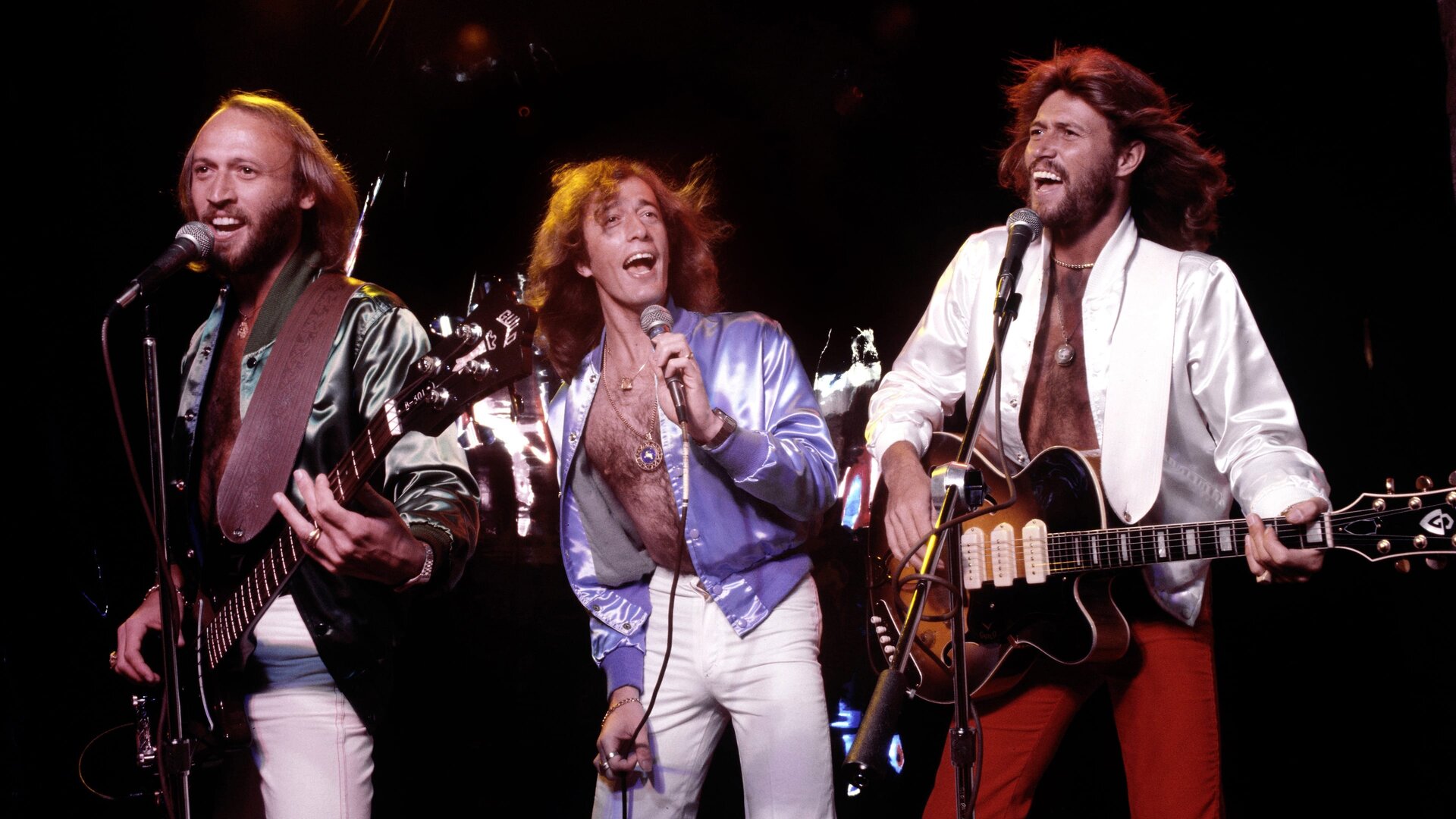
“The Way It Was” is the Bee Gees looking back at love without makeup—remembering the warmth, admitting the damage, and accepting that some goodbyes become part of who we are.
Released on 13 September 1976 as part of the Bee Gees’ landmark album Children of the World, “The Way It Was” isn’t one of the era’s headline-grabbing singles—it’s something subtler, and in many ways more enduring: a late-night confession tucked near the end of the record, track 9 on side two, sung by Barry Gibb with the kind of calm ache that only arrives when the shouting is over. The songwriting credit tells its own quiet story of the band’s evolving sound: Barry Gibb, Robin Gibb, and Blue Weaver—the group’s keyboard architect—sharing the pen on a ballad that feels like memory set to tape.
Because you value accuracy around “ranking at release,” it’s best stated plainly: “The Way It Was” was not released as a chart single, so it has no debut position on the Hot 100 to cite. Its public “arrival” is inseparable from the album that carried it. And Children of the World arrived with real commercial weight, peaking at No. 8 on the U.S. Billboard 200 (and No. 23 on Billboard’s Top R&B/Hip-Hop Albums chart), later earning Platinum certification in the U.S.
Yet the song’s power lies less in charts than in the circumstances of its creation—an album made during a moment when the Bee Gees were retooling their identity in the studio. The record was cut across two important locations—Criteria Studios in Miami and Le Studio in Quebec—during sessions that ran from 19 January to 26 May 1976. And there’s a wonderfully intimate detail in the album notes: while Robin and Maurice returned to England during a break, Barry stayed in Miami to mix the new single and to record “The Way It Was.” That image—one brother alone in the control room, working while the others are back with family—feels almost embedded in the track’s emotional temperature. This is not a song that needs a crowd. It’s a song written for the hours when the mind replays an old love like a film you can’t stop rewinding.
On paper, the lyric looks simple. In the ear, it’s quietly devastating. It begins with loneliness that arrives uninvited—“nights get lonely now”—and then slips into the most human kind of revisionism: it wasn’t all that bad. The narrator remembers “smiles” and “tears,” arms held tight, and then—without melodrama—admits the aching ambiguity at the heart of so many past relationships: Wasn’t that the way it was? Two strangers reaching for a worthless cause… Wasn’t that the love we shared, or just the restless years when no one cared?
That question is the song’s true subject. “The Way It Was” isn’t only about a breakup—it’s about the terrifying uncertainty of memory itself. The older we get, the more we realize that love can be real and still be wrong, sincere and still be doomed, beautiful and still be built on two people trying to heal something they can’t name. The Bee Gees capture that paradox with uncommon tenderness: they don’t paint the past as paradise, and they don’t paint it as poison. They paint it as life—a mixture of genuine affection and quiet incompatibility, the kind that only becomes clear after the door has closed.
Musically, it also sits in a fascinating place inside Children of the World. This album is often remembered for its forward push into R&B and dance rhythms, the beginning of the Gibb–Galuten–Richardson production era and the bright, kinetic sound that would soon change pop music’s bloodstream. But “The Way It Was” offers a pause—proof that even while the Bee Gees were learning new grooves, they hadn’t lost their oldest gift: turning regret into melody so graceful you almost don’t notice it’s hurting you.
In the end, “The Way It Was” feels like a photograph that hasn’t faded, only softened around the edges. It doesn’t demand that you forgive the past or curse it. It simply asks you to look at it honestly—to admit what was tender, what was restless, what was never going to last, and what still lives inside you anyway. And that’s why this deep album track remains so quietly beloved: it tells the truth the way grown life tells it—gently, sadly, and with a dignity that doesn’t need applause.