
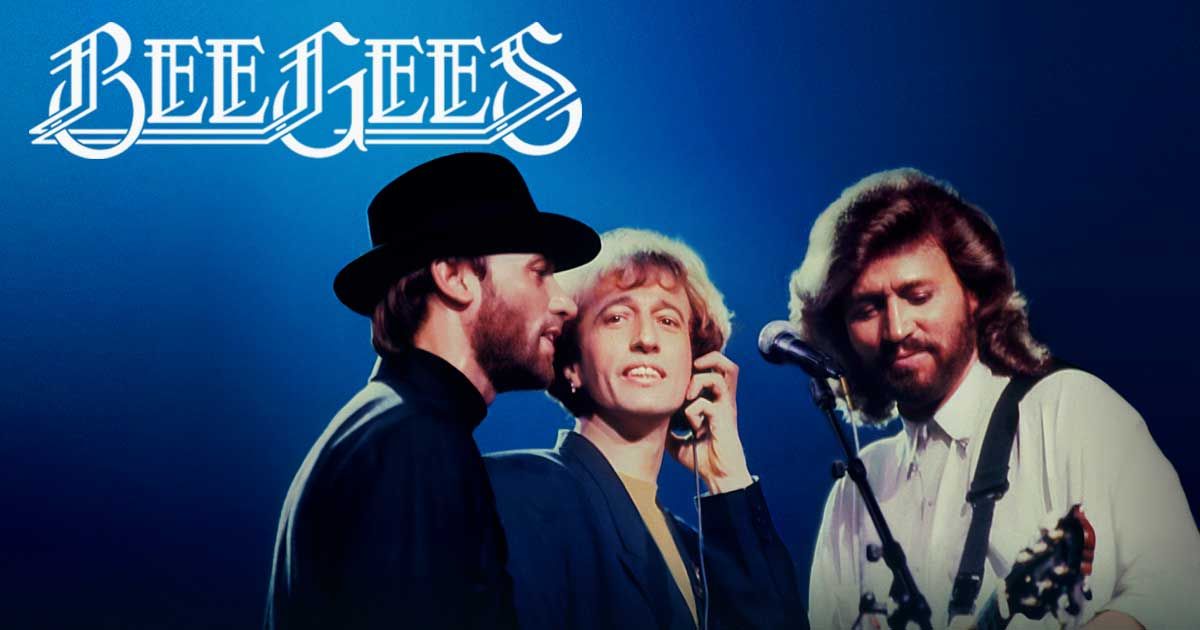
“I Will” is the Bee Gees writing a vow in candlelight—love promised not with fireworks, but with the steady patience of staying, day after day.
By the time Bee Gees released “I Will” in 1997, they weren’t chasing youth anymore—they were chasing truth. The song sits as track 9 on Still Waters, and it runs 5:08, carried by the blended, unmistakable lead of Robin and Barry Gibb. If the title feels simple, almost plain, that’s the point: it’s a sentence you can live inside. Not a slogan, not a flourish—just a promise you either mean… or you don’t.
The album context is essential, because it tells you exactly what kind of moment this was. Still Waters was released March 10, 1997 in the UK (and May 6, 1997 in the US). It became one of their strongest late-era comebacks, peaking at No. 2 on the UK Albums Chart and No. 11 on the Billboard 200. That matters when thinking about “I Will,” because this wasn’t a minor footnote in a fading career—this was the Bee Gees stepping back into the world with their craft intact, their harmonies still able to turn private emotion into public air.
And yet, “I Will” itself was not released as a chart single, which is almost poetic. Some songs are made for radio schedules and quick impact. This one feels built for later hours: the kind of track you don’t “notice” at first, until one evening you realize it’s been quietly holding the album together like an unseen stitch.
The story behind it is the story of Still Waters as a whole: songs largely written in the mid-1990s and then carefully assembled with a remarkable bench of collaborators and co-producers. The project took time and coordination—top-tier producers, A-list musicians, and a band famous for perfectionism all pulling in the same direction. Out of that large, modern production environment, “I Will” still feels intimate—proof that the Bee Gees could stand in a room full of industry machinery and still write like three brothers passing a secret between them.
What makes the song linger is its emotional architecture. “I Will” isn’t a naive pledge from the beginning of love; it’s a vow that sounds like it has survived storms. The lyric’s heartbeat is communication—voice, words, the act of reaching across distance as if letters and spoken names are lifelines. (It’s hard not to hear the Bee Gees’ own history inside that: decades of reinvention, periods of absence, returns that required faith.) Even without grand narrative, the song suggests a familiar human scene: someone listening too closely for the smallest sign that they’re still wanted, still remembered, still held.
Vocally, the presence of Robin and Barry together is everything here. Their voices were always different instruments—Barry often the warm current, Robin the ache that catches in the throat—and when they share a lead on a song titled “I Will,” it doesn’t feel like duet gimmickry. It feels like agreement. Like two men looking at the same promise from different angles and arriving at the same conclusion: love is a choice you keep making.
So the meaning of “I Will” is not complicated, but it is deep. It’s about devotion that doesn’t need to shout. About loyalty that isn’t dramatic, simply reliable. It’s the kind of song that understands how time changes romance: the longer you live, the more you value the love that shows up quietly, consistently, without needing applause.
And that may be the sweetest irony of all—“I Will” hides inside Still Waters rather than announcing itself to the charts, even as the album around it rose high. Like the best promises, it doesn’t perform. It endures.