
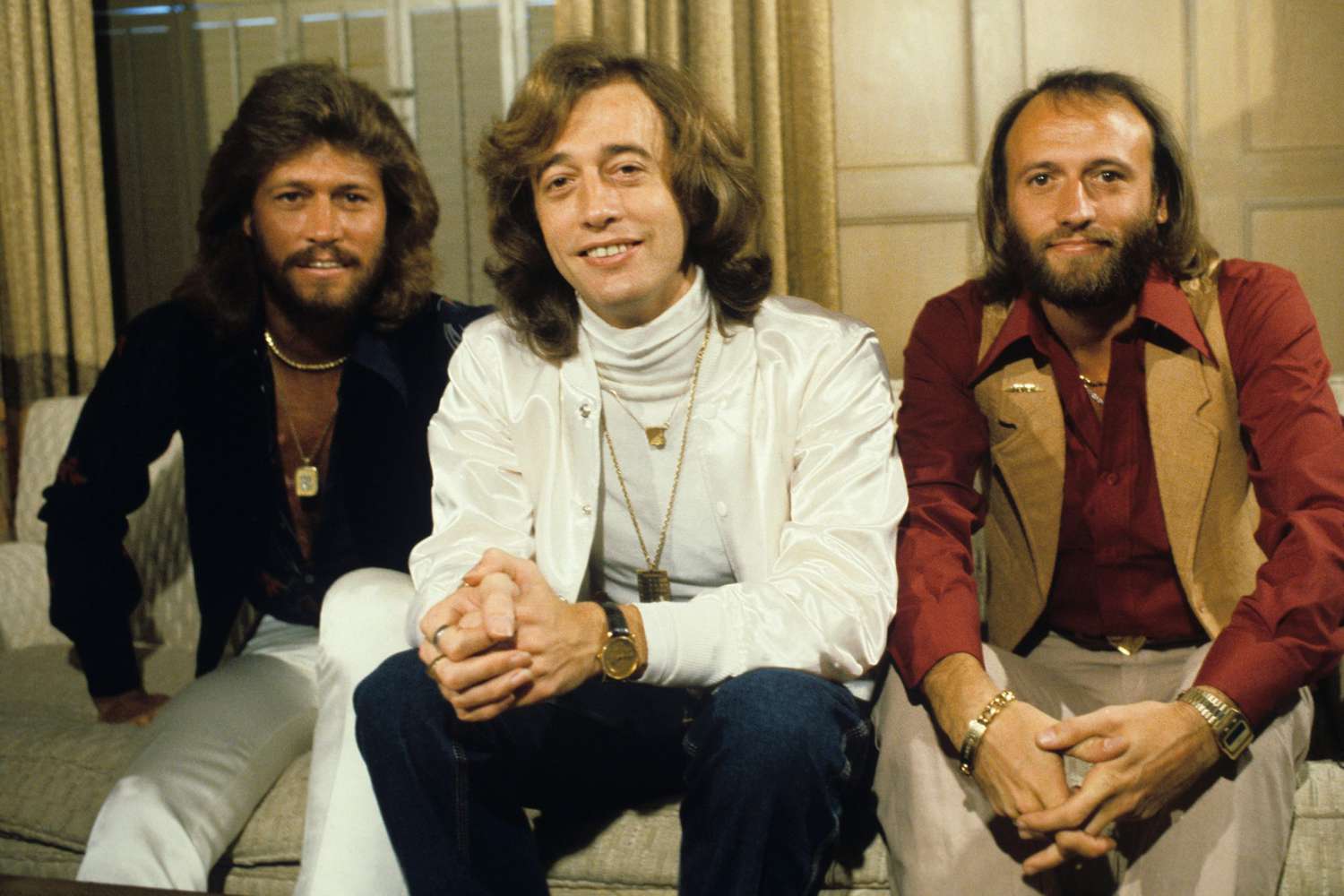
“Wildflower” is the Bee Gees’ soft-blooming act of resilience—an intimate song that opens quietly, yet carries the ache of survival after the spotlight has turned harsh.
If you drop the needle on “Wildflower” expecting the Bee Gees of glittering falsetto and dancefloor command, you’ll feel the room change. This is the Bee Gees in October 1981, stepping carefully through a new season—older, bruised by the cultural mood, and determined to be heard on different terms. “Wildflower” appears on their studio album Living Eyes (released October 1981 on RSO Records), a record made in the wake of the anti-disco backlash that had begun to treat their very name like a reason to turn the dial.
That context matters because it explains why “Wildflower” feels so personal, almost protective. Living Eyes deliberately leaned away from the mid-to-late ’70s disco/R&B identity—minimal falsetto, more soft-rock and adult-pop textures—partly because the band was under pressure to disassociate from disco at the time. And inside that shift, “Wildflower” becomes something even more poignant: it is sung with lead vocals by Maurice Gibb—a rare, cherished event in the Bee Gees’ post-1975 catalog. The album’s track list explicitly credits “Wildflower” with Maurice on lead, and the album narrative notes the “return” of Robin and Maurice as lead vocalists in whole songs.
On paper, the song’s “chart debut” isn’t a neat single entry—“Wildflower” wasn’t released as a single from Living Eyes (the singles were “He’s a Liar” and “Living Eyes”). So if you’re looking for the hard numbers of arrival, you look to the album itself. Living Eyes peaked at No. 41 on the US Billboard 200 and No. 73 on the UK Albums Chart, while performing far better in several other territories (for example, No. 7 in the Netherlands, No. 6 in Norway, No. 4 in Spain). The figures tell a story of a band still globally resonant, yet fighting headwinds in the two markets that had crowned them just a few years earlier.
And then there’s the craftsmanship: “Wildflower” is credited to Barry Gibb, Robin Gibb, and Maurice Gibb as writers, with the album produced by the Bee Gees alongside Albhy Galuten and Karl Richardson. That familiar triad of names—the Gibb brothers writing together—feels almost like a family signature at the bottom of a letter. But the voice at the center changes the emotional temperature. Maurice had always been the quiet pillar: the musical glue, the inner craftsman, the steady hand in the harmony stack. When he steps forward to sing “Wildflower,” it doesn’t feel like a power grab. It feels like the band letting the listener hear a different kind of truth.
If I were introducing it on an old radio program—late hour, the world outside gone still—I’d say this: “Wildflower” is a song about devotion that doesn’t need ceremony. It carries that Bee Gees gift for tenderness, but with less theatrical flourish and more lived-in breath. The lyric sketches a kind of wonderland that can tilt into longing—beautiful, slightly dazed, almost like love viewed through sleep-deprived eyes. (Even the repeated title—“Wildflower”—has the feel of an affectionate name you say more than once just to reassure yourself it’s real.)
One detail that longtime listeners often latch onto is the guitar flavor on the track: a later retrospective singled out “Maurice’s Don Felder-assisted ‘Wildflower’” as having an “easy charm,” which fits what you hear—smooth, melodic, a little West Coast in its polish. Whether you come for the phrasing, the harmony shading, or that gentle instrumental shimmer, the effect is the same: this is not music trying to win back an era. It’s music trying to outlast one.
In that sense, the deeper meaning of “Wildflower” isn’t just romantic. It’s almost autobiographical—three brothers keeping faith with the songcraft that made them, even as the cultural weather turns colder. Living Eyes is often described as an album made under pressure, released into a hostile moment, and later spoken of ambivalently by the group themselves. Yet “Wildflower” remains a small refuge inside it: a reminder that the Bee Gees were never only a trend, never only a sound of one decade. They were—at their core—writers and harmonists with an instinct for the human pulse.
So when Maurice Gibb sings “Wildflower,” listen for what’s underneath the softness: a quiet insistence that beauty still matters, even when it isn’t fashionable—especially when it isn’t fashionable.