
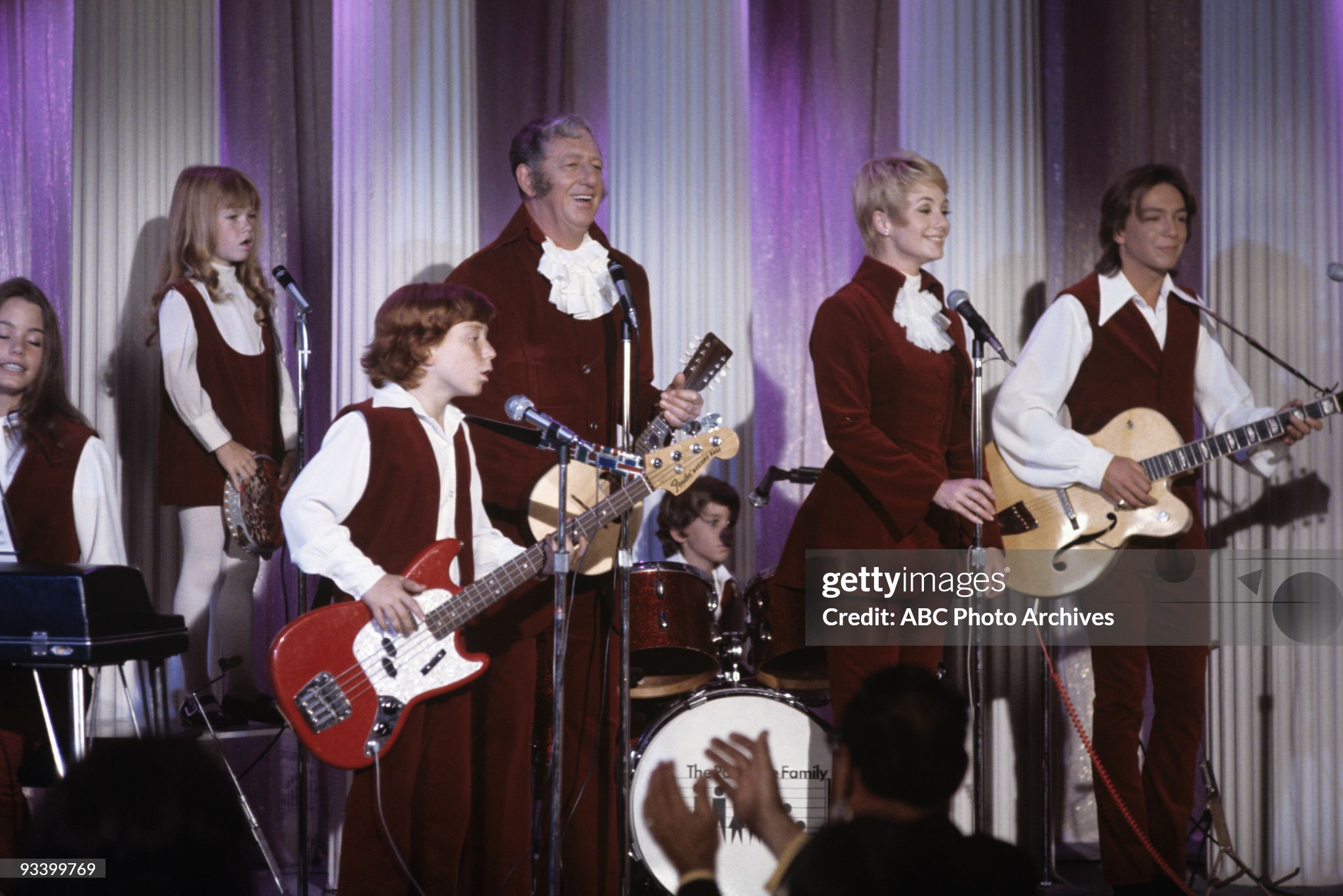
Something New Got Old captures that quiet, aching moment when romance loses its first sparkle and leaves behind something gentler, sadder, and far more human.
There are songs that conquer the charts, and then there are songs that linger in the heart for reasons a chart never fully measures. Something New Got Old belongs to the second group. Recorded by The Partridge Family during the later stretch of the act’s pop run, it did not become one of their major U.S. chart landmarks on the level of I Think I Love You, which famously reached No. 1 on the Billboard Hot 100 in 1970, or Breaking Up Is Hard to Do, which climbed to No. 8 in 1972. In commercial terms, Something New Got Old was a more modest chapter, not a defining Hot 100 smash. But emotionally, it reveals something essential about why this manufactured television group still mattered: beneath the bright arrangements and polished harmonies, there was often a real melancholy waiting to be heard.
The title alone is wonderful in that old pop-song way. Something New Got Old sounds simple at first, almost playful, but it carries a surprisingly adult truth. It suggests the moment when excitement fades, when a romance that once felt electric begins to settle into habit, disappointment, or distance. That emotional turn is universal. Nearly everyone knows the feeling of watching a bright beginning lose its shimmer. What makes the song memorable is that it does not scream that truth; it lets it drift in gently. Like many of the best early-1970s pop recordings, it says something painful in a melody that still feels easy on the ear.
That contrast was one of the secret strengths of The Partridge Family. On television, they were sold as a cheerful family band traveling from one harmless adventure to the next. In the studio, however, the records were usually far more sophisticated than the sitcom image suggested. The production team around Wes Farrell knew how to build radio-friendly records with clean hooks, rich backing vocals, and just enough emotional shading to keep them from feeling disposable. And at the center of it all was David Cassidy, whose voice gave the material its real pulse. He could sound buoyant, wounded, dreamy, or restless, sometimes all within the same song. That gift mattered on a number like Something New Got Old, because the lyric needed someone who could make disappointment sound tender rather than bitter.
One of the most interesting things about the song is the way its emotional message quietly mirrored the moment in which The Partridge Family existed. By the time later records were arriving, the first wave of Partridge mania had already softened. Pop music itself was changing. The early bubblegum sheen that had helped make the group a phenomenon was facing a tougher, more fragmented musical landscape. In that light, Something New Got Old almost feels doubly resonant. It is a song about fading freshness, released by an act that was also trying to hold on to its own changing place in popular culture. That does not make it sad in a tragic sense. It makes it poignant. It gives the record an unintended depth.
Musically, the song lives in that polished early-1970s pop space where sweetness and sadness sit side by side. The melody is approachable, the arrangement graceful, and the performance never overplays the emotion. That restraint is important. A lesser singer might have pushed the heartbreak too hard, but the charm here lies in the song’s conversational ache. It sounds like someone realizing a truth they would rather not admit. That kind of realization often lingers longer than a dramatic declaration. It feels lived in. It feels familiar.
For listeners who came of age with The Partridge Family, songs like this can open a very particular door in memory. Not just to the television series, not just to the posters and radio play, but to the emotional atmosphere of that era: the innocence, the vulnerability, the belief that pop songs could hold private feelings without turning them into spectacle. Something New Got Old may not be the first title casual listeners mention when the group’s name comes up, yet that is part of its charm. It waits a little deeper in the catalog, where devoted listeners often find the songs that age best.
Its meaning has only grown richer with time. When heard now, the song is no longer simply about a romance losing its novelty. It can also sound like a meditation on passing seasons of life, on the way excitement matures into memory, and on how the things that once felt effortless eventually ask something more reflective of us. That is why the title still lands. It speaks not only to young love, but to time itself. New things do grow old. The wonder is that some songs do not.
So while Something New Got Old was never among the biggest chart trophies in the The Partridge Family story, it remains one of those quietly rewarding records that reminds us why the group’s music is still worth revisiting. Strip away the sitcom reputation, the lunchbox nostalgia, and the easy assumptions about bubblegum pop, and what remains is a carefully made song about one of life’s most recognizable emotional shifts. In the voice of David Cassidy, that shift becomes gentle, wistful, and unexpectedly lasting. And perhaps that is the song’s final irony: a tune about fading novelty has aged with remarkable grace.