
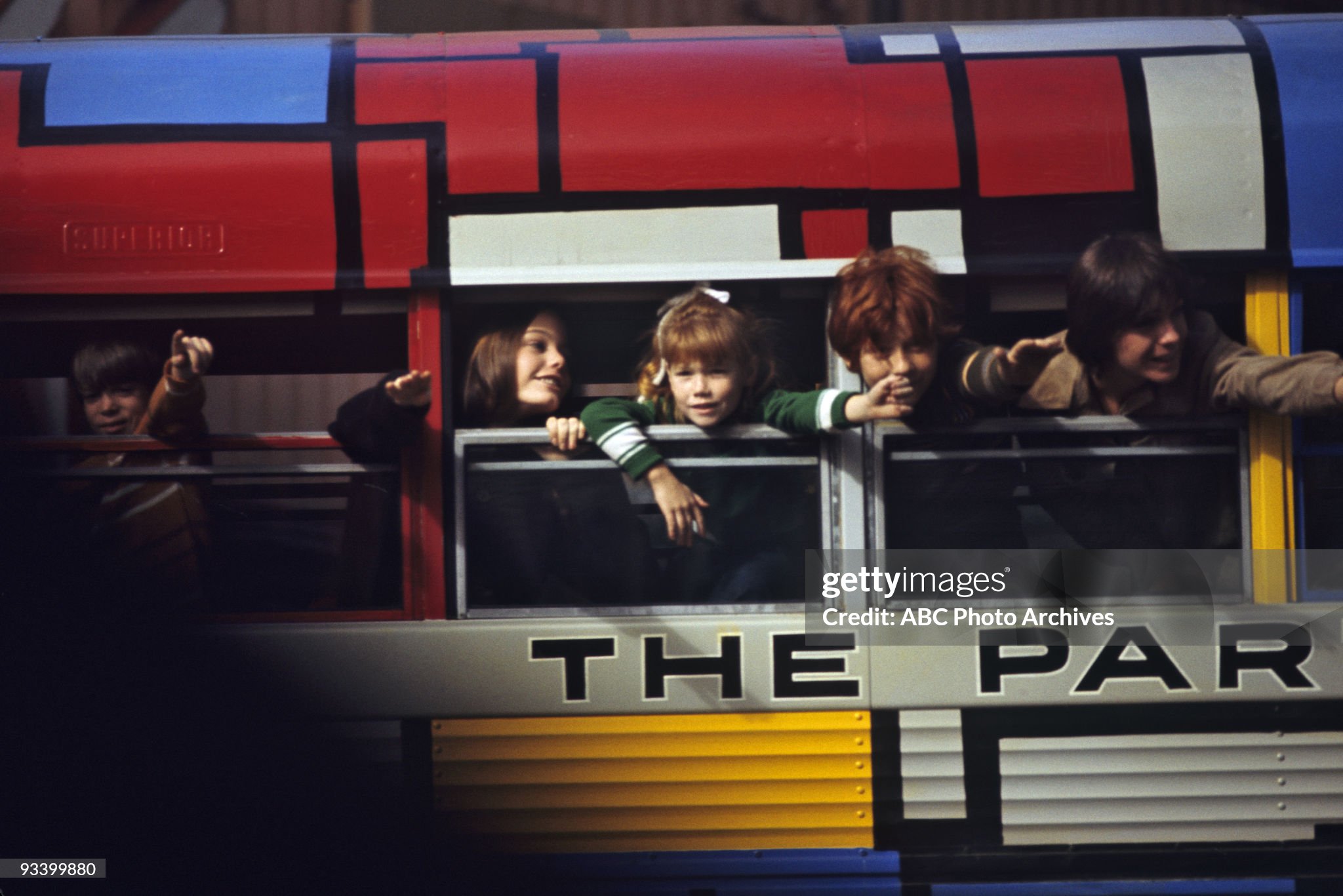
In Come On Love, The Partridge Family turned simple young longing into something warm, polished, and deeply inviting—a hidden song that still glows softly beyond the better-known hits.
When people remember The Partridge Family, they almost always reach first for the giant singles that filled radios and living rooms in the early 1970s. That is understandable. Songs like I Think I Love You became part of the culture almost overnight, and the group’s bright, family-friendly image made them one of the defining pop phenomena of their moment. Yet Come On Love belongs to the part of their catalog that reveals something quieter and, in some ways, more lasting. It is not remembered as one of the group’s major chart singles, and there is no widely cited standalone Billboard Hot 100 peak for the song. That alone tells us something important: this is not a song carried by statistics. It survives because of feeling.
That distinction matters. The Partridge Family was born from television, but its records were crafted with real pop discipline. Centered around the on-screen family led by Shirley Jones and the youthful magnetism of David Cassidy, the project became far more than a sitcom novelty. Under producer Wes Farrell, with top Los Angeles session players and polished studio arrangements, the music was designed to be immediate, melodic, and emotionally clear. Come On Love fits beautifully into that world. It has the familiar Partridge touch: buoyant rhythm, smooth backing vocals, and a melody that feels as if it arrives already glowing.
What makes the song linger is its emotional posture. Come On Love is built around invitation rather than grand drama. It does not sound cynical, guarded, or complicated in the modern sense. Instead, it reaches outward with the kind of open-hearted sincerity that defined so much of early-1970s pop at its best. There is yearning here, certainly, but it is wrapped in brightness. The song suggests hope before disappointment, anticipation before regret. That tone is part of why so many deep cuts from this era still strike the heart with unusual force: they preserve a moment when pop music could be direct without sounding naive, tender without sounding weak.
In a Partridge Family recording, that feeling was often carried by the unmistakable David Cassidy-led sound. His voice, especially in songs like this, had a persuasive blend of energy and sweetness. He could make a simple phrase feel personal, almost confessional, without overplaying it. That quality was central to the group’s appeal. The records did not depend on vocal acrobatics. They depended on tone, charm, and an emotional honesty that listeners recognized immediately. On Come On Love, that approach works beautifully. The performance never pushes too hard. It invites the listener in, then stays there with quiet confidence.
There is also a larger story behind a song like this. Deep cuts often tell us more about an artist’s emotional range than the hit singles do. Hits must seize attention quickly; album songs are often allowed to breathe. Even with a tightly produced pop act like The Partridge Family, those less celebrated tracks could carry a gentler mood, a softer texture, a more private atmosphere. Come On Love feels like one of those songs that lived just beyond the spotlight, where the group’s sound becomes less about pop event and more about emotional memory. It may not have dominated the charts, but it carries the same golden studio craftsmanship that defined the Bell Records era.
Its meaning is simple, and that simplicity is one of its virtues. At heart, Come On Love expresses the desire for connection before life grows too guarded. It is the sound of someone calling for closeness with faith still intact. There is no bitterness in it, no heavy self-protection. That is why the song can feel especially moving now. Heard years later, it captures not only a romantic mood but an entire cultural atmosphere—an era of transistor radios, after-school television, carefully arranged pop harmonies, and melodies that seemed to carry sunlight inside them.
And perhaps that is the real story behind Come On Love. It reminds us that the legacy of The Partridge Family is not limited to their biggest chart triumphs. Sometimes the songs that stay with us longest are the ones that lived a little off to the side, waiting to be rediscovered. They return not with fanfare, but with warmth. They bring back the texture of another time: the softness of a melody, the innocence of expectation, the polished glow of a pop world that believed a song could still reach someone gently.
For listeners who know the famous titles by heart, Come On Love offers a different kind of reward. It is not the soundtrack to a cultural headline. It is the soundtrack to remembrance. And in that quiet space, The Partridge Family sound less like a television phenomenon and more like what they also were at their best: makers of finely tuned, emotionally generous pop music that still knows how to open a door in the heart.