
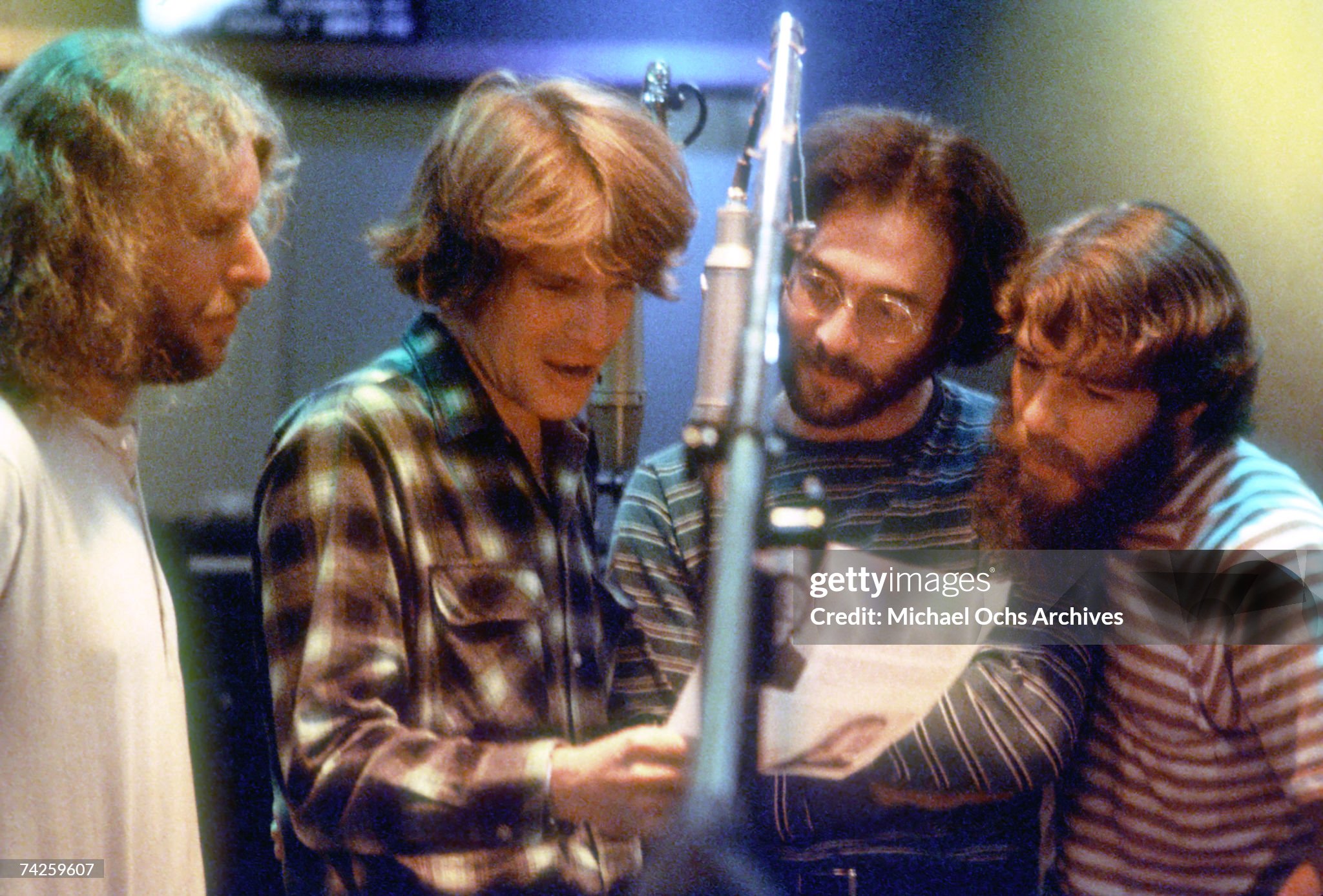
On “Bootleg (Alternate Take),” Creedence Clearwater Revival sound even more raw, more hypnotic, and more dangerous than on the album cut — as if John Fogerty had not yet tightened the song for release, and we are hearing the swamp still spreading in every direction.
There are Creedence Clearwater Revival songs that arrive like clean, hard statements, and then there are recordings like “Bootleg (Alternate Take)”, which let us hear the band before the final edges were trimmed. That is what makes this version so fascinating. The original “Bootleg” was written by John Fogerty, recorded in October 1968, and issued on Bayou Country, the band’s second album, released in January 1969. That album became a crucial early breakthrough, climbing to No. 7 on the Billboard 200 and carrying “Proud Mary,” the group’s first major smash. But “Bootleg” itself was never one of the headline hits. It lived inside the album as one of those dark, driving tracks that serious listeners often come to treasure even more deeply over time.
And that is exactly why the alternate take matters. According to the documented reissue history, “Bootleg (Alternate Take)” was included as a bonus track on the 40th Anniversary/expanded edition of Bayou Country, and digital services also list it as part of the expanded reissue. The key musical difference is striking: the album version runs about 3:03, while the alternate take is almost twice as long, around 5:46–5:47. That alone tells the story before a single word of criticism is added. The familiar master is compact, muscular, and efficient. The alternate take lets the groove uncoil, brood, and circle back on itself. It feels less like a finished single-era album cut and more like a band sinking into its own spell.
The song itself has always had a peculiar attraction. One summary of the track describes “Bootleg” as a song built around the old human weakness for forbidden things — the idea that what is bad for you somehow becomes more appealing once it is outlawed. That theme suits CCR perfectly. Few bands of the late 1960s were better at making temptation sound physical. In “Bootleg,” the title is not just a reference to moonshine or illicit liquor. It becomes an atmosphere: something rough, hidden, smoky, and half-dangerous, carried by rhythm more than explanation. On the final album version, that atmosphere is sharp and concentrated. On the alternate take, it stretches out into something even murkier and more immersive.
There is also something revealing in the way the song was built. Available song notes report that Tom Fogerty played a tuned-down Fender King, and John Fogerty later recalled that Tom’s hand would cramp while learning the part. Other commentary on the recording highlights the track’s twin acoustic guitars and its propulsive call-and-response vocal energy. Those details matter, because “Bootleg” is not merely a riff song. It is a texture song. Its power comes from repetition, tension, and a kind of low, rolling insistence. In the alternate take, those ingredients are allowed more room to breathe. Instead of rushing toward the finish, the band seems content to stay in the pocket, and that patience gives the song a different character — more trance-like, more humid, more deeply swamp-rock.
What makes this especially compelling is where “Bootleg” sits in the Bayou Country story. The album opened with “Born on the Bayou” and closed with “Keep On Chooglin’,” two tracks that helped define the mythic Southern atmosphere CCR could conjure despite being a California band. Commentary on “Bootleg” has even noted its kinship with “Keep On Chooglin’,” especially in the lead-guitar feel and in the sense of relentless forward motion. Heard in that context, “Bootleg (Alternate Take)” sounds like a missing bridge between those larger album statements — not as famous, perhaps, but cut from the same thick, shadowy cloth. It shows how naturally CCR could generate mood without psychedelic excess, simply by locking into rhythm and letting John Fogerty’s imagination do the rest.
That may be the real reason this version lingers with devoted listeners. Alternate takes often interest collectors because they are rare. But the best of them matter for a deeper reason: they show us another possible life a song might have lived. “Bootleg (Alternate Take)” does exactly that. It reveals a Creedence Clearwater Revival less concerned with compression and more willing to let the groove smolder. It makes the released master sound all the more impressive for its discipline, but it also reminds us that the discipline came from somewhere wild.
So when people return to “Bootleg (Alternate Take)”, they are not just chasing archival curiosity. They are hearing CCR in a looser, darker, more exploratory mood — still recognizably themselves, still unmistakably John Fogerty’s band, but not yet folded into the hard economy of the final album version. And that is the quiet thrill of it. The official “Bootleg” is the song as statement. The alternate take is the song as weather. One is finished. The other still feels alive in the room, rolling and rolling like something not quite ready to be bottled.