
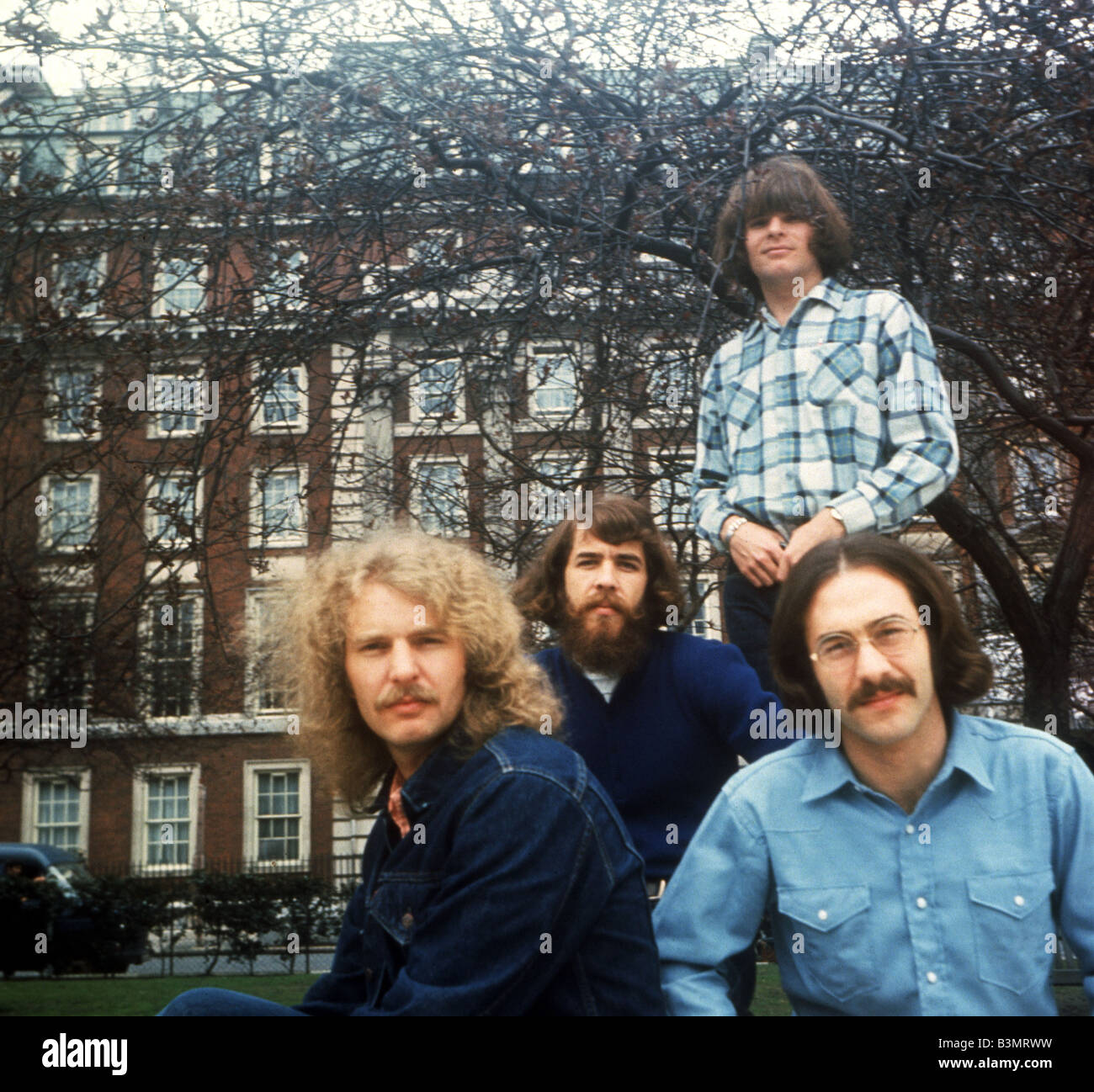
“Hello Mary Lou” is CCR letting their hair down—an old rock ’n’ roll grin in the middle of their final album, like a last dance before the lights come up.
By the time Creedence Clearwater Revival recorded “Hello Mary Lou,” the band was no longer the unstoppable, unified hit machine of 1969–70. The song appears on Mardi Gras—released April 11, 1972—CCR’s seventh and final studio album. It wasn’t issued as a major charting single in the U.S. the way their classics were; instead, it lived as an album cut—side two, track three—a quick, bright cover that almost feels like the band borrowing a little sunshine while the bigger story around them was growing complicated.
That context matters because Mardi Gras itself is famous for being an uneasy ending: internal strain, shifting responsibilities, and the sense of a great run beginning to fray. Yet inside that tension, “Hello Mary Lou” flashes like a postcard from rock’s earlier innocence—two minutes where the world is simpler, the rhythm is king, and the only thing you’re asked to do is smile and move.
The song’s lineage is pure early-’60s American pop craft. “Hello Mary Lou” was written by Gene Pitney and Cayet Mangiaracina. The tune was first recorded by Johnny Duncan in 1960, but it became iconic through Ricky Nelson, who recorded it on March 22, 1961 and released it in May 1961 as the flip side to “Travelin’ Man” (a double A-side situation in practice). Nelson’s version reached No. 9 on Billboard’s pop chart and No. 2 in the UK.
CCR’s choice to cover it is revealing. They didn’t pick an obscure deep-blues relic here—they picked a clean, teen-idol rock ’n’ roll standard, the kind of song that once lived on transistor radios and television sets. And on Mardi Gras, it’s sung by John Fogerty, who also produced the album overall—another reminder that even as band dynamics shifted, Fogerty’s musical instincts still guided the ship.
What does “Hello Mary Lou” mean in CCR’s hands?
On the surface, it’s pure fun—rockabilly bounce, bright guitars, a chorus that’s basically a smile you can sing. But underneath, it functions like a memory of why people fall in love with rock music in the first place. Before the debates, before the egos, before “career arcs” and “eras,” there was simply the pleasure of a beat and a name called out like a dare: Mary Lou. CCR play it with their trademark economy—no fuss, no extra perfume—just a tight groove and that Fogerty vocal that always sounds like it’s leaning forward, urging the band on.
And because this sits on their last album, it also carries an accidental poignancy. It’s not “farewell music” in a lyrical sense, but it can feel like the band tipping their hat to the roots one last time—honoring the simple rock ’n’ roll spark that existed before everything got heavier. Even later reissues and compilations kept the track visible, treating it as part of the CCR canon rather than an expendable curio.
In the end, CCR’s “Hello Mary Lou” isn’t trying to be profound. Its gift is something older and rarer: uncomplicated joy. And sometimes, when a great band is nearing the end, that kind of joy—brief, bright, and perfectly played—feels profound anyway.