
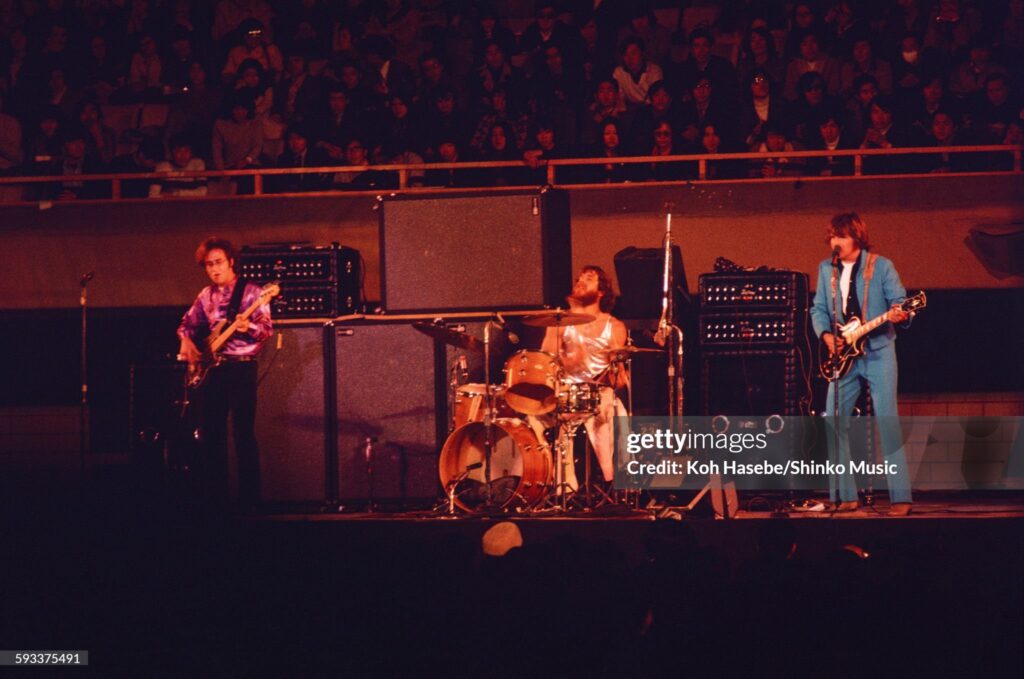
“Lodi” is CCR’s saddest road song—an anthem for anyone who ever chased a dream too far, only to find themselves stranded in the wrong town with no money and no way out.
By the time Creedence Clearwater Revival recorded “Lodi” in March 1969 at Wally Heider Studios in San Francisco, John Fogerty was writing like a man who could sketch an entire life in a few blunt lines. The song didn’t arrive as a proud A-side statement. Instead, it slipped into the world on April 16, 1969, released as the B-side to “Bad Moon Rising” on Fantasy Records—a flip side that many listeners discovered only after the hit had finished spinning and the needle was dropped again.
And yet, that “secondary” placement never matched the song’s emotional force. “Lodi” still managed to chart in the United States, reaching No. 52 on the Billboard Hot 100—not a Top 40 triumph, but enough to prove that a quiet, downcast story could travel far on its own gravity. The parent album, Green River, followed soon after on August 7, 1969, and “Lodi” became one of its most enduring deep cuts—one of those tracks that grows larger than its chart math because people keep living inside it.
What makes “Lodi” hit so hard is how unglamorous it is. The narrator isn’t a rebel hero or a romantic outlaw. He’s a working musician who has landed at the bottom of the circuit—stuck playing bars in Lodi, California, unable to scrape together enough fare to leave. The lyric is a postcard from the moment when ambition turns into exhaustion, when the road stops feeling like freedom and starts feeling like a sentence.
The story behind the title is almost disarmingly simple—and that simplicity is part of CCR’s strange genius. Fogerty later said he had never actually visited Lodi before writing the song; he chose the place name because, the first time he heard it, he thought it was “the coolest sounding name,” and he saved it for the right song. That little detail gives “Lodi” an extra layer of poignancy: the town becomes less a literal map point and more a symbol—anywhere you can get stuck when life doesn’t go the way you swore it would.
Musically, “Lodi” is classic CCR restraint: a steady, almost weary groove; guitars that don’t show off; a vocal that sounds like it’s been up too late too many nights. There’s no big twist, no triumphant bridge—because the song’s emotional truth doesn’t require fireworks. The chorus is the whole bruise: “Oh Lord, stuck in Lodi again.” It’s a line that feels half complaint, half prayer—what you say when you’ve run out of plans and you’re bargaining with the universe for a break.
And if you’ve ever loved anyone who chased the stage—the small-time singer, the weekend guitarist, the friend who swore the next gig would change everything—“Lodi” can feel uncomfortably familiar. It’s not mocking the dream. It’s honoring the cost. In three minutes, Fogerty captures that quiet humiliation no one posts about: sleeping in cheap rooms, counting change, smiling through the set, then stepping outside afterward and realizing you’re still nowhere near home.
That’s why “Lodi” has lasted for decades as more than a B-side curiosity. It’s one of CCR’s most human songs: not about apocalypse (“Bad Moon Rising”) or mythic rivers (“Proud Mary”), but about the small, heavy reality that sometimes the dream doesn’t break you with drama—sometimes it just wears you down one mile at a time.
So even if its official peak was No. 52, “Lodi” ranks much higher in the private charts people carry inside them—the ones measured in late-night drives, in old regrets, in the soft ache of remembering how far you once believed you could go.