
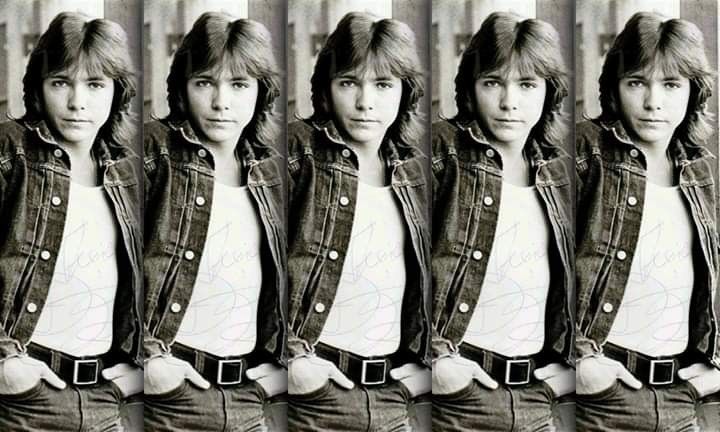
“Crazy Love” is the sound of David Cassidy stepping away from the teen-idol glare and into something warmer, older, and more human—where love isn’t a poster on a wall, but a need that won’t stop calling your name.
Here are the solid facts first. “Crazy Love” (as performed by David Cassidy) appears on his album Classic Songs, released February 27, 1996. The song’s composer and lyric writer is Rusty Young. This track was not issued as a major chart single in Cassidy’s 1990s catalogue, so it doesn’t have a meaningful “debut chart position” the way his early-1970s hits did.
But the song has a famous earlier life—one that adds a rich shadow behind Cassidy’s reading. Rusty Young originally wrote and recorded “Crazy Love” with Poco, and Poco’s version became a major 1979 hit, peaking at No. 17 on the Billboard Hot 100 and reaching No. 1 on Billboard’s Adult Contemporary chart (where Billboard ranked it the #1 AC song of 1979).
That’s the spine of the story. Now comes the heart of it.
When David Cassidy sings “Crazy Love” in 1996, you’re not just hearing a cover—you’re hearing a man with decades behind him choosing a song whose emotion isn’t flashy, but persistent. Poco’s original had that soft-rock ease, a California-sunlight tenderness. Cassidy keeps the yearning, but the feeling changes temperature. With him, the plea feels closer to the skin—less “smooth radio romance,” more late-night honesty. The opening lines alone set the tone like a confession you didn’t plan to make out loud: “Woman, don’t leave me here alone / Don’t let this lover love alone…” There’s no cleverness in that language—just need. And need, sung plainly, can be devastating.
Classic Songs itself frames the performance in a quietly meaningful way. By title and track selection, it’s a record that looks backward—revisiting well-known corners of Cassidy’s past while also making room for songs like “Crazy Love” that speak to endurance rather than innocence. The album places it among familiar names and melodies (including “I Think I Love You”) but “Crazy Love” stands apart because it doesn’t trade on nostalgia as a gimmick. It trades on something deeper: the recognition that love can still make us feel helpless, even after we’ve learned how to look composed.
And there’s something quietly poignant about Cassidy choosing a song written by Rusty Young—a songwriter associated with the mellow, steady ache of country rock—because it suits the way Cassidy’s voice matured. The best adult performances aren’t about vocal acrobatics. They’re about believability. In this lyric, love is described as a force that “calls” and “haunts.” That word—haunts—isn’t teenage language. It belongs to grown-up nights, to memories that revisit you when the day is finally quiet.
If you listen closely, the emotional message of “Crazy Love” isn’t “love is fun.” It’s “love has weight.” It’s the kind of weight that keeps you from leaving a room unchanged. And that’s where the title becomes almost ironic—because “crazy” here isn’t reckless joy. It’s the unsettling truth that attachment can feel like something outside your control. You don’t simply choose it; you find yourself living inside it.
So, what does David Cassidy’s “Crazy Love” mean, ultimately? It’s a portrait of longing without glamour—an admission that the bravest thing a person can do sometimes is ask, simply, not to be left alone. It’s Cassidy in a more reflective frame: not trying to relive the scream-filled days, but offering something quieter and more lasting—one of those songs you play not to relight the past, but to sit with the feelings that the past taught you how to name.