
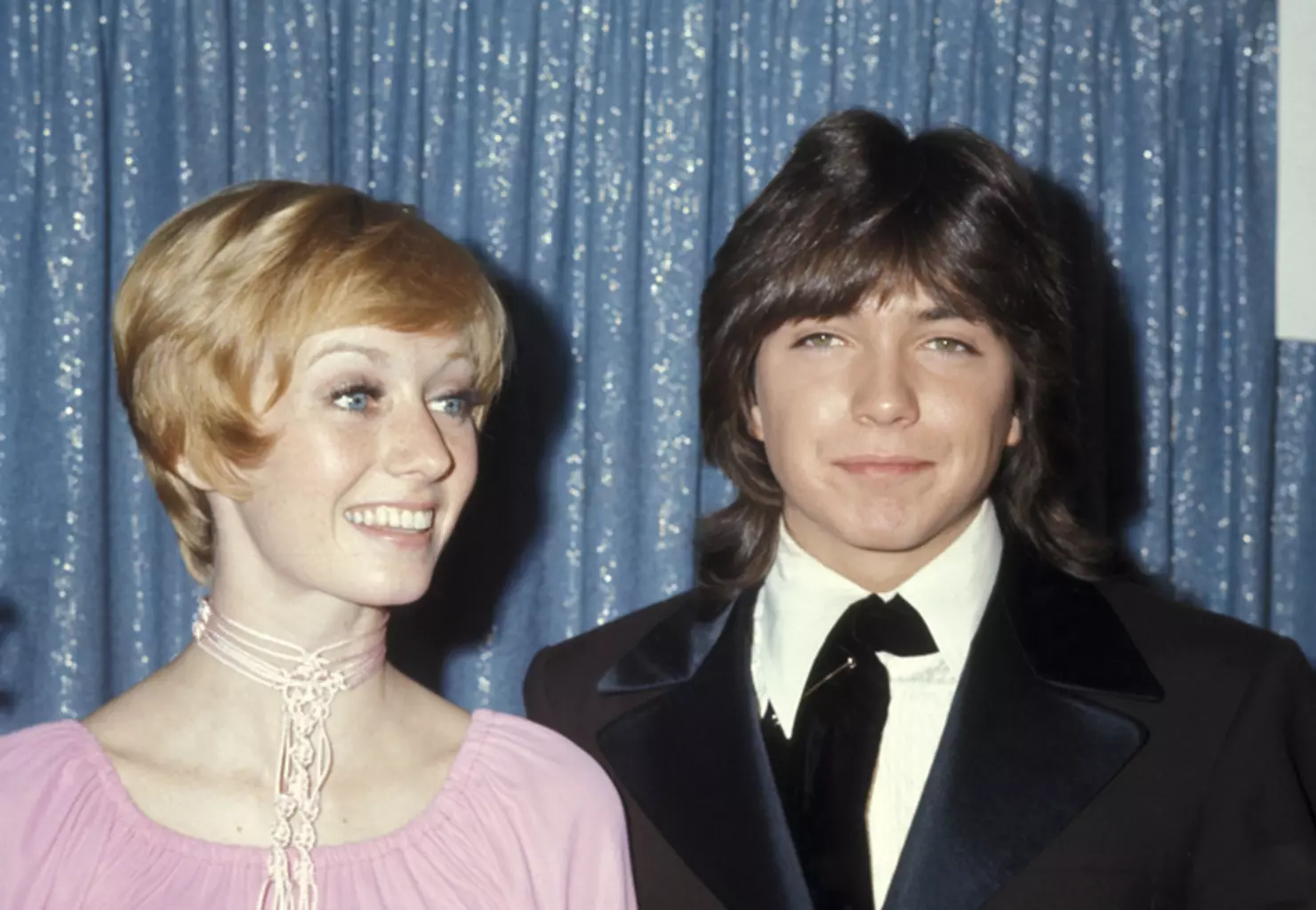
“For What It’s Worth” becomes, in David Cassidy’s live hands, less a protest slogan and more a personal reckoning—one voice trying to steady itself while the world keeps making noise.
Start with the facts that matter most. “For What It’s Worth (Stop, Hey What’s That Sound)” was written by Stephen Stills and first made famous by Buffalo Springfield, released as a single in December 1966, and it climbed to No. 7 on the U.S. Billboard Hot 100 in 1967. David Cassidy later recorded an extended live version for his 1974 concert album Cassidy Live!, where the track appears with a running time of 5:36. That album—recorded live in Britain and produced by Cassidy and Barry Ainsworth—peaked at No. 9 on the UK Albums Chart.
Now the feeling—the reason anyone returns to this performance when the years have piled up.
A song like “For What It’s Worth” is often treated like a document: a snapshot of the 1960s, a shorthand for unrest, a melody you recognize before you’ve even decided whether you want to remember what it’s about. But in David Cassidy’s version—especially in the live setting of Cassidy Live!—it stops being a headline and starts being a human voice in real time. And that shift is everything.
Because by 1974, Cassidy was living inside a kind of cultural weather of his own. The screaming crowds were not a metaphor; they were the environment. Cassidy Live! is described as capturing the “mass hysteria” that surrounded his performances, and even if you never heard a single shriek, you can sense what that would do to a person standing at the center of it—how it could make you grateful and lonely at the same time. So when he chooses “For What It’s Worth,” he isn’t merely borrowing a classic. He’s picking a song that already knows what it means to be watched, misunderstood, and surrounded by a crowd that feels like a wave.
The original recording is famous for its cool restraint—an almost conversational warning: stop, listen, look around, something is happening and we should be honest about it. Cassidy stretches that mood into something more dramatic, not by shouting, but by taking time. The fact that his live rendition is extended matters; it gives the lyric room to breathe, and it gives the audience room to settle—if only briefly—into listening rather than screaming.
And there’s a subtle irony that makes the performance quietly poignant. The song has long been associated in popular memory with Vietnam-era protest, even though its origins were tied to a specific real-life confrontation on Los Angeles’ Sunset Strip—history turning an event into a symbol, a symbol into a shorthand. Cassidy, too, was often turned into shorthand: the pretty face, the teen idol, the poster on a wall—easy to summarize, harder to truly know. When he sings “For What It’s Worth” in front of a roaring room, it can feel like he’s asking for the same thing the song asks of society: look again. listen again. don’t reduce me to noise.
The beauty of Cassidy Live! is that it preserves that tension instead of hiding it. It’s a record made in public, shaped by public emotion, yet it contains private moments—small pockets where a singer tries to steer the night toward something more lasting than adrenaline. In that light, “For What It’s Worth” becomes less about a single decade’s unrest and more about the timeless sensation of standing in the middle of confusion, trying to name what you feel before it slips away.
So if you play David Cassidy’s “For What It’s Worth” today, don’t treat it like a curiosity. Hear it as a meeting point: a famous song about social unease, sung by a man who knew what it was to be adored loudly and understood quietly. And in that meeting, the old warning becomes strangely tender—an invitation to pause, to listen, and to notice that sometimes the truest “sound” in the room is the one that’s almost drowned out.