
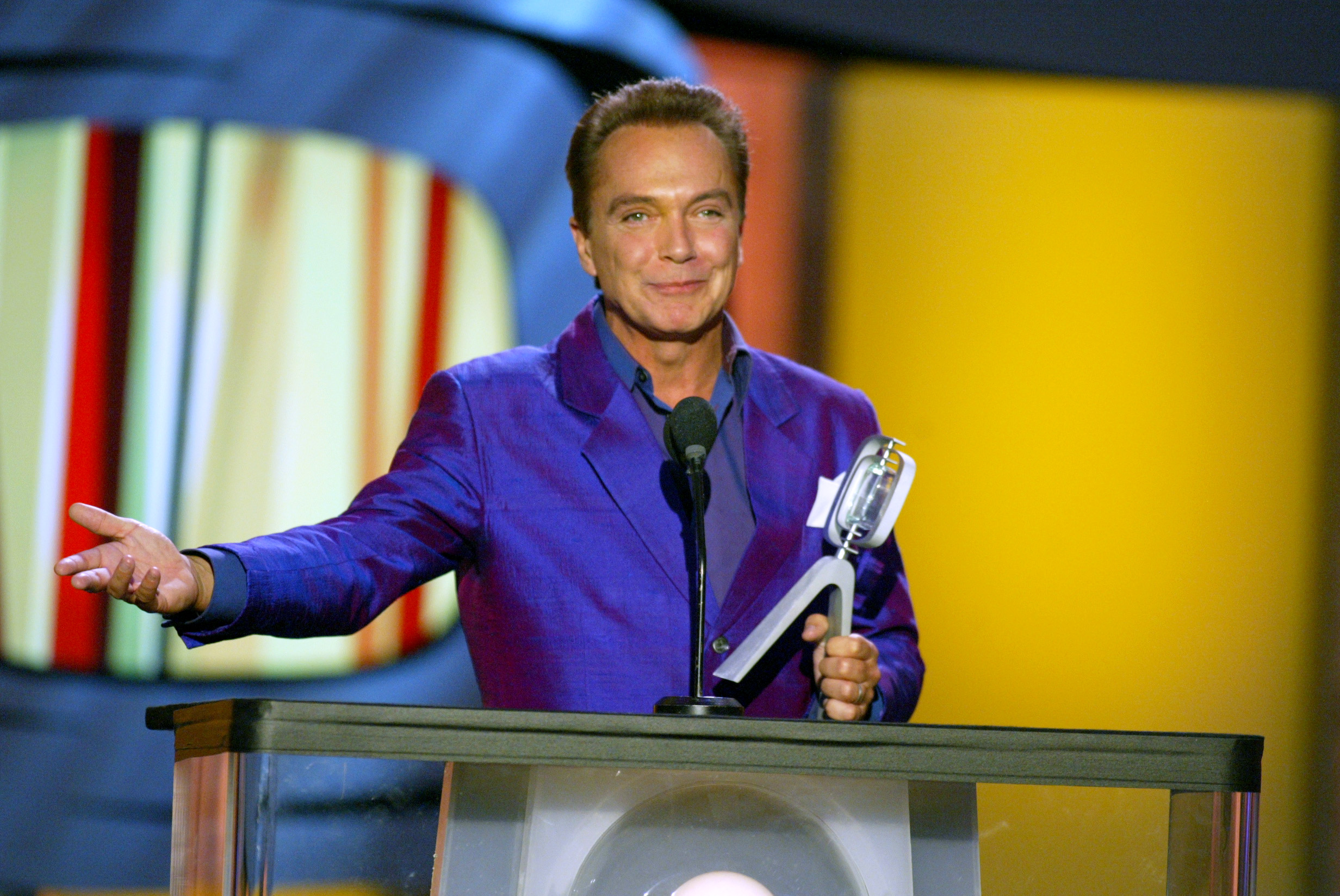
“Sweetness” is David Cassidy’s secret-door song—a glimpse of the artist he wanted to become, hiding in the vaults behind the teen-idol spotlight.
He wrote “Sweetness” himself, and that alone makes it feel like a small, personal flare in his catalog—because so much of early Cassidy was shaped by the machinery around The Partridge Family, the hit factory precision, the controlled image. The discography notes describe “Sweetness” (1971) as a demo Cassidy recorded that producer Wes Farrell rejected for use with the Partridge Family. The song didn’t have a “debut ranking,” because it wasn’t commercially released to radio in the era when it was recorded—no chart climb, no week-by-week proof. Its story is the quieter kind: the way a song can sit in a drawer for years, then suddenly matter more precisely because it wasn’t worn out by airplay.
That later life begins in 1998, when the track finally appeared on David Cassidy’s Partridge Family Favorites—a limited-release CD on Slamajama (812-2) that lists “Sweetness” as track 11 (followed by another unreleased demo, “Mystical Lady”). A collector-oriented write-up of the disc explains why this disc became so prized: it was sold via QVC, curated by Cassidy himself, and its real “draw” for longtime listeners was the inclusion of rare vault material—specifically naming “Sweetness” and “Mystical Lady” among the demos.
And that’s where the emotion begins to deepen. Because “Sweetness” isn’t just “a rarity.” It’s a document of ambition.
In the early ’70s, Cassidy’s voice was everywhere—bright, anxious, yearning, that unmistakable tremble of a young man who could sell innocence and dread in the same breath. But behind the magazine covers and the stadium hysteria was a musician who wanted more agency than the role allowed. A demo like “Sweetness” suggests a Cassidy leaning forward—trying on a tougher pulse, a more streetlit mood, something less “family TV” and more private and bodily. Even the way the song is remembered by fans—its urgency, its heat—carries the feel of someone writing from the inside of youth rather than performing youth as a product.
That is the meaning of the song’s title, too: sweetness isn’t merely sugar here. It’s temptation. It’s immediacy. It’s the particular kind of longing that makes you lock the door and turn the night into a promise—half romance, half escape. (A fan discography page summarizes the lyric opening and credits the song as “Written by David Cassidy,” reinforcing that this was his voice in more than one sense.)
You can also hear, in the very fact of its rejection, how narrow the Partridge “frame” could be. Wes Farrell was building a brand—clean, saleable, repeatable. A self-written Cassidy demo that leaned too sensual, too restless, too much like a young man wanting to outrun his own image—maybe it simply didn’t fit the family-hour silhouette. That doesn’t make the song lesser. It makes it revealing. It becomes a small map of the tension that followed Cassidy for years: the gap between the adored public figure and the complicated artist inside him.
So when “Sweetness” finally surfaced on that 1998 compilation, it arrived like an old photograph you didn’t know existed—proof that the person you remember was always more layered than the headlines suggested. There’s a particular kind of nostalgia in that discovery: not nostalgia for “the way it was,” but for the way possibility once felt—raw, unfinished, still choosing its shape.
In the end, David Cassidy’s “Sweetness” is precious because it isn’t polished into mythology. It’s a glimpse of the man in the workshop, not the man on the poster—still writing, still reaching, still trying to sound like his own truth. And that kind of song, even when it hides for decades, has a way of finding you exactly when you’re ready to hear it.