
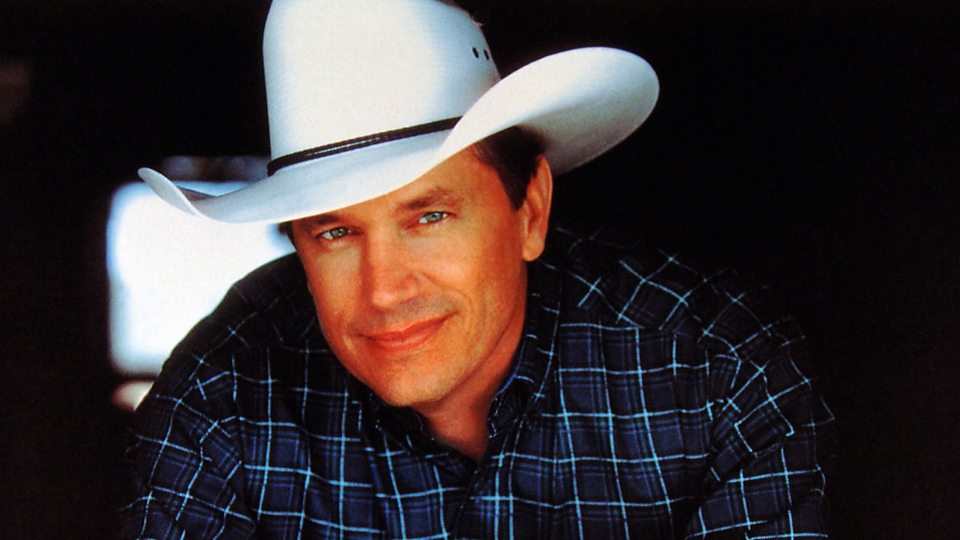
The Quiet Reckoning Between Love and Freedom on the Open Road
When George Strait released “I Can Still Make Cheyenne” in 1996, as part of his acclaimed album Blue Clear Sky, the song immediately resonated with audiences who recognized in it the aching solitude and stoic pride that lie at the heart of the cowboy’s spirit. The single reached the Top 5 on the Billboard Hot Country Singles & Tracks chart, a testament to Strait’s continued dominance in the decade that had seen him become one of country music’s most steadfast traditionalists. Yet beyond its commercial success, this song carved a deeper mark—serving as a quiet elegy for the choices made by those who love the road more than the comfort of staying still.
“I Can Still Make Cheyenne” unfolds like a short story whispered from the cab of a pickup under a wide, indifferent sky. The narrative follows a rodeo cowboy who, after learning that the woman he loves has moved on, chooses not to plead or linger in heartbreak. Instead, he turns back toward the only life he knows—the circuit, the miles, the restless chase of another ride in another town. There is no dramatic confrontation, no grand romantic gesture. Just a phone call, a few words exchanged, and the humbling realization that love and freedom rarely coexist for long. Strait sings it with quiet restraint, his voice carrying that unmistakable blend of resolve and regret that made him the defining interpreter of modern western masculinity.
Musically, the song is a masterclass in understatement. The arrangement is sparse and patient, built on the steady pulse of acoustic guitar and fiddle, allowing every word to linger like dust in the fading light. The production—helmed by Tony Brown—keeps everything intimate and unadorned, framing Strait’s vocal as if it were a lone figure against the horizon. There’s a timelessness here, a refusal to chase trends or embellish emotion. That restraint is its power. It reflects the inner code of the cowboy himself: say little, feel deeply, keep moving.
Lyrically, “I Can Still Make Cheyenne” captures the eternal conflict between love and vocation, between tenderness and pride. The cowboy’s decision to turn back toward Cheyenne—symbolic heart of the rodeo world—represents not just a physical journey, but a return to identity. The woman he leaves behind embodies domestic stability, emotional intimacy; the road offers uncertainty but also purpose. Strait’s performance never judges his protagonist—it simply bears witness to the quiet dignity of his choice and the loneliness it ensures.
In the larger arc of Strait’s career, the song stands as one of his most emotionally nuanced pieces. It distills everything that makes him the keeper of the country tradition: economy of language, melodic purity, and an instinct for truths that lie beyond sentimentality. “I Can Still Make Cheyenne” is more than a heartbreak ballad—it is a meditation on the cost of freedom, a reminder that sometimes the horizon calls louder than any human voice.