
A Lament for Lost Authenticity in the Heart of Country Music
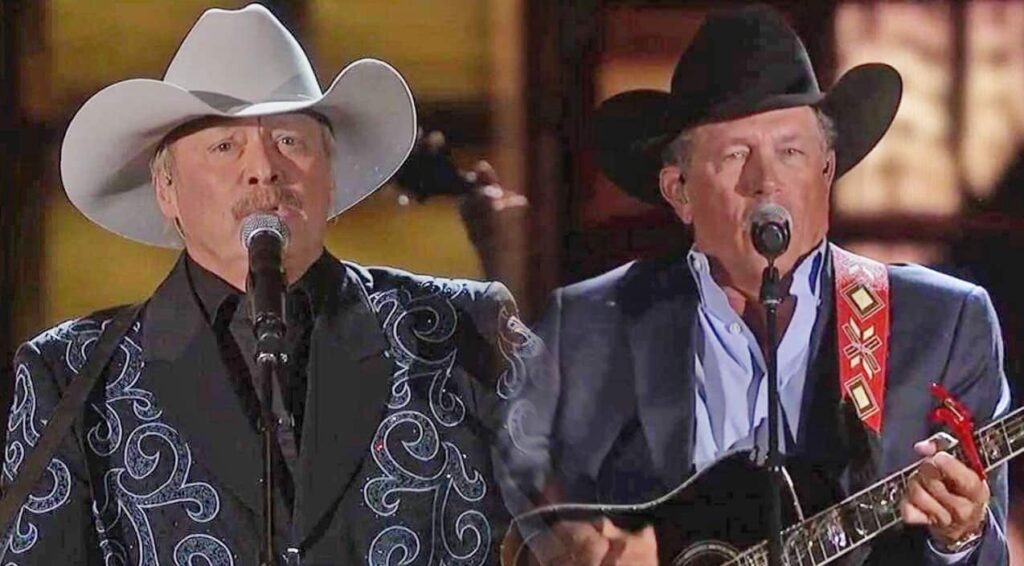
When Alan Jackson and George Strait joined forces to record “Murder on Music Row,” released in 2000 as part of Strait’s compilation album Latest Greatest Straitest Hits, the song struck a raw, resonant chord with country purists. Though it was never issued as a commercial single, it nevertheless climbed to No. 38 on Billboard’s Hot Country Songs chart through unsolicited airplay alone—an impressive feat that revealed the fervor of its reception among fans who still clung to the traditions of twang and storytelling. The song went on to win both the Country Music Association’s Vocal Event of the Year and Song of the Year awards in 2000, affirming that its message—however incendiary—spoke directly to the heart of a genre wrestling with its own identity.
At its core, “Murder on Music Row” is less a song than a eulogy. Written by Larry Cordle and Larry Shell, it paints a chilling metaphor: the “murder” of real country music at the hands of commercialism and pop crossover ambition. In their duet, Jackson and Strait—two pillars of neotraditionalist country—deliver not only a haunting indictment but also a deeply emotional confession. They sing as witnesses to an artistic crime scene, mourning the loss of fiddles and steel guitars to synthetic polish and market-driven formulas. The collaboration itself is symbolic; these were not rebellious newcomers railing against the establishment but two of Nashville’s most respected craftsmen daring to speak uncomfortable truths from within the industry walls.
The power of “Murder on Music Row” lies in its simplicity. Musically, it stands as an act of defiance—built upon pure, uncluttered instrumentation that harks back to the genre’s roots: acoustic guitar strums that echo through open space, gentle pedal steel weeping like an elegy for tradition. There are no lush string sections or glossy production tricks here; every note is deliberate, measured, and unapologetically rural. Jackson and Strait trade verses with quiet conviction, their voices intertwining like two generations united in grief and pride. It is as though they are standing shoulder to shoulder at a graveside, tipping their hats not only to what has been lost but also to what endures.
Culturally, the song crystallized a pivotal moment in country music’s evolution. The late 1990s saw Nashville increasingly courting pop audiences, smoothing away the genre’s rough edges in pursuit of mainstream appeal. In this climate, “Murder on Music Row” became both protest and prophecy—a reminder that even as trends shift, there remains an audience hungry for authenticity, for songs that tell real stories about ordinary lives and emotional truths. Jackson and Strait gave voice to that yearning without bitterness, channeling instead a mournful reverence for lineage.
More than two decades later, “Murder on Music Row” still resonates as both warning and benediction. It captures an eternal tension in American music: between art and commerce, between heritage and reinvention. For those who listen closely, it remains not just an accusation but an invitation—to remember where country came from, and to preserve what makes it human.