
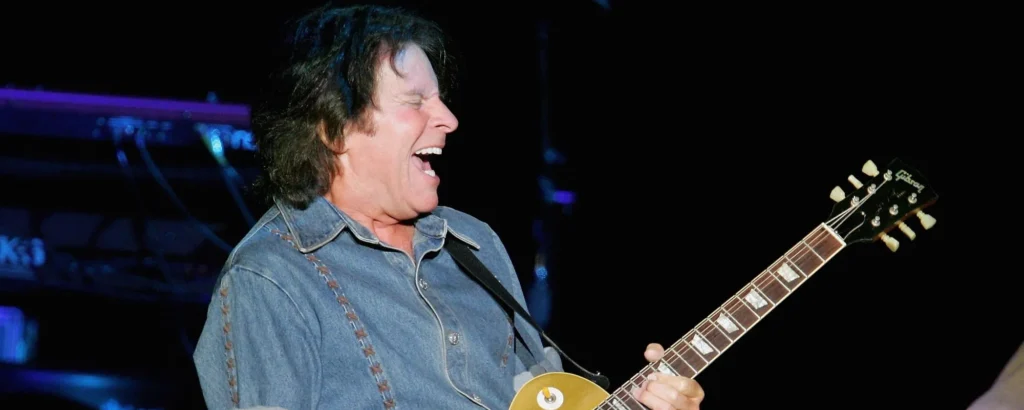
A heart that keeps “falling” isn’t always weak—sometimes it’s simply alive, still willing to be moved when the calendar says it should have learned to stand still.
The important truth about “Fallin’, Fallin’, Fallin’” in John Fogerty’s catalog is that it isn’t one of his self-written declarations of swamp-rock destiny. It’s something more tender, and in its own way more revealing: a 1950s country lament, first recorded by Ray Price, written by Bud Deckelman, Joe Guillot, and J.D. Miller. Fogerty revived it decades later as Track 10 on The Blue Ridge Rangers Rides Again, released September 1, 2009—though some release listings note August 31, 2009, depending on catalog/territory.
That album detail matters because it tells you what kind of “chart life” this song had. “Fallin’, Fallin’, Fallin’” wasn’t launched as a hit single meant to climb week by week. Instead, it rode in on the album’s momentum—an album that reached No. 24 on the Billboard 200. In other words, if you found this performance, you likely found it the best way: not because the world insisted you hear it, but because you went looking for a quieter room in Fogerty’s house.
And what a room it is.
The Blue Ridge Rangers was the original idea back in 1973: Fogerty stepping away from the storm of Creedence Clearwater Revival lore and into older American songs—country, gospel, rockabilly—music that smells faintly of wooden porches and late radio. The 2009 sequel carries that same spirit, recorded beginning in October 2008 at Village Recorders and related studios, with Fogerty producing. The cast around him includes roots-minded players like Buddy Miller and Greg Leisz, and the album even hosts larger spotlights—like Bruce Springsteen elsewhere on the track list—yet “Fallin’, Fallin’, Fallin’” remains a small lamp in the corner, burning steadily.
The lyric is disarmingly plain: a heart breaking, tears falling, eyes burning—grief expressed in household objects, the way real sorrow tends to speak when it’s too tired for poetry. And that’s exactly why it works. Country music at its most durable doesn’t decorate pain; it names it, then leaves you alone with it long enough to recognize your own reflection.
Fogerty, famously a writer of vivid American scenes, doesn’t try to repaint this song into one of his cinematic road stories. He honors its original shape. He sings it like a man who understands that longing doesn’t always arrive as drama—sometimes it’s just repetition, the same thought returning as faithfully as a winter ache: fallin’, fallin’, fallin’. There’s a humility in that choice. For an artist whose voice once sounded like it could command storms, it’s quietly moving to hear him surrender to a song that only asks him to confess.
And if you’ve lived long enough to know how memory behaves, you’ll recognize the deeper meaning hidden in that simple hook: “falling” is what we do when we’re caught between what we want to be over and what we are not over at all. The holidays do it. Old photographs do it. A certain streetlight at dusk does it. A melody from another era does it—one you didn’t even know you were carrying until it starts playing and, suddenly, you’re back in the emotional weather of a different year.
That’s the gift of “Fallin’, Fallin’, Fallin’” in Fogerty’s hands. It’s not there to reinvent him. It’s there to remind you that behind all the legend—behind the riffs, the anthems, the American shorthand—there is still a singer who can stand in front of a very old country song and let it say what it has always said: that love can leave, and the heart, stubbornly human, can still keep reaching after it.