
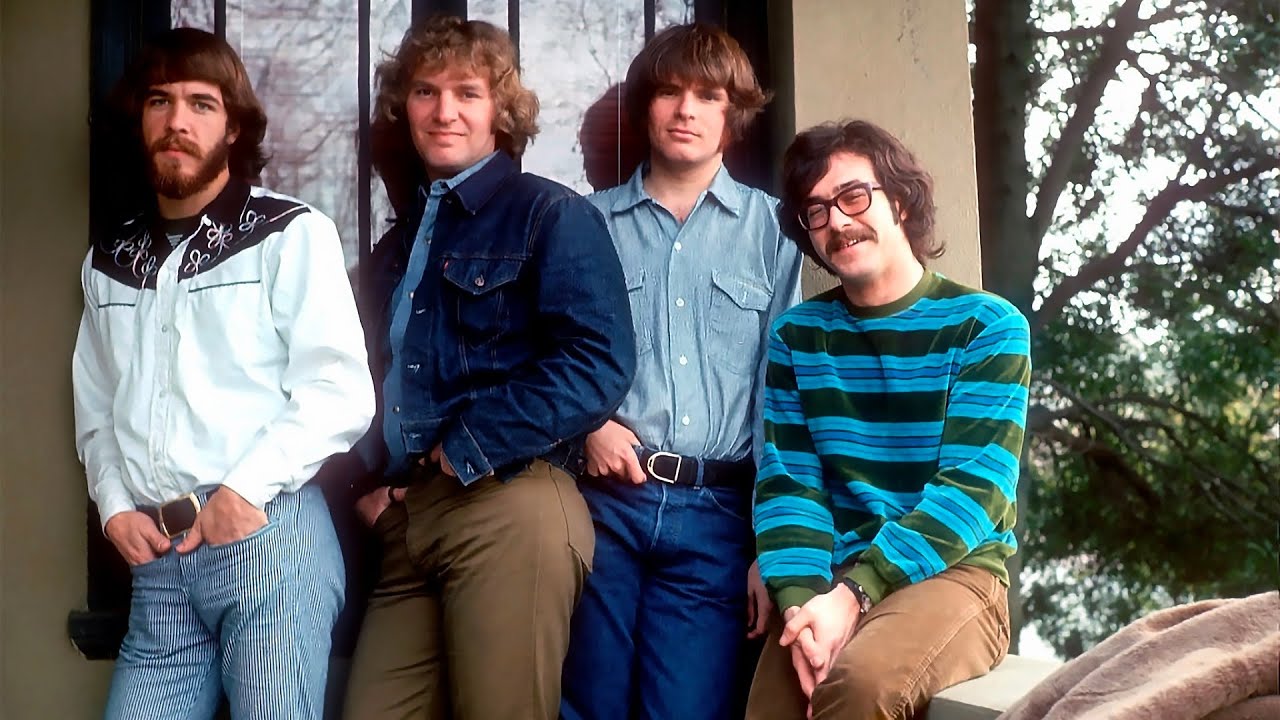
Side O’ the Road carries the quiet ache of being just outside the spotlight—an image of motion, distance, and the lonely edge of the American journey that always lived inside Creedence Clearwater Revival‘s music.
Some songs arrive with chart triumph, endless radio spins, and a place already waiting for them in popular memory. Others live a little farther out, where the pavement narrows and the feeling gets deeper. Creedence Clearwater Revival‘s Side O’ the Road belongs to that second category. It is not remembered as one of the band’s towering Billboard Hot 100 landmarks, and there is no major chart peak commonly attached to it in the way fans can instantly recite for Proud Mary, Bad Moon Rising, or Have You Ever Seen the Rain. In a strange way, that is the beginning of its meaning. This is a title—and a mood—that seems to stand exactly where its name suggests: off to the edge, away from the parade, somewhere dustier, quieter, and more human.
That roadside feeling fits CCR almost perfectly. Few American bands ever captured movement the way they did. Their songs were filled with rivers, trains, back roads, bayous, storms, and small-town horizons. Even though the group came from El Cerrito, California, they created one of the most convincing musical landscapes in rock history, a world that felt humid, restless, and unmistakably American. In that larger universe, Side O’ the Road sounds less like a grand statement than a glance out the window at dusk—a song shaped by the same instinct that made so many of the band’s records feel both tough and tender at once.
The story behind a lesser-known song like this is often different from the stories attached to famous singles. There is no single overplayed radio myth to lean on, no familiar awards narrative to repeat. Instead, what matters is placement: where the song sits in the emotional map of the band. If you came to Creedence Clearwater Revival through the colossal hits, Side O’ the Road can feel like discovering a faded photograph tucked inside an old record sleeve. It does not announce itself with the explosive urgency of Fortunate Son or the singalong brightness of Down on the Corner. It draws you in more slowly, through atmosphere, implication, and the old rock-and-roll gift of making ordinary places feel permanent.
That is why the title matters so much. The side of the road is where people stop to think. It is where travelers pause, where plans change, where confidence gives way to reflection. In the language of American songwriting, it can mean being stranded, being overlooked, being set free, or simply taking in the silence after the engine goes quiet. Heard through the lens of CCR, that image gains extra resonance. This was a band that always understood the pull between motion and burden, between getting away and carrying the past with you anyway. Side O’ the Road suggests a place just beyond the center line of life, where the noise fades and the truth gets a little easier to hear.
Musically, that mood is exactly what makes deep catalog songs endure. They are not always the tracks that ruled the jukebox. They are the ones that return later, after years have done their work, when listeners no longer need only excitement from a record—they want recognition, texture, and memory. Side O’ the Road feels like that kind of song. It lives in the same emotional territory as the quieter, more reflective corners of the Creedence Clearwater Revival legacy, where road imagery is never just scenery. It becomes a way of talking about time itself.
And that may be the real meaning behind it. Not rebellion in the loud, headline-making sense, but endurance. Not the middle of the highway, but the place where a person gathers themselves before moving on. There is something deeply moving about songs that do not arrive as monuments. They arrive as companions. Side O’ the Road has that companion quality. It feels less like performance and more like presence, less like spectacle and more like a moment shared with the passing landscape.
For listeners who have spent years with CCR, that kind of song can become surprisingly powerful. The famous records give you the rush of recognition. The overlooked ones give you the echo. And echoes can last longer than applause. That is why Side O’ the Road, despite its modest place in the public story, still carries emotional weight. It reminds us that Creedence Clearwater Revival was never only about hits. They were about atmosphere, place, and the old mystery of why certain songs seem to know the road before we do.
So if this title has remained at the edge of the conversation, perhaps that is exactly where it was meant to live. Some songs are built for the center of the room. Others wait at the shoulder of the highway, where the light is softer and the memory runs deeper. Side O’ the Road belongs to that second tradition, and that is why it still lingers like evening air after the car door closes.