
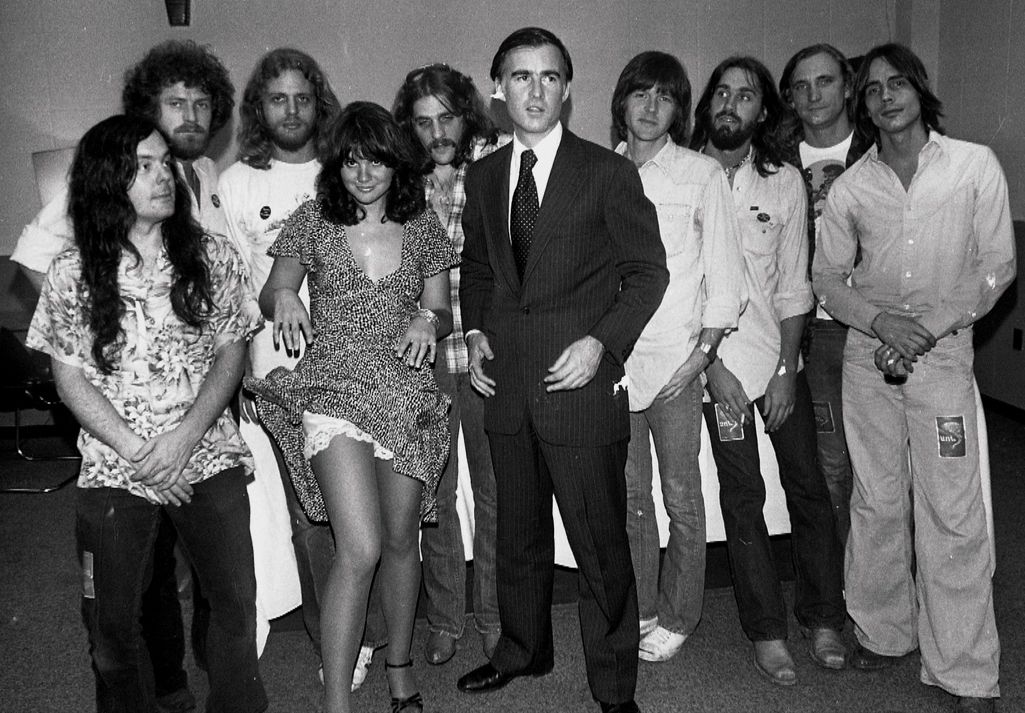
“Don’t Cry Now” is Linda Ronstadt’s hand on the shoulder after a hard turn of fate—an adult kind of comfort that doesn’t deny the bruise, but asks you to keep walking anyway.
Right at the heart of the matter: “Don’t Cry Now” is the title track of Linda Ronstadt’s 1973 album Don’t Cry Now—her first release for Asylum Records, issued October 1, 1973. The song itself was not released as a major charting single, so its “chart position at debut” is best understood through the album’s public arrival: Don’t Cry Now entered the Billboard 200 with a debut at No. 177 (chart date: October 20, 1973), and eventually climbed to a peak of No. 45. In other words, the song’s first footprint in the world wasn’t a flashbulb moment—it was a slow, steady opening of doors, week after week, the way trust returns.
That quiet rise suits the character of “Don’t Cry Now.” It isn’t built to win the room with a chorus you can shout. It’s built to sit beside you. The writing credit matters here: “Don’t Cry Now” was written by J.D. Souther—a key figure in the Southern California songwriter circle that fed so much of the era’s country-rock storytelling. And the production story places the song inside a decisive chapter of Ronstadt’s life: much of the album was co-produced by John David (J.D.) Souther and John Boylan, with Peter Asher also producing select tracks—an early sign of the collaborative seriousness that would soon elevate Ronstadt from cult admiration to full-on mainstream inevitability.
If you’ve ever wondered why Ronstadt’s early-’70s work still feels alive—not “vintage,” but present—it’s because she didn’t sing these songs as museum pieces. She sang them as if the ink were still wet. On “Don’t Cry Now,” that approach turns a simple premise into something almost physical: the lyric speaks to someone who’s been knocked around—by money, by pride, by the kind of loyalty that costs you more than you wanted to pay. (It’s one of those songs that recognizes how the world can drain you, and still refuses to let you become bitter.) You can hear Ronstadt’s special gift in how she handles that emotional terrain: she doesn’t perform sympathy—she inhabits it. The comfort she offers isn’t sugary. It’s earned.
Musically, the track sits in that sweet spot where country-rock and singer-songwriter sensibility overlap: grounded rhythm, warm instrumentation, and enough space around the vocal for every breath to count. This is the Los Angeles sound before it hardened into cliché—still porous, still mixing folk intimacy with rock confidence. That’s part of what made Don’t Cry Now feel like a turning point: Ronstadt had moved to a label that was quickly becoming a home for the era’s writerly pop—Asylum, the scene’s nerve center—and she arrived not as a passive interpreter, but as an artist assembling a world.
It’s also telling that contemporary critics heard something “classic” in her voice even then. Reviews at the time praised the album’s reflective freshness and singled out the authority of her singing—comparisons that framed her as more than a promising vocalist, but as someone able to carry emotional truth without melodrama. That’s exactly what “Don’t Cry Now” requires. The lyric could easily tip into self-help slogans in the wrong hands. Ronstadt keeps it human. She sings like someone who has watched the room go quiet after bad news, and knows the dignity of not making a spectacle of pain.
And then there’s the deeper, almost philosophical undercurrent: “Don’t Cry Now” isn’t merely saying “cheer up.” It’s asking for endurance—the kind that comes after the initial shock, when you realize there’s still a tomorrow to live through. The song’s emotional center is a paradox Ronstadt understood instinctively: sometimes the most loving thing you can offer isn’t reassurance that everything will be fine, but faith that a person can survive even if it isn’t. That’s why the title lands the way it does. It’s not a command. It’s a companion’s voice—close enough that you can hear the concern, steady enough that you can borrow some strength from it.
Placed within Don’t Cry Now, the track also feels like a signpost pointing toward what was coming. Within a year, Ronstadt would reach a new commercial height with Heart Like a Wheel, but the emotional architecture—this balance of toughness and tenderness—was already here. When you return to “Don’t Cry Now” today, you don’t just hear an early chapter; you hear the blueprint of her artistry: take a well-written song, strip away the unnecessary show, and sing it as if it matters to someone’s real life.
That may be the song’s lasting meaning: a reminder that grief doesn’t need an audience, and healing doesn’t need a speech. Sometimes it just needs a voice—Linda Ronstadt’s voice—saying, softly but firmly, that you can keep going.