
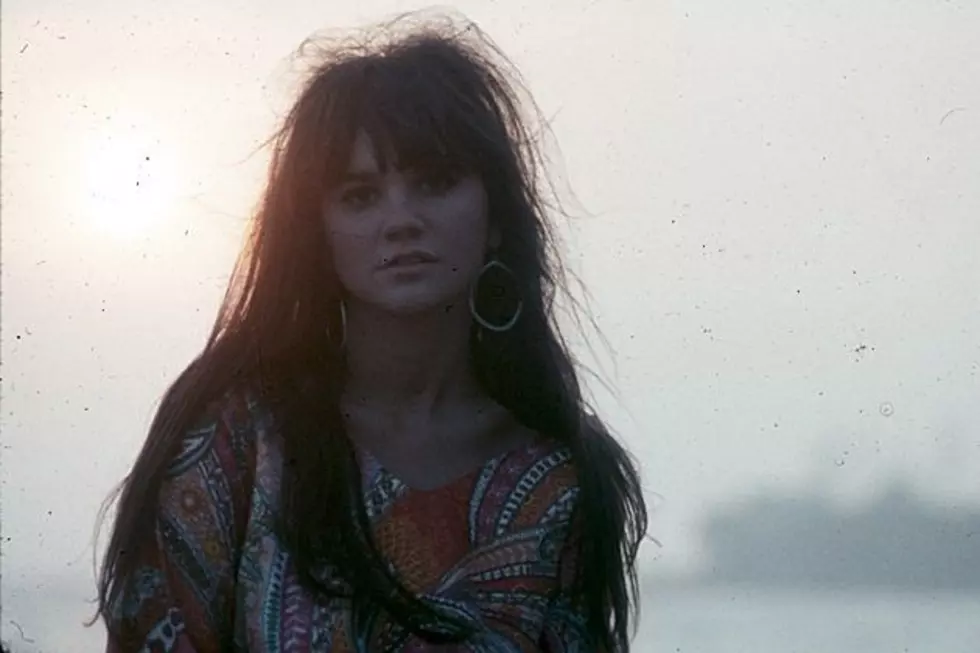
“River” is a Christmas song that refuses the tinsel—an intimate winter confession where the brightest sleigh-bell melody hides a wish to disappear and start over.
Linda Ronstadt recorded “River” (written by Joni Mitchell) as track 5 on her holiday album A Merry Little Christmas, released October 17, 2000—and she sings it as if the season’s lights only make loneliness more visible. The album’s chart “arrival” was modest but real: Billboard later noted it peaked at No. 179 on the Billboard 200 in December 2000. Ronstadt’s version of “River” runs 4:10 on the album, placed right after familiar standards—almost like a door opening from carols into confession.
To understand why this cover hits so hard, you have to remember where the song was born. Joni Mitchell first released “River” in June 1971 on Blue, her landmark album released June 22, 1971. Mitchell never issued “River” as a single, yet it became a standard anyway—one of those songs that quietly outgrows marketing and starts traveling by word of mouth, by winter weather, by heartache. The lyric sits near Christmas, but it’s not about Christmas in the greeting-card sense; it’s a breakup song with snow on its shoulders—“set near Christmas time,” as the song’s background summaries often put it. And in one stroke of musical genius, Mitchell lets the piano accompaniment borrow heavily from the tune of “Jingle Bells,” turning the most public, cheerful little motif into the private soundtrack of regret.
That’s the first reason Ronstadt’s “River” works: she doesn’t “holiday-ify” it. She respects its original contradiction. A song can carry sleigh bells in its bones and still be devastated. In fact, that’s the point. Sometimes the season of togetherness is when you feel absence most sharply—when every store window and every family table seems to underline what’s missing.
The second reason is placement and intent. Ronstadt once spoke about wanting A Merry Little Christmas organized with a sense of history—moving “from ancient and went to modern”—and “River” is a crucial bridge in that plan: a modern standard that already feels timeless. It’s not a hymn, not a carol, not a chestnut roasting on an open fire. It’s something rarer: a winter song for adults who know that joy and sorrow often arrive in the same envelope.
And then there’s Ronstadt herself. By 2000 she had already proved—again and again—that she could step into almost any tradition and make it sound like her native language: country, rock, pop, mariachi, the Great American Songbook. So when she sings “River,” you don’t hear an artist trying on Joni Mitchell like a costume. You hear one great interpreter recognizing another great writer. She approaches the lyric with a kind of plainspoken dignity—no melodrama, no vocal fireworks to distract you from the ache. The pain is already written into the song’s central wish: I wish I had a river I could skate away on.
What makes that wish so haunting is how human it is. It’s not revenge. It’s not even reconciliation. It’s the desire to escape yourself—the version of you that said the wrong thing, did the wrong thing, watched something precious fracture and couldn’t reverse time. “River” understands that regret doesn’t always roar; sometimes it simply repeats, quietly, while the world keeps playing carols.
In Ronstadt’s performance, you can feel that repetition like breath on cold air. The melody keeps its graceful movement, but the emotional temperature stays low—winter-blue, clear-eyed. The “Jingle Bells” echo becomes almost cruel: the sound of celebration drifting in from another room while you sit with the consequences of your own choices.
That’s why “River” has become such a beloved outlier on Christmas albums: it tells the truth that many holiday songs avoid. The season doesn’t only bring comfort. It brings memory. It brings accounting. And sometimes it brings the realization that the person you miss might not return—so all you can do is name the feeling honestly, and let the song carry you across the ice.
In the end, Linda Ronstadt’s “River” isn’t just a cover tucked into a 2000 track list. It’s a small winter masterpiece—Joni Mitchell’s most private kind of Christmas music, filtered through Ronstadt’s mature restraint—reminding us that the heart, like the weather, can turn suddenly… and still be beautiful while it breaks.