
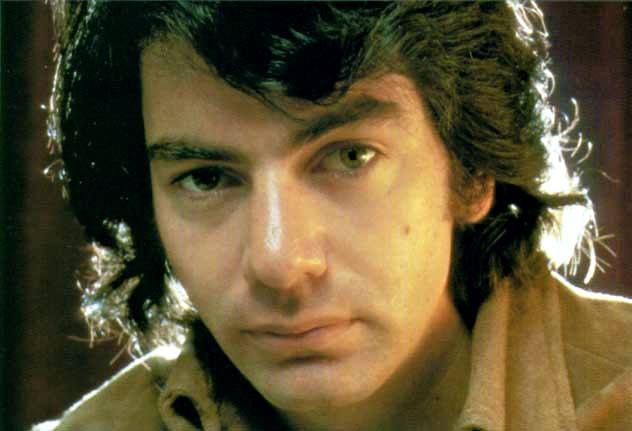
“Childsong” is Neil Diamond stepping away from the spotlight’s bravado to listen for something older and purer—children’s voices carrying a blessing that feels like innocence remembering the world before it hardened.
In Neil Diamond’s catalog, “Childsong” is not a radio “hit” you remember from countdown shows—it’s something more intimate and quietly radical. It opens the second side of his sixth studio album Tap Root Manuscript, released October 1970 on Uni, where Diamond built a conceptual suite called “The African Trilogy (A Folk Ballet)”—a 19-minute journey that braided African folk flavors with blues and gospel elements. Because “Childsong” was never issued as a major U.S. chart single, it has no meaningful “debut position” on the Hot 100. Its debut was the moment a listener flipped the record to Side Two and realized Diamond was daring himself—and his audience—to hear him differently.
That context matters, because Tap Root Manuscript was already commercially strong without needing experiments: the album reached No. 13 on the Billboard 200 and went Platinum in the U.S., powered primarily by “Cracklin’ Rosie” (his first No. 1 single) and aided by other charting material such as “He Ain’t Heavy, He’s My Brother.” In other words, Diamond didn’t have to take a left turn here—he chose to. And “Childsong” is the signpost that announces that turn: a brief, disarming piece (listed at 2:10) that also returns at the end as “Childsong (Reprise)” (listed at 2:00), framing the suite like a pair of small hands opening and closing a storybook.
So what is “Childsong” really doing?
On paper, it looks simple—children’s voices, a lullaby-like innocence—yet it functions like a doorway. Diamond’s first side is pop-rock craft: tight songs, hooks, the familiar confidence of a star on the rise. Then suddenly, “Childsong” appears and the room changes. The effect can feel almost physical: as if the air becomes softer, and the listener is asked to set down adult defenses for a moment. In that sense, “Childsong” isn’t merely “a song sung by children.” It is a symbolic cleansing of the palate, a ritual step into a different space where rhythm, faith, and folk imagination take precedence over radio logic. (Even Diamond himself described the suite as a “folk ballet,” which is exactly how it behaves: a sequence of scenes rather than a string of singles.)
The story behind it—at least the story you can hear—feels like a songwriter reaching for roots rather than applause. Diamond built Tap Root Manuscript at a moment when Western pop had not yet fully turned “world music” into a fashionable label; the album’s page makes the point that this effort predates later waves of mainstream interest in African-influenced pop. That makes “Childsong” feel quietly courageous: it’s not exotic window-dressing, but a sincere attempt to widen the emotional vocabulary of a pop record.
And the meaning lands in a very human place. “Childsong” suggests that innocence isn’t only something you lose—it’s also something you can briefly recover by remembering how to listen. Children’s voices do that to us: they bypass cynicism. They don’t argue. They don’t posture. They simply are. Framed at the beginning and end of the suite, “Childsong” becomes a kind of before-and-after mirror: you enter the “African Trilogy” through innocence, travel through rhythm and chant and reflection, and then return—changed—back to that same purity, hearing it with new ears.
That’s why “Childsong” has aged so well for listeners who find it. It carries the fragrance of an era when albums were still allowed to be worlds, not just playlists—when a superstar could risk confusing the casual listener in order to satisfy a deeper artistic hunger. Neil Diamond didn’t put “Childsong” at the front of the album to chase a hit; he placed it at the threshold of his most experimental side to remind you of something tender: beneath the grown-up noise, the heart still recognizes the sound of beginnings.