
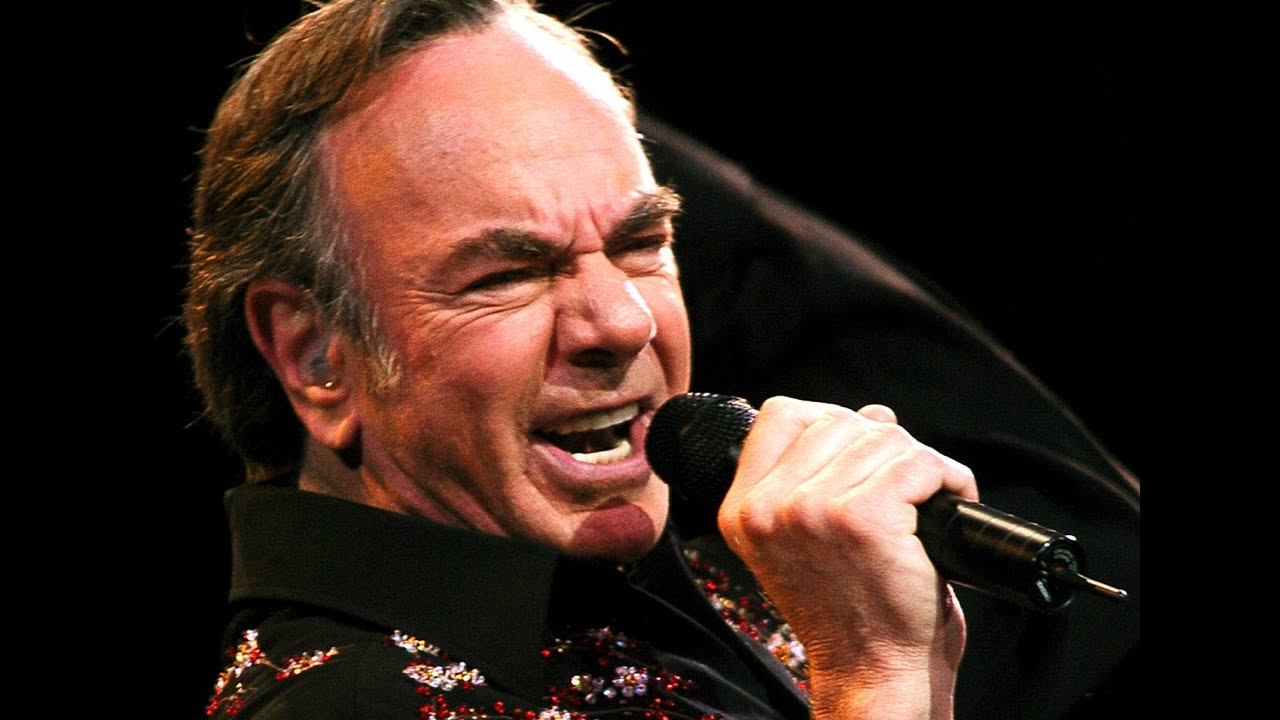
“Hello Again” is Neil Diamond meeting love at the doorway of memory—not as a young man chasing sparks, but as someone older who knows that returning can hurt… and still chooses it.
When Neil Diamond released “Hello Again” as a single in January 1981, it arrived with the quiet confidence of a song that already knew its place in people’s lives. It wasn’t a debuting newcomer trying to prove itself; it was a late-night conversation set to melody—one that immediately translated into numbers, yes, but more importantly into recognition. In the United States it reached No. 6 on the Billboard Hot 100 and No. 3 on Billboard’s Adult Contemporary chart, and Billboard ranked it as the No. 70 pop single of 1981.
Its official “home” is inseparable from a particular chapter of Diamond’s career: “Hello Again” was written by Neil Diamond and Alan Lindgren, recorded in 1980, and featured in the film The Jazz Singer as well as its soundtrack album. The single’s B-side was “Amazed and Confused.” That’s the factual frame—but the emotional frame is what has kept the song breathing for decades. Because “Hello Again” isn’t merely a love song; it’s a love song for the moment after pride has done its damage, when the heart finally admits that distance has never been the same as freedom.
On paper, the lyric’s central gesture is simple: the act of returning, of speaking the words you once withheld. But Diamond doesn’t deliver “hello” like a casual greeting. He sings it like a key turning in a lock you thought had rusted shut. There’s a particular kind of longing in that word—an ache that suggests absence, unfinished sentences, and the small, haunting hope that the person on the other side might still be willing to open the door.
That’s why the song fits so naturally within The Jazz Singer era, a period when Diamond’s writing often felt cinematic—big enough for the screen, but still rooted in intimate feelings that don’t need special effects. Contemporary reviewers heard that emotional weight very clearly: Billboard critic Vicki Pipkin called Diamond’s performance of the song in the film “poignant,” and Record World praised the dramatic intensity of his vocal against a monumental string-and-piano backdrop. Even a regional critic from The Pittsburgh Press singled out “Hello Again” (alongside “Love on the Rocks”) as Diamond at his best in that film.
And then there’s the international footnote that quietly underscores how differently a song can travel: in the UK, “Hello Again” peaked at No. 51 on the Official Singles Chart, with its first chart date listed as 14 February 1981. Not every Diamond ballad crossed every border the same way—but that almost makes the song feel more personal, as if it chose its listeners rather than conquering them.
The meaning of “Hello Again” deepens with time because it speaks to something unglamorous and true: the way love often returns not with fireworks, but with humility. The song doesn’t posture. It doesn’t pretend the past was simple. It’s a hand extended—careful, almost tentative—asking for one more chance to be heard. In that sense, “Hello Again” is less about romance as fantasy and more about romance as memory: the kind we carry quietly, the kind we revisit when the house is silent and the mind won’t stop replaying what might have been said differently.
If many of Diamond’s biggest anthems feel like open-road declarations, “Hello Again” feels like a room with the lights turned low—where the bravest thing you can do is speak softly and mean it. And perhaps that’s its real chart position, the one that isn’t printed on paper: it ranks high in the private geography of the heart, where a single word—hello—can hold an entire history.