
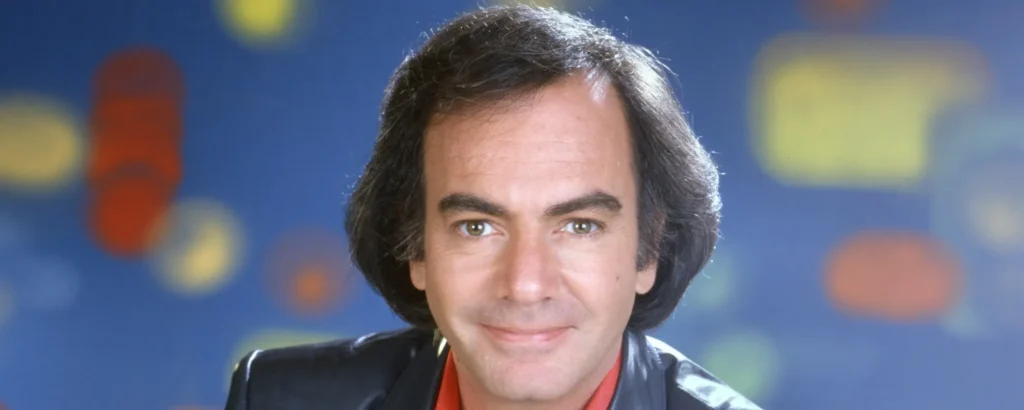
A Hymn of Unity and Celebration in a Divided World
When Neil Diamond released his rendition of “Joy to the World” on the 1992 album The Christmas Album, he did more than simply revisit a centuries-old carol — he reimagined it through the lens of his own musical and emotional language. While the track did not chart as a single, the album itself resonated deeply with listeners, marking another chapter in Diamond’s storied career of bridging the sacred and the secular, the traditional and the personal. In his hands, this hymn — originally penned in the early 18th century by Isaac Watts — became something more than a festive anthem. It became a song of collective renewal, filtered through Diamond’s unmistakable baritone and emotional gravitas.
To appreciate Diamond’s “Joy to the World,” one must first understand his instinct for transformation. Throughout his career — from the introspective ache of “I Am… I Said” to the communal uplift of “Sweet Caroline” — Diamond has pursued connection as both theme and mission. On The Christmas Album, recorded at a time when many legacy artists were revisiting standards, he approached these carols not as museum pieces but as living, breathing expressions of faith, hope, and human endurance. His take on “Joy to the World” carries that signature tension: reverence interwoven with reinvention.
Where most versions of this carol soar on choral grandeur or orchestral pomp, Diamond’s interpretation roots itself in warmth and intimacy. His voice does not merely proclaim joy — it extends an invitation to believe in it. The arrangement leans into gospel-inflected rhythms and rich harmonic layering, recalling both church choirs and the emotional architecture of American popular song. There’s a pulse beneath the reverence, an earthly grounding that makes this spiritual declaration feel human rather than purely divine. It is joy not as a given state, but as something chosen — a light wrested from darkness through conviction and community.
This is where Diamond’s artistry finds its quiet triumph: in transforming universal themes into personal testimony. His delivery suggests not just celebration but understanding — that joy is meaningful precisely because it emerges against sorrow, because unity matters most when fracture threatens to define us. Released in the twilight years of his commercial peak, “Joy to the World” stands as an emblem of Diamond’s enduring belief in music’s capacity to heal and gather people together. It is a reminder that even familiar songs can be reborn when interpreted by an artist who sees them not as artifacts, but as vessels for shared humanity — timeless melodies rekindled by a voice that still believes in wonder.