
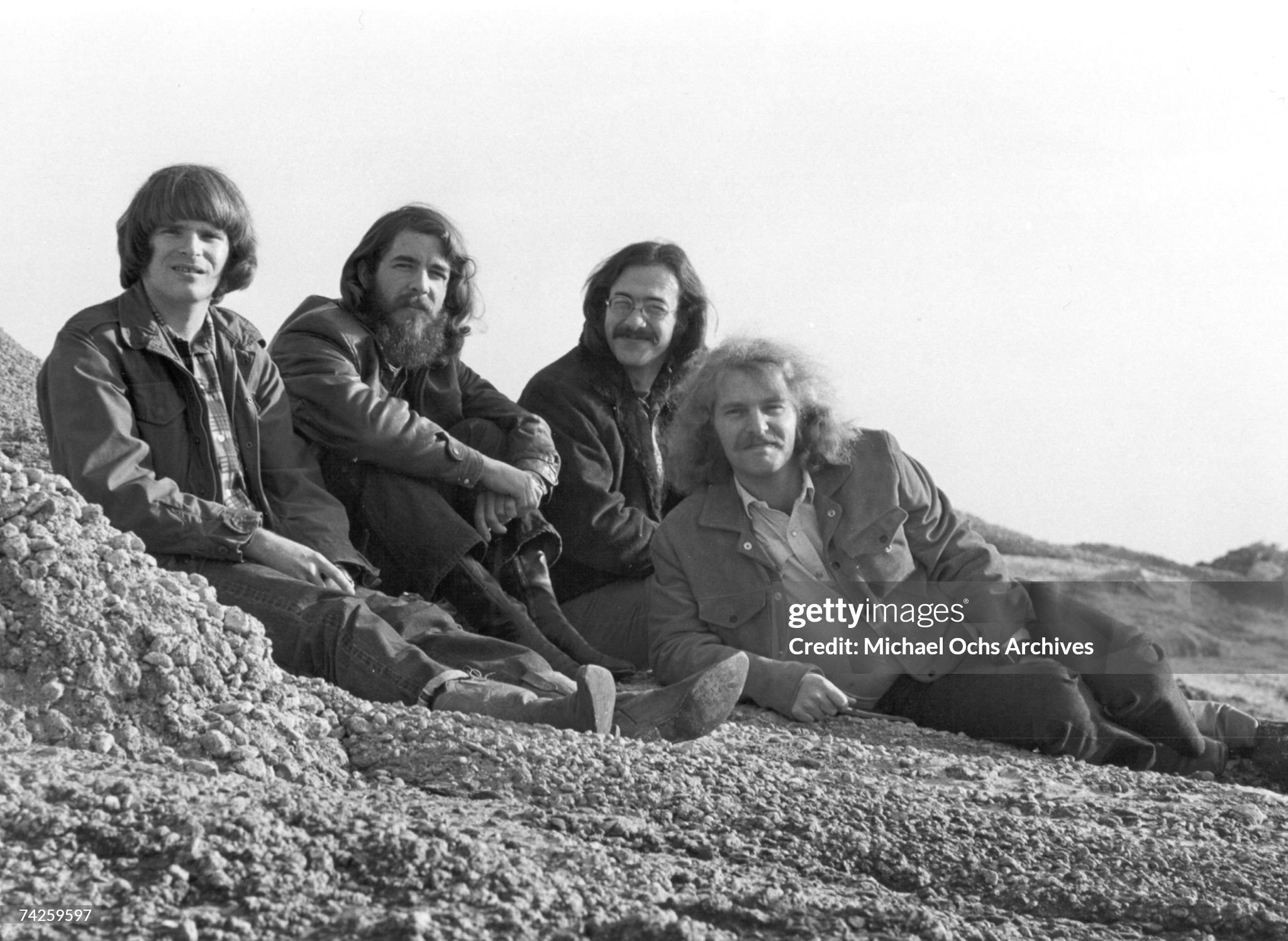
“Born on the Bayou” feels legendary from the first note because Creedence Clearwater Revival did not just describe an American landscape—they invented one vivid enough to seem older than the song itself.
There are records that sound like they were written. “Born on the Bayou” sounds like it was discovered—already hanging in the air somewhere between fog, river water, memory, and myth. That is why it still feels so powerful. Issued in January 1969 as the B-side of “Proud Mary” and opening CCR’s second album, Bayou Country, the song arrived at the exact moment the band’s identity was coming fully into focus. “Proud Mary” would climb to No. 2 on the Billboard charts, but “Born on the Bayou” was the darker, stranger, more atmospheric companion piece—the one that announced, with almost eerie certainty, that Creedence Clearwater Revival could make American rock sound ancient, elemental, and self-created all at once.
That is the first great truth of the song: it sounds authentic long before one learns that its authenticity is partly imagined. John Fogerty, who wrote it, was not raised in Louisiana bayou country at all; he was a California musician building a Southern dreamscape out of records, images, and instinct. Sources on the song and Fogerty’s own later comments note that “Born on the Bayou” captured an imagined Southern childhood, despite the fact that he had never visited a bayou when he wrote it. That detail only makes the record more impressive. It means the song’s swamp atmosphere was not documentary realism. It was artistic mythmaking. Fogerty took fragments of the American South already floating through blues, rock and roll, and regional folklore, then fused them into a setting so convincing that generations of listeners have felt they could smell the damp air in the grooves.
And that is why the song sounds like American rock creating its own legend. It does not merely borrow Southern imagery; it turns that imagery into a private national mythology. “Bayou” in this song is not just geography. It is origin story. It is darkness, heat, menace, desire, and memory all at once. The opening riff alone seems to crawl out of the earth. Before Fogerty has even sung a full line, the song has already built a world—humid, nocturnal, and faintly dangerous. Many bands can create a mood. CCR create territory. That is much rarer.
The timing of its release matters too. Bayou Country, released in 1969, was the album where Creedence Clearwater Revival truly stepped into the sound that would define them: stripped-down, hard-hitting, roots-fed rock with a deep sense of place. If the debut album showed promise, “Born on the Bayou” felt like a declaration. It was the first track listeners heard on that record, and what an opening statement it was—smokier than psychedelia, heavier than folk-rock, less polished than pop, yet somehow more complete than all of them. It told the audience immediately that CCR were not trying to sound fashionable. They were trying to sound inevitable.
The song’s legend inside the band is revealing as well. According to Doug Clifford, “Born on the Bayou” had originally been expected to lead as the single, and he later admitted it remained his favorite CCR song, calling it “nasty” and regretting that it was flipped behind “Proud Mary.” That word—nasty—is exactly right. Not in any cheap sense, but in the deepest rock-and-roll sense: thick, dangerous, physical, unconcerned with prettiness. The song growls. It does not charm. It drags listeners into its current and lets the atmosphere do the rest.
What makes “Born on the Bayou” endure, finally, is that it reveals something essential about American music itself. So much of American rock has always lived off reinvention—artists imagining places they were not born in, inheriting traditions indirectly, then turning them into something new enough to feel true. Fogerty did that here with astonishing conviction. He did not come from the bayou, but he understood what the bayou meant in the American imagination: mystery, danger, memory, freedom, murky beauty. He translated all of that into a song so persuasive that it now feels inseparable from the landscape it invented.
So yes, from the very first note, Creedence Clearwater Revival’s “Born on the Bayou” sounds like American rock creating its own legend. Because that is exactly what it is doing. It takes borrowed shadows, half-remembered myths, and pure musical conviction, then forges them into something more lasting than realism. A real place can be visited. A legend has to be entered. And “Born on the Bayou” still opens that door as powerfully as ever.