
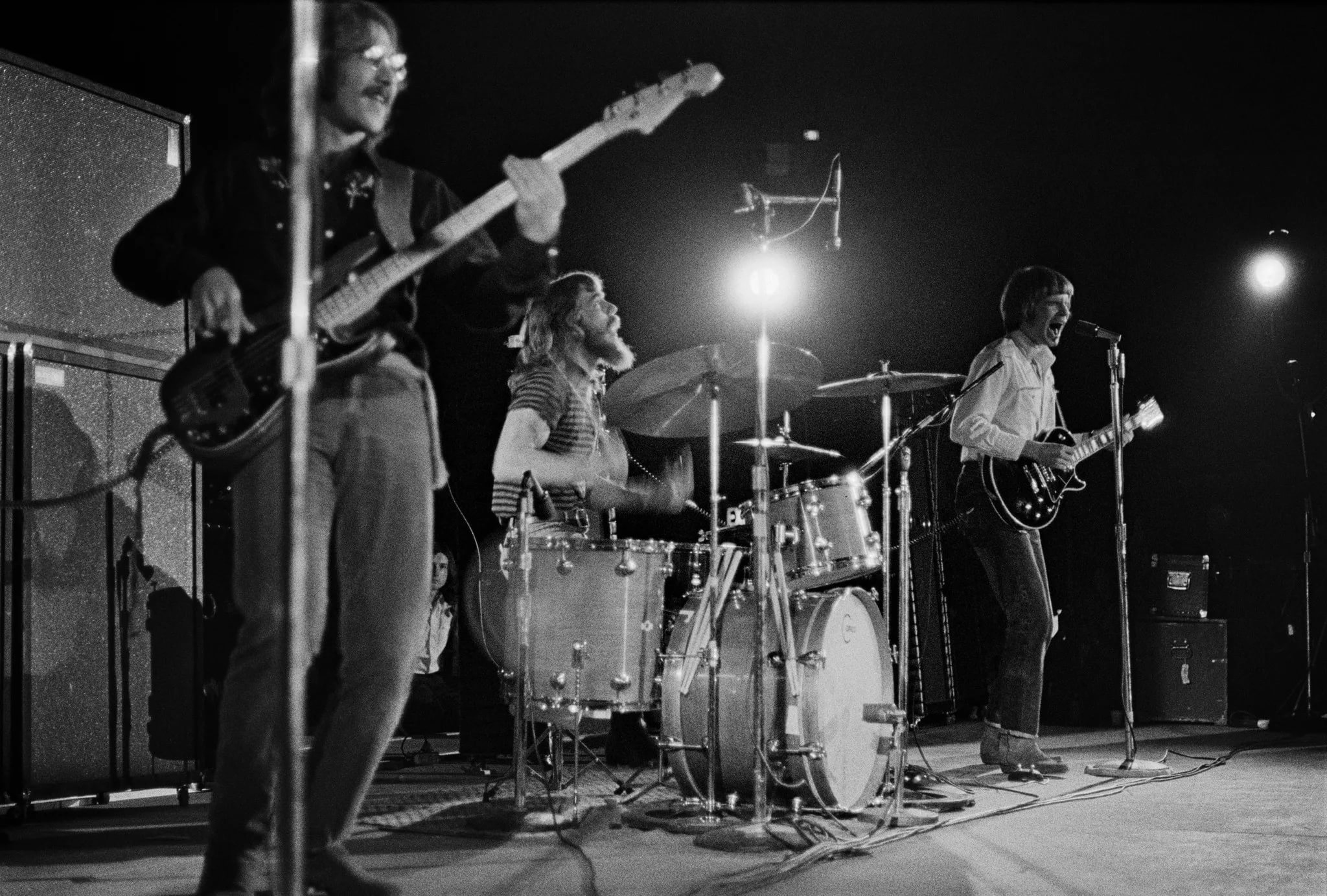
“My Baby Left Me” is CCR returning to the bedrock of rock ’n’ roll—turning a simple farewell into a lean, driving lesson about pride, loss, and getting back on your feet.
There’s a special kind of honesty in the way Creedence Clearwater Revival play “My Baby Left Me.” No ornate confession, no theatrical collapse—just a blunt sentence, repeated until it becomes a fact you can live with. The band treat heartbreak the way working people often have to: acknowledge it, feel it, then keep moving. And that practical dignity is exactly why this track matters inside Cosmo’s Factory (released July 8, 1970), an album that didn’t merely succeed—it dominated, spending nine consecutive weeks at No. 1 on the Billboard 200, with Billboard listing its peak chart date as August 22, 1970.
What’s quietly thrilling is that “My Baby Left Me” isn’t one of the album’s headline-grabbing singles. It’s a roots statement—a reminder that while CCR were conquering radio with originals, they still carried their earliest loves in their pockets. The song itself began far from stadium lights. It was written by Arthur “Big Boy” Crudup, first recorded in Chicago on November 8, 1950, and released as a single—pure rhythm-and-blues, plainspoken and resilient. Years later it gained wider pop oxygen through Elvis Presley, who cut it in 1956, and that Elvis version—by Fogerty’s own telling in later reflections—left a lasting imprint on his musical imagination.
CCR’s recording sits on Cosmo’s Factory like a well-worn tool placed carefully back on the workbench: not decorative, not nostalgic for nostalgia’s sake, but essential. Wikipedia’s album notes even point to the record’s deliberate tributes to blues and early rock ’n’ roll, explicitly naming “My Baby Left Me” among those roots covers. And that’s the key: CCR weren’t “covering” the past so much as reaffirming their source code—showing where their economy of style, their clipped groove, their refusal to over-explain emotion really came from.
Listen to how the band move. The rhythm is tight and forward—like tires on a summer road—while John Fogerty sings with that familiar combination of bite and clarity. He doesn’t dramatize the line “my baby left me”; he delivers it as if saying it out loud is how you stop it from owning you. This is blues as self-respect. The hurt is real, but so is the spine. In CCR’s hands, the song becomes less a sob story than a snapshot of a hard moment survived.
And there’s something else here, something almost tender beneath the grit: the way old songs carry old rooms inside them. “My Baby Left Me” arrives on a 1970 LP that was already being treated like a greatest-hits set while it was still new—stacked with era-defining singles and performances—yet this two-minute-and-change rocker feels like an open door to the jukebox era. You can imagine the fluorescent glow of a late-night diner, the clink of coins, the private drama of a young person learning what it means to be left—and learning, too, that being left doesn’t have to mean being broken.
Even the album’s title carries that sense of work, repetition, discipline—Cosmo’s “factory,” the rehearsal space where the band reportedly practiced relentlessly, turning raw material into finished strength. In that light, “My Baby Left Me” is more than a cover: it’s a component in the machine that made CCR so formidable. They could honor the past, compress it, and send it back out into the world with fresh velocity.
So the meaning of “My Baby Left Me”—especially as CCR deliver it—isn’t only about abandonment. It’s about the moment after abandonment, when the heart is still hot but the feet have to keep walking. It’s the sound of a person refusing to be reduced to a wound. And when that kind of plain truth rides inside a No. 1 album like Cosmo’s Factory, it becomes a quiet reminder: sometimes the strongest songs don’t shout. They simply tell you what happened—and dare you to carry on.