
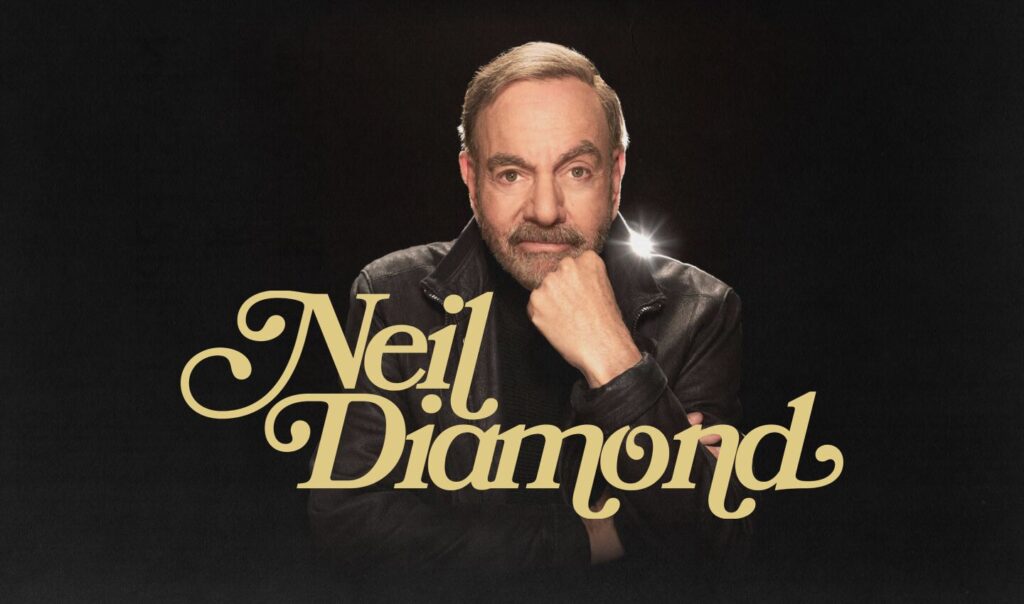
“Evermore” carries one of Neil Diamond’s oldest truths in a late, tender voice: that the first feeling rarely leaves us behind, no matter how many years, losses, or reinventions life places in between. It stays, quietly shaping what comes after.
There is something quietly beautiful about “Evermore” because it does not sound like a young man discovering emotion for the first time. It sounds like an older artist looking back across a long life and realizing that the heart, for all its scars and revisions, still answers to its earliest awakenings. That is what gives the song its weight. Neil Diamond placed “Evermore” on 12 Songs in 2005, an album that marked one of the most admired late-career renewals of his life in music. On the official album track list, “Evermore” sits right at the center of the record, surrounded by songs that feel stripped of old spectacle and returned to the essentials: memory, desire, faith, regret, and the stubborn persistence of feeling.
That setting matters, because 12 Songs was not just another Neil Diamond release. Produced by Rick Rubin, it was the album that reminded many listeners how strong Diamond could be when he stepped away from grand pop flourish and sang from a more private room. The album itself was a real success, reaching No. 4 on the Billboard 200, and it was widely received as a creative comeback rather than a mere nostalgia exercise. In that context, “Evermore” feels especially moving: not like a tossed-off album track, but like part of a larger act of artistic return.
And that is why your line about “the first feeling” fits the song so well, even more than simple romance might suggest. The title “Evermore” already carries the sense of something that refuses to end cleanly. Not just forever in the dreamy, youthful sense, but forever as memory actually works—something continuing inside us whether or not we invite it to stay. Neil Diamond had always been drawn to that emotional territory. So many of his best songs live in the space where longing outlasts logic. But in “Evermore,” that quality feels less theatrical and more reflective. The feeling at the center of the song is not racing forward. It is lingering, echoing, proving itself durable.
What makes that so powerful is the age of the voice carrying it. By 2005, Neil Diamond no longer sounded like the bright, urgent hitmaker of the late 1960s. His voice had roughened, deepened, weathered. And rather than diminishing the song, that weathering gives “Evermore” its authority. A younger singer can tell you that first feelings last forever. An older singer can make you believe it, because he has already lived long enough to test the claim against time. That is the difference. In Diamond’s performance, the song does not feel like a romantic slogan. It feels like recognition.
There is also something deeply human in the way “Evermore” belongs to 12 Songs rather than to the singles chart. Unlike some of Diamond’s best-known recordings, this was not a big standalone hit with its own chart narrative. Its life is tied to the album that holds it. And somehow that seems right. “Evermore” is not built like a radio event. It feels more intimate than that, more inward, as though it is speaking to the listener after the room has grown quiet. Sometimes the songs that stay with people longest are not the ones that arrive with the loudest public noise, but the ones that feel discovered in solitude.
What I find especially affecting is how naturally the song speaks to the idea that the heart never fully becomes modern. We age, we adapt, we learn to protect ourselves, we gather experience and disappointment and hard-earned perspective. Yet somewhere beneath all that, the original spark remains strangely unchanged. The first hope. The first ache. The first time love or wonder made the world feel larger than it had the day before. “Evermore” seems to understand that these first feelings do not vanish; they simply sink deeper into us, where they continue to color the rest of life in ways we do not always admit.
That has always been one of Neil Diamond’s great strengths as a songwriter and singer. He knows how to take an emotion that sounds almost too simple when stated plainly and reveal the years hidden inside it. He does not need to overcomplicate the feeling. He trusts it. And on “Evermore,” that trust becomes the whole point. The song does not argue that first love, first yearning, or first revelation should rule us forever. It suggests something subtler and more haunting: that they never quite stop speaking.
So yes, “Evermore” makes that truth hard to ignore. Not by shouting it, and not by dressing it in grand declarations, but by singing it with the calm conviction of someone who has lived long enough to know better and still feels it anyway. That is what makes the song so touching. It understands that life moves on, but the heart keeps certain beginnings. And sometimes, when a singer like Neil Diamond finds exactly the right melody for that realization, it can feel less like a song than like a truth we had always known, only never heard said quite so gently before.