
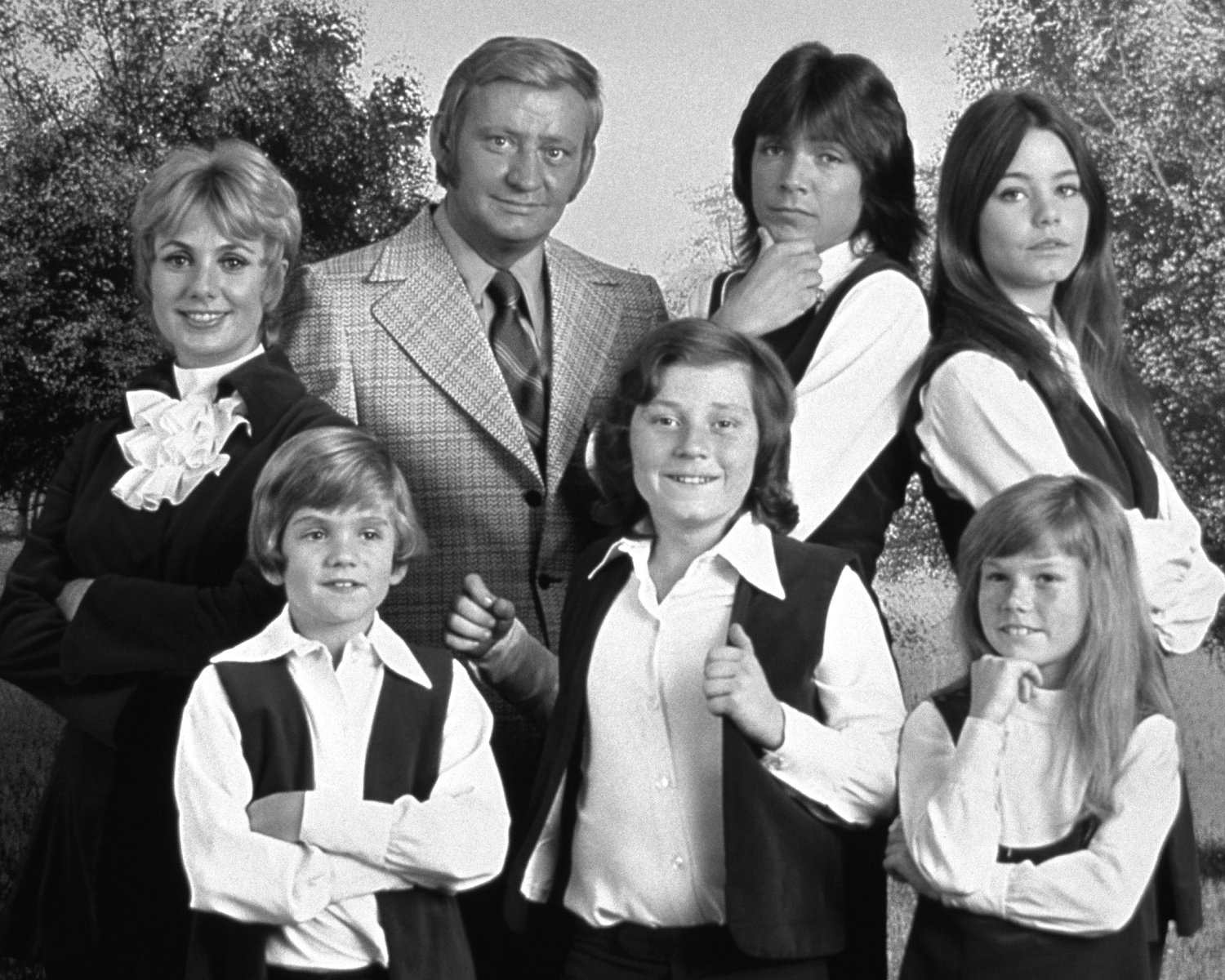
“Come On Love” is a gentle plea dressed in sunshine—an invitation to let tenderness win again, even when a relationship feels tired, distracted, or a little bruised by time.
There’s a quiet irony to “Come On Love” by The Partridge Family: it’s one of those songs that sounds like it should have been a radio staple, yet it never got the full “main character” treatment in the United States. It wasn’t issued as a U.S. single from its parent album, Crossword Puzzle, because Bell Records—after years of flooding the market with Partridge product—chose not to release an American single from the album at all. That decision alone tells you a lot about the record’s world: the music was still being made with care, but the industry’s patience was thinning, the spotlight beginning to move elsewhere.
“Come On Love” appears on Crossword Puzzle, released in June 1973, the group’s seventh and penultimate studio album, and—tellingly—the last Partridge Family album to chart in the U.S., peaking at No. 167 on the Billboard 200. In other words, the song lives at the edge of an era: not the bright arrival, not the peak, but the late-afternoon glow when everything familiar starts to feel slightly more precious because you can sense the day turning.
On paper, the credits are straightforward, almost workmanlike. “Come On Love” was written by Terry Cashman and Tommy West, and it runs about 3:43 on the album. Yet the most revealing detail is the recording date: 4 September 1971. That’s nearly two years before the album hit stores—evidence of how the Partridge machine often operated, stockpiling strong tracks while the TV-and-record schedule kept rolling. In the studio credits for the album, you’ll find the dependable architecture of that sound: producer Wes Farrell, lead vocals credited to David Cassidy and Shirley Jones, and a roster of top-tier session players and arrangers that helped make “TV pop” feel surprisingly luxurious.
But the heart of “Come On Love” isn’t in the paperwork—it’s in the way it speaks like a hand reaching across a small distance that has grown too quietly. The title phrase—come on, love—isn’t a command so much as a hopeful nudge, the kind you offer when you still believe the warmth is in there somewhere, buried under routine and misread signals. That’s what makes the song land with a peculiar tenderness: it doesn’t dramatize romance as fireworks; it treats love as something you sometimes have to call back—softly, patiently—like coaxing a songbird to return to a familiar window.
And if you listen with the album’s context in mind, the meaning deepens. Crossword Puzzle itself is described as arriving at a time when the label was “losing faith,” and the project, despite its craft, was handled with less commercial push in the U.S. That atmosphere seeps into how a song like “Come On Love” feels today: not desperate, not bitter—just aware of how easily affection can be taken for granted, how quickly attention wanders, how love can become background noise unless someone chooses to bring it back to the foreground.
Outside the U.S., the song had a slightly different fate. While America didn’t get a dedicated single campaign from Crossword Puzzle, collectors and discographies note that “Sunshine / Come On Love” did appear as a Japanese single release (often cited as one of the rare times either track appeared on a 45 in that market). That detail feels fitting: a song this gentle sometimes finds its audience in side streets rather than on the main highway.
Ultimately, “Come On Love” endures the way many Partridge deep cuts endure—not by shouting louder than the hits, but by offering a more intimate kind of companionship. It’s a reminder that love isn’t only the first rush; it’s also the decision, made again and again, to return to one another—before the “something new” truly becomes old. And when David Cassidy’s voice carries that invitation, it doesn’t sound like pop fantasy. It sounds—beautifully, stubbornly—like hope.