
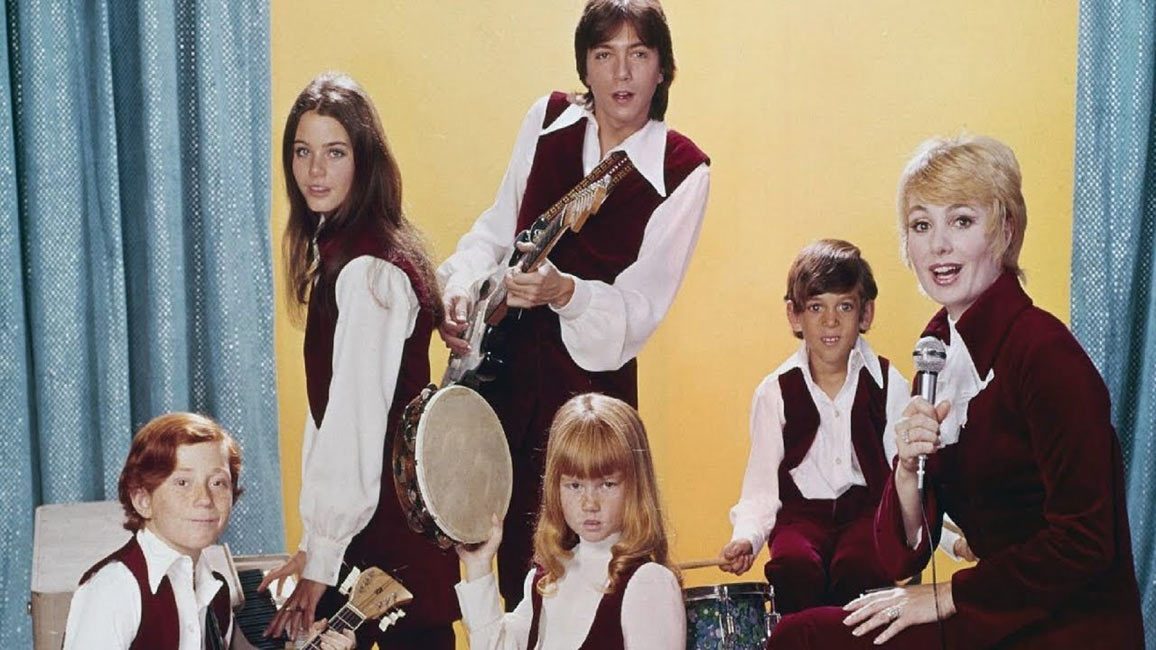
“Every Little Bit O’ You” is The Partridge Family’s soft-focus devotion—love measured not in grand vows, but in the small details you can’t stop noticing.
In the Partridge catalog, some songs feel designed for the big, bright smile—radio-ready, television-friendly, a hook that arrives like a handshake. “Every Little Bit O’ You” belongs to a different category: it’s tenderness shaped into pop, the kind of track that doesn’t demand your attention so much as earn it by being gentle. It appears on Bulletin Board—released in October 1973 as The Partridge Family’s eighth and final studio album—a record often remembered for sounding noticeably different from the earlier, bubblegummier LPs.
That late-era context matters because Bulletin Board arrived at a turning point. It was the first Partridge Family album that failed to chart on Billboard’s Top LPs. The commercial tide was slipping, the cultural spotlight moving elsewhere, and yet the record itself was arguably more interesting for it—less obligated to be a product, more allowed to sound like an album made by people trying to feel something. Even the production story hints at the shift: though Wes Farrell is credited as producer, sources note the album was actually produced and arranged by John Bahler, whose touch gave it a subtly different atmosphere.
Now, to be precise about the song: “Every Little Bit O’ You” appears on the album’s track list (Side Two), credited to songwriter Tony Romeo—the same writer who penned the band’s defining smash “I Think I Love You.” That credit is meaningful. Romeo understood how to write for the Partridge “voice,” especially David Cassidy’s particular combination of sweetness and ache. Even when the lyric is purely affectionate, Cassidy could make it sound like he was singing from slightly behind the feeling—like he’s grateful, but also aware how easily good things slip away.
Because that’s what “Every Little Bit O’ You” is at heart: attention as love. The title itself suggests a kind of romantic inventory—not obsessive, but devoted. It’s the belief that love lives in details: the way someone laughs, the way they say a certain word, the tiny habits that become priceless simply because they belong to them. In the best Partridge ballads, romance isn’t framed as drama; it’s framed as warmth, a steady presence that makes life feel less sharp. This song fits that tradition, but with a slightly deeper hue that matches the album’s late-’73 mood.
The “ranking at release” story, like many tracks on Bulletin Board, is quiet. “Every Little Bit O’ You” was not issued as a major charting A-side single, and it doesn’t carry a standalone Billboard peak the way the early classics did. That, too, is part of its emotional identity: it isn’t a song stamped by the week’s marketplace—it’s a song meant to be found by listeners who stayed long enough to flip the record over and listen past the obvious.
If you want the real “story behind” its poignancy, it’s the album itself: Bulletin Board is the sound of the Partridge world nearing its curtain call. The lead single “Lookin’ for a Good Time” failed to chart, and the LP is widely documented as the last Partridge studio album to be released. Against that backdrop, a title like “Every Little Bit O’ You” starts to feel like more than romance. It feels like a small act of preservation—the instinct to hold on to what matters, detail by detail, before it slips into memory.
That’s the deeper meaning the song can carry if you let it. Love songs often talk about forever, but this one feels like it’s quietly aware of time. It doesn’t say, “I’ll love you forever.” It says, in effect, “I love this about you… and this… and this…”—as if naming the pieces might keep them safe.
And maybe that’s why the song lands so gently for listeners who return to the Partridge era with years behind them. The bright hits are wonderful, but the quieter tracks—like “Every Little Bit O’ You”—often feel more personal. They don’t try to dazzle. They simply remind you of a truth pop music sometimes forgets: that the deepest love is often made of small things, remembered clearly, and held close long after the rest of the world has moved on.