
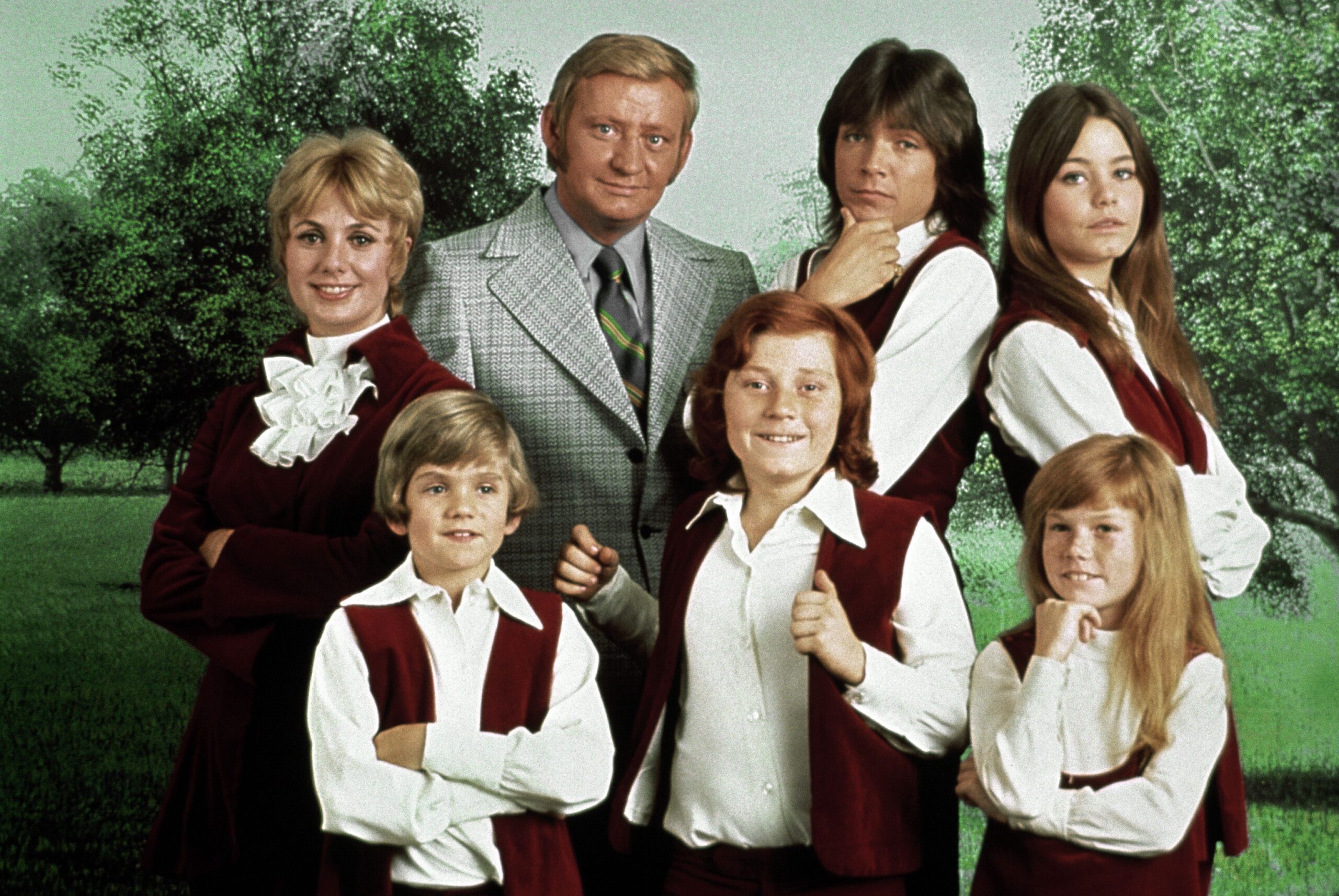
“Sunshine” is The Partridge Family’s little act of faith—holding light in your hands and choosing to let it spill outward, even when the world feels too crowded for innocence.
“Sunshine” sits in a fascinating place in the Partridge Family story: not as one of the huge U.S. singles that dominated early ’70s AM radio, but as a later-era gem that still carries the group’s signature warmth—only with a slightly more reflective tint. The song was written by Bobby Hart, Danny Janssen, and Wes Farrell, the hitmaking minds who understood exactly how to bottle uplift without making it feel cheap.
In real-world release terms, “Sunshine” belongs to the album Crossword Puzzle, released in June 1973 on Bell Records, produced by Wes Farrell. That album is historically significant for one blunt reason: it was the last Partridge Family album to chart in the U.S., entering Billboard’s album chart and peaking at No. 167, with a short run of just five weeks. And here’s the key chart-detail that often gets missed: Bell Records did not release a U.S. single from the album, having begun to lose confidence after years of oversaturating the market—so “Sunshine” never had a U.S. singles-chart “debut” to report.
Yet the song still was singled out—just not in America. “Sunshine” was released as a single in Japan, typically documented with “Come On Love” as its B-side (a reminder that Partridge releases often traveled in different forms across territories). In other words, the industry heard something in it worth pressing onto 7-inch vinyl, even if U.S. radio plans had cooled.
What makes “Sunshine” especially charming is how directly it speaks. Some Partridge tunes flirt, some plead, some bounce along on teenage romantic momentum. This one feels more like a small declaration about attitude—about choosing brightness as an action, not a mood. The lyric that later resurfaced in popular culture says it plainly: “We’ve got the sunshine in our hands… now let it shine all over this land.” That’s not heartbreak; that’s a worldview. It’s the kind of line that sounds simple—until you realize how hard it can be, in real life, to keep believing that you can still “hold” something good and share it.
There’s also an unusually satisfying bit of “behind the curtain” context: the song was featured in the TV series itself. The episode “Ain’t Loveth Grand?” aired November 17, 1972, and its listed song is “Sunshine.” That matters because it places the track within the Partridge universe as more than an album cut—it was part of the show’s musical storytelling, the same way other Partridge songs functioned as emotional punctuation at the end of an episode.
And then—decades later—“Sunshine” quietly proved it still had cultural stickiness. It was used in a 7UP commercial (notably documented as a February 2007 ad), with that “sunshine in our hands” refrain doing exactly what great pop is supposed to do: instantly lift the room.
So what does “Sunshine” mean, beyond its pleasant hook? It’s optimism without arrogance. It doesn’t claim life is easy; it suggests something gentler and more resilient—that even when the outside world is noisy, you can still carry a small, portable kind of light. In the Partridge Family’s best moments, there’s always been a sense of community—voices gathered close, harmony as reassurance. “Sunshine” takes that communal spirit and turns it outward: not “look at me,” but “let’s share this.”
That’s why the song endures as a late-period favorite. It isn’t famous because it topped the U.S. charts; it’s loved because it feels like a hand on the shoulder—bright, sincere, and unembarrassed about hope. In the end, The Partridge Family weren’t only selling a TV fantasy. At their best, they were selling a mood people genuinely needed. And “Sunshine”—true to its name—still offers that mood, softly but stubbornly, whenever you press play.