
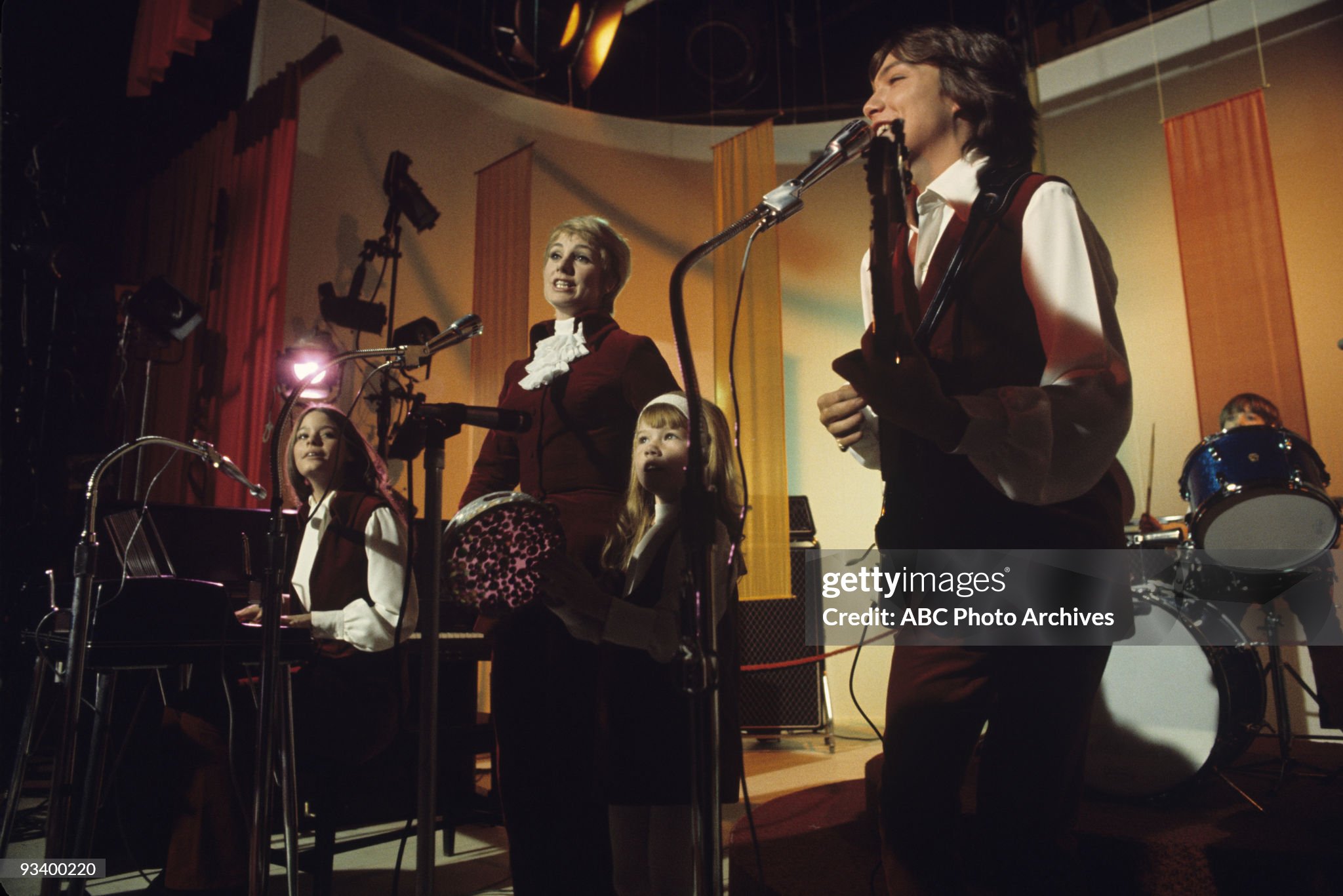
“That’ll Be the Day” isn’t a shout of rebellion here—it’s a soft, determined promise that one day the heavy chains will loosen, and the soul will finally “sail away” into a gentler life.
It’s worth putting the most important fact on the table right away, because titles can play tricks on memory: The Partridge Family’s “That’ll Be the Day” is not the famous Buddy Holly/Crickets hit. It’s a completely different song—same title, different heart. And once you hear it with that clarity, the track starts to reveal its own quiet identity: a piece of early-’70s pop television dreaming, more wistful than flashy, built for the kind of listener who doesn’t just chase the singles but stays with the album long enough to find the songs hiding in the corners.
“That’ll Be the Day” appears on Up to Date (released February 1971), The Partridge Family’s second studio album. The record itself arrived at a commercial peak that’s easy to forget today: it hit No. 3 on the Billboard 200, and it was certified gold on March 25, 1971. In other words, this was not a minor TV tie-in drifting through the racks—it was a real, mass-audience pop artifact, the sound of a weekly show turning into something you could carry home under your arm.
But here’s the key “chart position at release” detail for the song specifically: “That’ll Be the Day” was not released as a single from Up to Date, so it did not have its own Billboard Hot 100 debut or peak. The album’s singles were “Doesn’t Somebody Want to Be Wanted” (Billboard No. 6) and “I’ll Meet You Halfway” (Billboard No. 9). That fact shapes how the song has lived across time: it wasn’t pushed at you. It waited for you.
The story behind it is, in a way, the story behind the whole Partridge phenomenon. Wes Farrell produced Up to Date at United Western Recorders in Los Angeles, surrounding the “band” with top-tier studio players associated with the Wrecking Crew—musicians who could make bright pop feel effortless. In that polished setting, “That’ll Be the Day” was written by Tony Romeo, a key behind-the-scenes architect of the Partridge sound who contributed material across their albums. And it was recorded early—on May 16, 1970—months before the album even reached stores, like a photograph developed in advance of the moment it would eventually represent.
What does the song mean? Listen to the lyric and it becomes almost startlingly earnest. It speaks of a life that feels bound—“chains around me”—and a hope that isn’t naïve so much as necessary: the belief that there will come a day when the weight lifts, the silence breaks, and the self can move freely again. That’s a bigger emotional canvas than people sometimes grant “bubblegum” pop. Beneath the clean harmonies and the made-for-radio shine is an old human craving: not just romance, but release.
And here’s where the nostalgia turns potent. The Partridge Family were always a kind of pleasant illusion—family sitcom warmth packaged as a pop group—yet the feelings in the best of these tracks are real enough to outlast the packaging. A song like “That’ll Be the Day” captures a particular early-’70s mood: optimism that doesn’t come from having everything, but from believing you might someday have enough. It’s the sound of hope being rehearsed.
So if you return to “That’ll Be the Day” now, don’t measure it by whether it conquered the charts on its own. It wasn’t built for conquest. It was built for companionship—for the moment you’re alone with a record, the world outside still busy and complicated, and you want a song that says (gently, almost under its breath) that the day will come when things feel lighter. And sometimes, if you’re lucky, the day really does.