
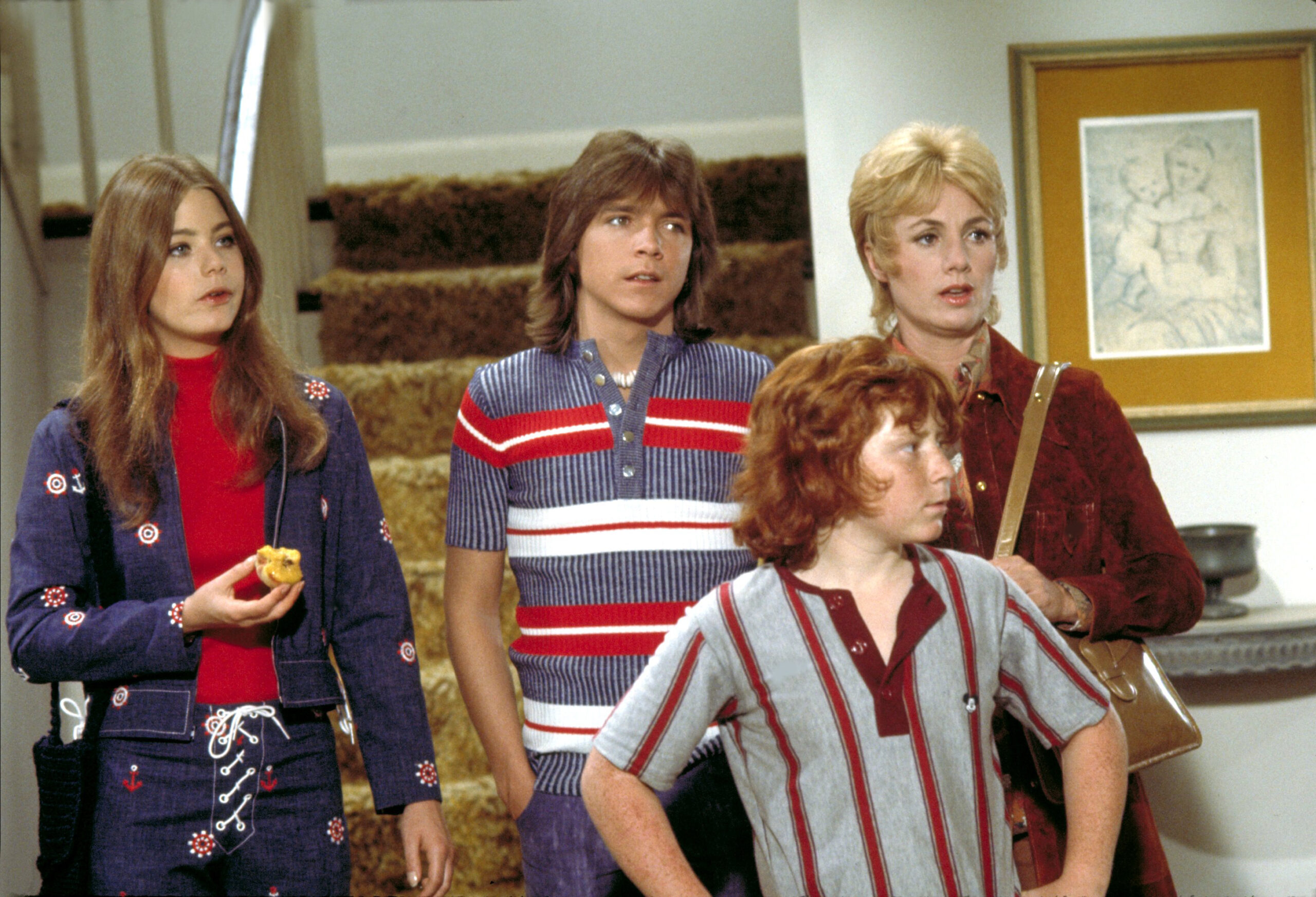
A gentle, easily overlooked gem from The Partridge Family, It Sounds Like You’re Saying Hello lingers in that tender space where warmth, doubt, and longing all arrive in the same breath.
Chart note: unlike the group’s biggest singles, It Sounds Like You’re Saying Hello was not known as a major standalone Billboard Hot 100 hit, so it does not carry the kind of chart peak attached to signature smashes such as I Think I Love You at No. 1, Doesn’t Somebody Want to Be Wanted at No. 6, or I’ll Meet You Halfway at No. 9. Its reputation has always lived somewhere more intimate than the charts: in the memory of listeners who stayed with the albums and found the quieter corners of the catalog just as rewarding as the radio favorites.
That is part of what makes It Sounds Like You’re Saying Hello so affecting. The Partridge Family are often remembered first through their brightest, most instantly recognizable records, the songs that spilled out of radios and television sets with a polished smile. But this track reveals another strength entirely. It shows how the group’s music could be soft without feeling slight, and emotionally direct without becoming sentimental in an obvious way. Even within a pop machine that was expertly designed for accessibility, there was room for songs that carried a little uncertainty, a little hesitation, a little emotional weather behind the melody.
The title itself is the song’s great emotional doorway. It Sounds Like You’re Saying Hello is such a curious phrase because it does not declare certainty. It does not say someone is saying hello. It says it sounds like they are. That difference matters. In just a few words, the song opens a world of mixed signals, hopeful listening, and fragile interpretation. It is about that moment when affection seems close enough to touch, yet not secure enough to trust. Few things are more human than that. A voice, a gesture, a pause, a tone of kindness — all of them can feel like promise when the heart is listening closely.
Musically, the song fits beautifully within the polished pop world associated with The Partridge Family, but it carries a more reflective glow than the big sing-along hits. The arrangement feels measured rather than pushy, allowing the melody to do the emotional work slowly. There is a softness to this style of production that suits the song well: a clean rhythm, bright but not overbearing instrumentation, and harmonies that cushion the lyric instead of overpowering it. As with much of the group’s recorded work from the early 1970s, the sound reflects the craftsmanship of a highly professional recording operation, shaped in the orbit of producer Wes Farrell and the Los Angeles studio tradition that gave so many pop records of that era their effortless sheen.
And then there is the vocal feeling, which is crucial. The world of The Partridge Family often balanced youthful charm with a faint undercurrent of ache, and that combination is exactly why so many of the recordings continue to resonate. A song like this does not need grand vocal fireworks. It needs sincerity, restraint, and the ability to make uncertainty sound tender instead of weak. That is where the group’s best lesser-known material often succeeds. The performance invites the listener inward. Rather than demanding attention, it earns it gradually, which is often the more lasting kind of impact.
The story behind a song like this is also tied to the larger story of The Partridge Family itself. Because the television image was so bright, cheerful, and widely loved, some listeners missed how carefully the music itself was assembled. Beneath the family-band concept was a serious pop enterprise that knew how to build records with memorable hooks and emotional clarity. The famous hits brought the audience in, but the deeper album cuts kept many listeners there. It Sounds Like You’re Saying Hello belongs to that second category. It is not simply a pleasant extra. It is a reminder that the catalog had nuance.
Lyrically, the song speaks to one of the oldest emotional experiences in popular music: the desire to believe. Not blind belief, but hopeful belief — the kind that hears possibility in another person before certainty has fully arrived. That is why the song can feel so moving even when it seems modest on the surface. It understands that emotional life is often built from small clues. A hello can mean courtesy, affection, invitation, or the beginning of something not yet spoken aloud. The song lives in that ambiguity, and instead of resolving it too neatly, it allows the listener to sit with it. That is a sophisticated choice for a piece of accessible pop.
There is also something deeply nostalgic in the way the song now plays against the memory of its era. The early 1970s produced no shortage of bright pop records, but the ones that last are often the ones carrying a little shadow behind the sunlight. It Sounds Like You’re Saying Hello has that quality. It sounds open-hearted, but not carefree. It feels approachable, but not simple. And decades later, that emotional blend may be exactly what makes it worth revisiting. Songs like this remind us that not every meaningful record announces itself loudly. Some simply wait, patiently, until the listener is ready to hear what was there all along.
In the end, this is the quiet achievement of It Sounds Like You’re Saying Hello. It takes a phrase that could have been merely sweet and turns it into something far more memorable: a portrait of hope listening very carefully for reassurance. For fans of The Partridge Family, that makes it more than a forgotten track. It becomes a small but beautiful example of how their music could move beyond television brightness and into something more delicate, more thoughtful, and more emotionally lasting.