
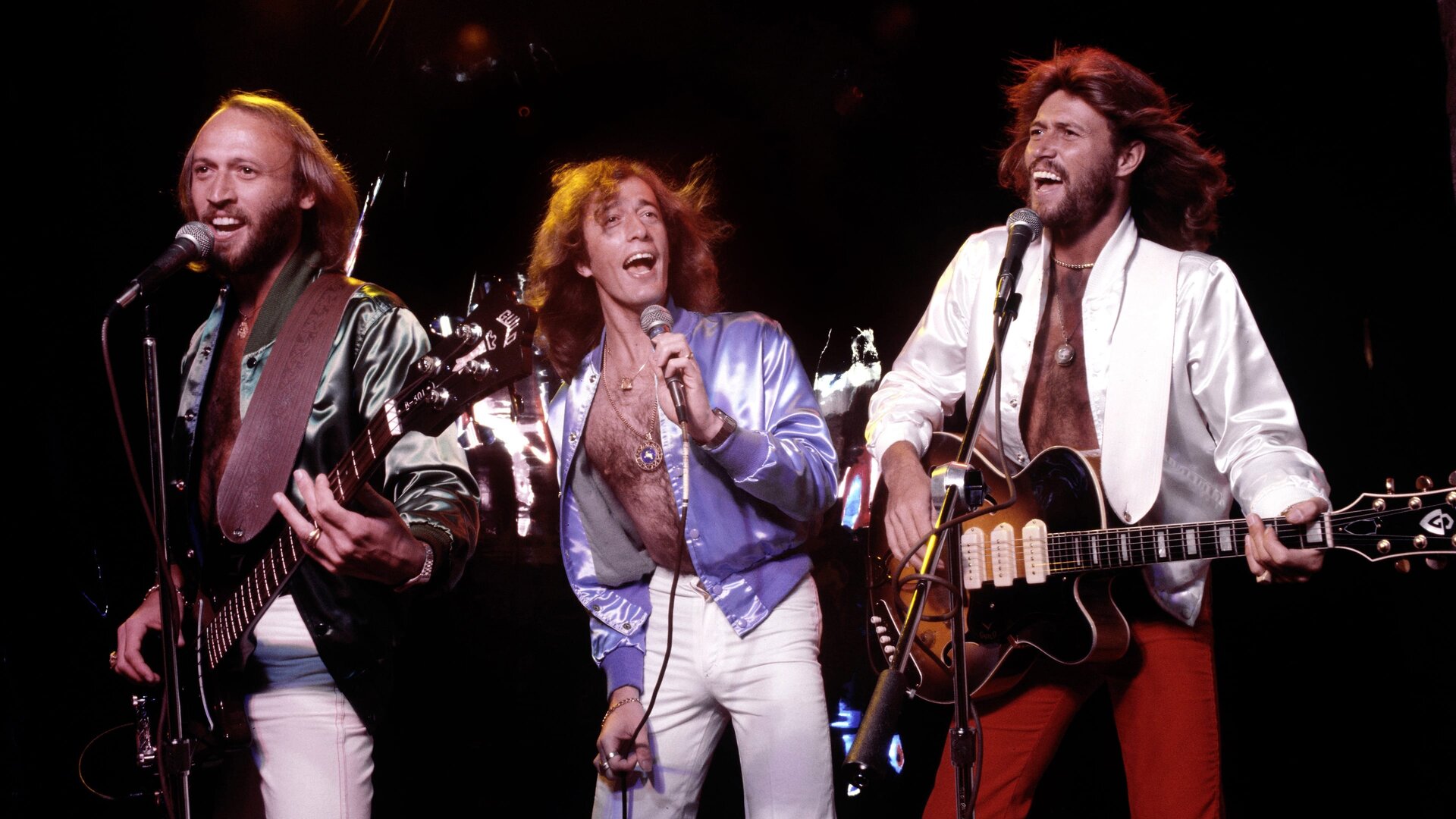
Islands in the Stream is a song about love without distance, and when the Bee Gees sang it at the MGM Grand in 1997, it felt less like a revival than a homecoming.
When the Bee Gees performed Islands in the Stream during their 1997 One Night Only concert at the MGM Grand in Las Vegas, they were doing something quietly remarkable. They were not simply adding a familiar hit to the set list. They were reclaiming one of the most successful songs they had ever written for someone else, and in doing so, they reminded the audience just how deep their songwriting legacy truly ran. By then, the song had long since entered popular memory through the beloved 1983 duet by Kenny Rogers and Dolly Parton, but hearing it in the voices of Barry Gibb, Robin Gibb, and Maurice Gibb gave it a different kind of glow—warmer, more reflective, almost like hearing an old letter read aloud by the person who first wrote it.
The chart history alone explains why the song matters. Released in 1983 on Kenny Rogers‘ album Eyes That See in the Dark, Islands in the Stream became a major crossover triumph. It reached No. 1 on the Billboard Hot 100, No. 1 on Billboard Hot Country Singles, and No. 1 on the Adult Contemporary chart in the United States. That rare sweep told its own story: this was a song spacious enough to hold country tenderness, pop elegance, and adult emotional realism all at once. It did not belong to just one radio format, and perhaps that was the most Bee Gees thing about it. Their best writing always moved beyond category.
The backstory has only added to the song’s mystique over the years. Barry, Robin, and Maurice Gibb wrote it, and Barry has often said the song was originally conceived with an R&B direction in mind, even associated in its earliest idea stage with Marvin Gaye. But songs, like people, sometimes find their real destiny by surprise. When the brothers became deeply involved in Kenny Rogers‘ Eyes That See in the Dark project, the piece was reshaped into a duet, and once Dolly Parton entered the picture, the chemistry was undeniable. The result was one of the defining partnerships of the era, even though the song itself had come from the pens of three brothers from another musical world.
The title also carries literary weight. Islands in the Stream borrows its name from the posthumously published Ernest Hemingway novel, though the lyrics are not a direct retelling of that book. Instead, the song turns the image into something intimate and universal. Two people may seem like separate islands, but love, trust, and shared feeling erase the water between them. Lines about relying on each other and moving in one emotion give the song its lasting appeal. This is not the restless romance of youth. It is love as refuge, love as partnership, love as a place where the world grows quieter.
That emotional center came through beautifully in the Bee Gees‘ 1997 performance. At the MGM Grand, the song felt less like a country-pop blockbuster and more like a confession carried on harmonies. Barry’s lead vocal gave the melody its steady heart, while Robin and Maurice wrapped the chorus in the kind of familial blend no one else could imitate. The original hit version had the delight of dialogue—the spark between two famous voices meeting in perfect balance. The Bee Gees version, by contrast, offered something more inward. It was not about flirtation or crossover novelty. It was about craftsmanship, memory, and the astonishing durability of a great melody.
That is what made the performance so moving in the context of One Night Only. The concert itself was a statement of survival, stature, and renewal. By the late 1990s, the Bee Gees were being seen again not merely as hitmakers from the disco era, but as one of the great songwriting forces in modern music. Their Las Vegas set moved through many chapters of their career, and Islands in the Stream served as a reminder that their influence stretched far beyond the songs they recorded under their own name. They had written for other artists with the same instinctive understanding of emotion, structure, and melodic lift that shaped classics like How Deep Is Your Love, To Love Somebody, and How Can You Mend a Broken Heart.
There is also something deeply touching about hearing songwriters return to their own creation after the world has already made different memories with it. By 1997, many listeners associated Islands in the Stream so strongly with Kenny Rogers and Dolly Parton that it almost felt borrowed from them. Yet when the Bee Gees sang it, you could hear the architecture underneath the familiarity—the elegant chord movement, the flowing phrasing, the unforced rise of the chorus. Suddenly the song’s bones were visible again, and so was the genius behind them.
What lingers most from that performance is its maturity. The brothers did not attack the song. They trusted it. They let it breathe. The arrangement had polish, but never stiffness; tenderness, but never sentimentality. In a concert full of famous titles, Islands in the Stream stood out as a reminder that the Bee Gees were never only performers of their own catalog. They were builders of emotional spaces that other singers entered, inhabited, and made famous. On that 1997 night at the MGM Grand, they stepped back into one of those spaces themselves, and it fit them perfectly.
That is why the performance still resonates. It lets us hear the song from both ends of its life: first as a worldwide hit that topped the charts in 1983, and then as a seasoned, graceful statement by the men who created it. In the hands of the Bee Gees, Islands in the Stream becomes more than a familiar duet. It becomes a quiet testament to what they did better than almost anyone else—write songs that could travel through voices, decades, and changing times without losing their heart.