
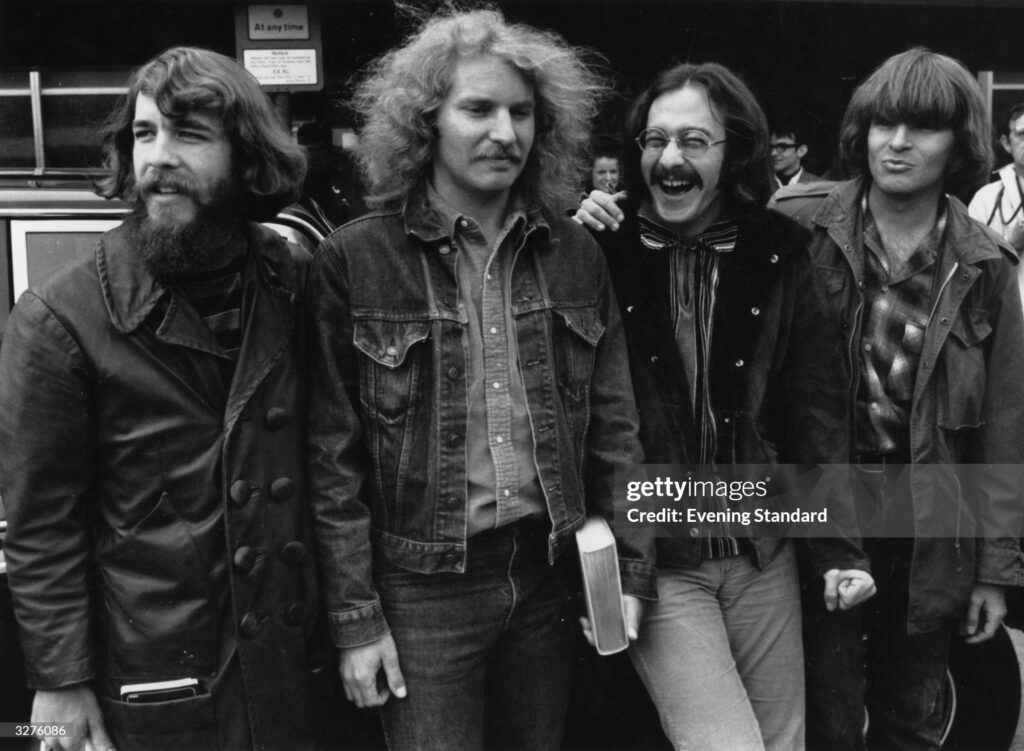
In “Before You Accuse Me,” Creedence Clearwater Revival turn a simple blues warning into a standoff. The song is not really about innocence at all—it is about pressure, counterattack, and the dangerous moment when blame comes back wearing a mirror.
Who is really guilty here?
That is the beauty of “Before You Accuse Me.” The song never gives you a clean answer, and that uncertainty is exactly what keeps the tension alive. Creedence Clearwater Revival recorded it for Bayou Country, released on January 15, 1969, the album that helped establish the band’s full identity and reached No. 7 on the Billboard 200. On a record that also carried “Proud Mary” and “Born on the Bayou,” this old blues number could have felt like a respectful detour. Instead, it sounds like a confrontation already in progress.
The first fact that matters is that CCR did not write the song. “Before You Accuse Me” was written and first recorded by Bo Diddley—credited under his real name, Ellas McDaniel—in 1957, then released in 1958 as the B-side of “Say Bossman.” That matters because the song already came loaded with an old blues logic before John Fogerty ever touched it: if you are going to accuse me, you had better examine yourself first. It is not a confession. It is not even a denial. It is a reversal.
And that reversal is what gives the song its pure tension.
Because the lyric never tries to prove the singer spotless. It does something sharper than that. It throws the accusation back across the room. Before you accuse me, take a look at yourself—that line works because it is morally slippery in such a human way. Maybe the singer is guilty. Maybe the accuser is guilty too. Maybe both are trapped in the same cycle of betrayal and suspicion. The song does not resolve the argument; it tightens it. That is why the blame feels so alive. It becomes less about truth than about leverage.
CCR’s version makes that tension even stronger by the way they play it. They do not treat the track like a history lesson or a delicate blues homage. They give it weight, drive, and a little grit. The band had actually recorded an earlier version during the sessions for their first album in January 1968, but Fogerty left it off because he was unhappy with the sound; that first take only surfaced much later as a bonus track. The version on Bayou Country therefore feels deliberate, chosen, and better aimed.
That small recording history says something valuable. “Before You Accuse Me” was not tossed onto the album casually. Fogerty came back to it when the band had found more of its own force. And that force matters, because this performance lives on the edge between blues and threat. The rhythm does not wander. It presses. Fogerty’s vocal does not beg for sympathy. It stares back. The effect is not wounded innocence, but bruised defiance.
That is why the song still sparks the question so quickly: who is really guilty here? The answer may be that guilt is almost beside the point. What the song captures so well is the emotional mechanics of accusation itself. The second blame enters the room, love becomes a trial. Pride takes over. Self-protection hardens. No one wants to be the first person caught standing defenseless. The old blues insight underneath the lyric is painfully durable: people in trouble rarely argue like judges. They argue like survivors.
There is also something revealing in how well this song fit CCR at that moment. Bayou Country was the album where the band’s mythic Southern atmosphere and hard, economical groove fully came into focus. An old Bo Diddley song about mutual blame sat naturally in that world because Fogerty understood how to make roots material feel immediate rather than antique. He did not polish away the song’s finger-pointing tension. He sharpened it.
So yes, “Before You Accuse Me” still turns blame into pure tension because it refuses the comfort of a clean moral center. In Creedence Clearwater Revival’s hands, the song becomes a showdown of wounded pride: accusation answered by accusation, guilt shadowed by hypocrisy, truth obscured by heat. That is why it lasts. It understands that in love, in anger, and in the blues, the person speaking loudest is not always the innocent one—and the person answering back is not always innocent either. The tension lives in that uncertainty, and CCR make it feel wonderfully impossible to settle.