
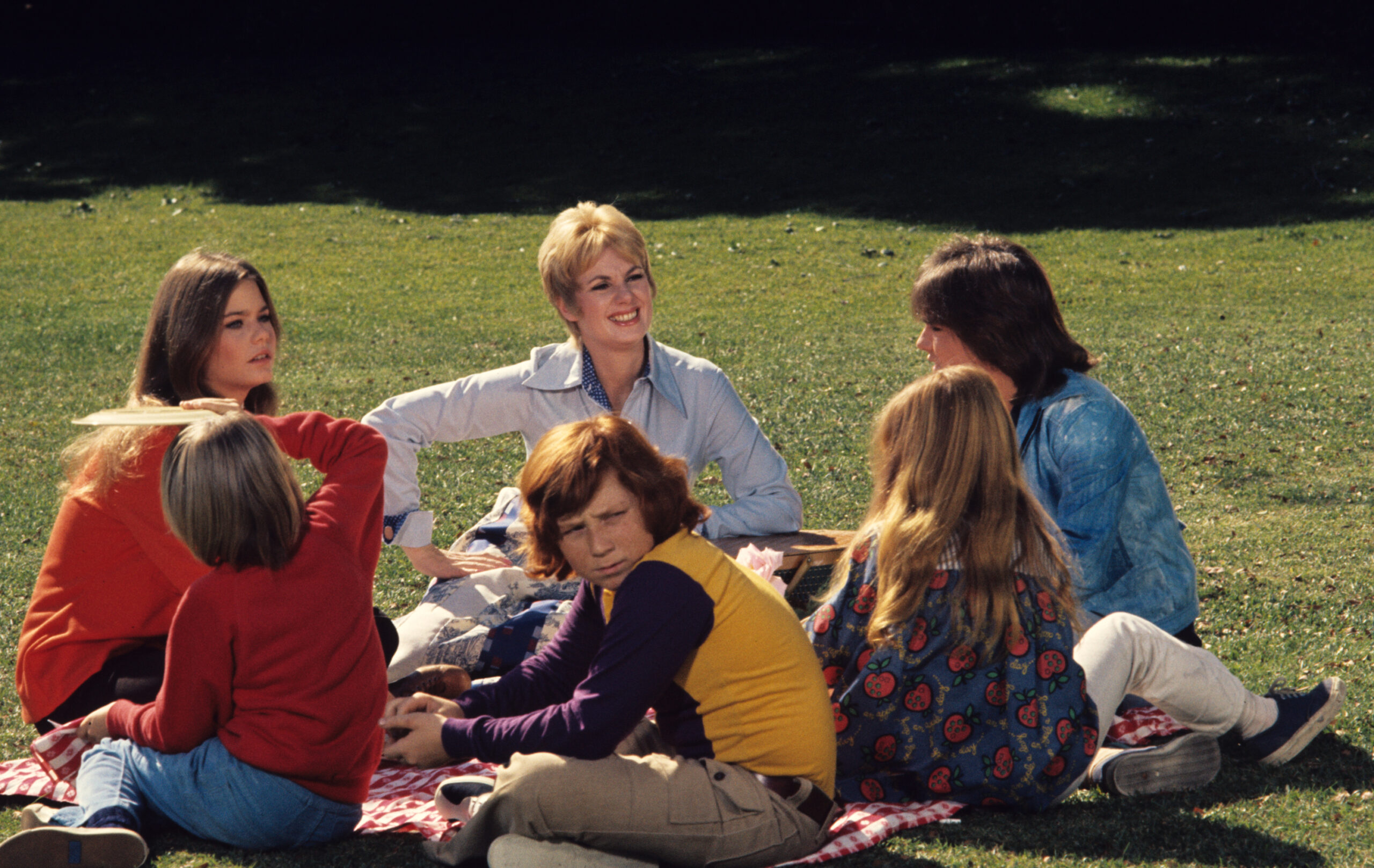
“Am I Losing You” hits harder than anyone expects from The Partridge Family because beneath the bright pop surface is a real tremor of doubt — the sound of love already slipping away while the singer is still trying, almost desperately, to keep it in his hands.
When The Partridge Family released “Am I Losing You” in 1972, it arrived from a group many people still associated first with television warmth, teen-magazine charm, and radio-friendly optimism. Yet this song carried a different emotional weather. It was issued as a single from Shopping Bag, the group’s fifth studio album, released in March 1972 on Bell Records. Written by Irwin Levine and L. Russell Brown, the single reached No. 59 on the Billboard Hot 100, with additional chart showings in Canada and Australia. The album itself performed far more strongly, peaking at No. 18 on Billboard’s Top LPs chart and earning Gold status. That contrast already tells part of the story: “Am I Losing You” was not one of the Partridge Family’s giant blockbuster hits, but it lived inside a period when the group still had enormous cultural reach.
And perhaps that is exactly why the song can catch listeners off guard. The Partridge Family were often at their most effective when they wrapped uncertainty inside polished pop. “Am I Losing You” sounds catchy enough on the surface, but its central question is not playful at all. It is anxious, intimate, and quietly destabilizing. There is no great declaration of forever here, no smiling teenage certainty. Instead, the whole song turns on insecurity — that helpless moment when affection is still present, but confidence is gone. The title itself feels like a crack opening in the middle of a seemingly safe world.
That is what makes the record hit harder than expected. In the Partridge Family universe, listeners often expect sweetness first: first crushes, hopeful promises, gentle longing, easy singalong choruses. “Am I Losing You” does contain some of that melodic accessibility, but emotionally it is closer to a plea than a daydream. The song is built around the fear of emotional drift — not a dramatic breakup already completed, but the much sadder feeling that something precious may be slipping away before it can even be named clearly. That kind of uncertainty often hurts more than a clean ending. The listener is left in the same place as the singer: sensing change, unable to stop it, and still hoping the fear is wrong.
It helps, too, that the song came during a slightly later phase of The Partridge Family story, when their sound had matured just enough to carry more wistfulness. By the time Shopping Bag appeared, the group had already scored major hits with “I Think I Love You,” “Doesn’t Somebody Want to Be Wanted,” “I’ll Meet You Halfway,” and “It’s One of Those Nights (Yes Love).” “Am I Losing You” followed that run, but it did not lean as heavily on pure teen euphoria. Instead, it brought in a little more ache, a little more vulnerability, as though the first glow of romance had begun to encounter the possibility of disappointment.
The songwriting deserves attention here. Irwin Levine and L. Russell Brown knew how to write pop that sounded immediate without being empty, and “Am I Losing You” is a fine example of that balance. The structure remains concise, the melody remains approachable, but the emotional center is uneasy. It is a song built not on certainty but on suspicion — something in the air has changed, something cannot quite be touched, and the heart has begun to notice before the mind is ready. That is strong writing for a so-called bubblegum-pop act, because it lets the song carry a real emotional sting without abandoning radio shape.
Then there is David Cassidy, who is a large part of why the song works as well as it does. Cassidy could have sung this too brightly and made it merely pleasant. He does not. He gives it a slight tremble of worry, enough to let the lyric mean something. One of the enduring truths about the best Partridge Family records is that Cassidy often smuggled sincerity into material that might otherwise have seemed purely manufactured. On “Am I Losing You,” that sincerity is crucial. The song depends on the listener believing that the question actually hurts. He makes it hurt. That is one reason the track remained important enough to show up later on compilations like Greatest Hits, At Home with Their Greatest Hits, The World of the Partridge Family, and The Definitive Collection.
Its afterlife says a great deal. Songs that continue turning up on retrospectives are usually there for one of two reasons: huge chart success or enduring emotional identity. “Am I Losing You” has some chart history, but not enough to explain that kind of repeated preservation by itself. What explains it better is that the song captured a deeper side of the Partridge Family sound — the side where teenage pop was not just sugary fantasy, but a place where genuine uncertainty could be heard. It remains memorable because it is one of the songs that reveals the fragility underneath the smile.
So why does “Am I Losing You” hit harder than anyone expects from The Partridge Family? Because it takes the group’s polished, approachable pop style and fills it with a far more adult feeling than first appears. Not melodrama, not despair, but that quiet panic of sensing love change shape in front of you. In a catalog full of bright, inviting songs, this one carries a bruise. And that bruise is exactly why it lasts.