
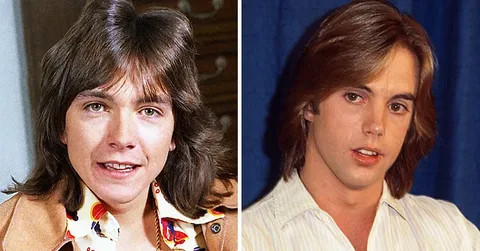
“Tell Me True” is David Cassidy at his most unguarded—an adult confession set to pop craft, asking for honesty not as drama, but as survival.
By the time “Tell Me True” appeared in September 1992, David Cassidy was no longer singing from the bright, crowded stage where his name once felt like a headline. He was writing from the quieter place—where a relationship can still look intact from the outside, yet feel uncertain in the dark. The song is featured on his studio album Didn’t You Used to Be… (released by Scotti Bros. Records), a record built almost like a private diary: nearly every track was written or co-written with Cassidy’s wife and creative partner, Sue Shifrin.
Because you asked for the debut “ranking”: “Tell Me True” itself was not released as a charting single, and the album Didn’t You used to Be… is listed as not charting in the major territories summarized in standard discography tables (including the U.S. and U.K.). That absence is actually part of the song’s story. It arrived without the noise of a chart run—more like a letter slipped under the door than a billboard on the highway. The album was recorded February–June 1992 and produced by Eric “E.T.” Thorngren, with Cassidy credited not only as vocalist but also as a hands-on presence in the project’s making.
“Tell Me True” sits deep in the track list—track 7—and that placement feels symbolic: not the opening handshake, not the grand finale, but the middle-of-the-night moment when the mask finally slips. The writing credit is clean and personal: David Cassidy and Sue Shifrin. And the lyric, from what’s been preserved in fan discographies, opens in a mood of aching uncertainty—he remembers how love used to be spoken easily, and admits that lately he can’t tell what’s real anymore. It’s a familiar kind of heartbreak, but rarely described so plainly: not the explosive end, not the cinematic betrayal—just the slow, creeping doubt that turns a shared bed into a lonely place.
Musically, the record’s credits hint at why “Tell Me True” feels like it wants to move even while it hurts. The album personnel list notes horns on “Tell Me True,” performed by a section credited as The Fungi Horns—a detail that matters, because horns in early-’90s adult pop often signaled a certain emotional honesty: warmth, pulse, and a touch of late-night soul. It’s the sound of someone trying to keep the conversation alive, trying to stop silence from winning. And that’s the song’s tension in a nutshell: the heart is anxious, but the groove keeps walking forward, as if motion itself might prevent the truth from disappearing.
The deeper meaning of “Tell Me True” lives in its title. He doesn’t ask, “Tell me everything.” He asks for what’s simplest and hardest: the truth—plain, undiluted, without mercy but also without cruelty. In the Cassidy/Shifrin writing style on Didn’t You used to Be…, love isn’t treated like a teenage lightning strike; it’s treated like a long weather system, full of pressure changes you learn to sense before the storm arrives. “Tell Me True” becomes the moment when someone stops negotiating with their own fear. The singer is no longer asking for romance; he’s asking for clarity, because clarity is what lets a person either repair the bond—or finally, respectfully, let it go.
And if there’s something especially poignant here, it’s hearing David Cassidy—so often frozen in the public imagination as a symbol of youthful pop—choosing, in 1992, to sing like a man who has lived through the consequences of confusion. “Tell Me True” doesn’t chase applause. It chases peace. It’s a song for anyone who has ever stared at the ceiling and realized that uncertainty can be its own kind of heartbreak—quiet, persistent, and exhausting.
In that sense, the track’s lack of chart “debut” almost feels fitting. “Tell Me True” wasn’t built to compete; it was built to confess. And sometimes the most lasting songs aren’t the ones that arrive with numbers beside their names—they’re the ones that arrive when you need them, sounding like the truth you’ve been trying to say out loud.