
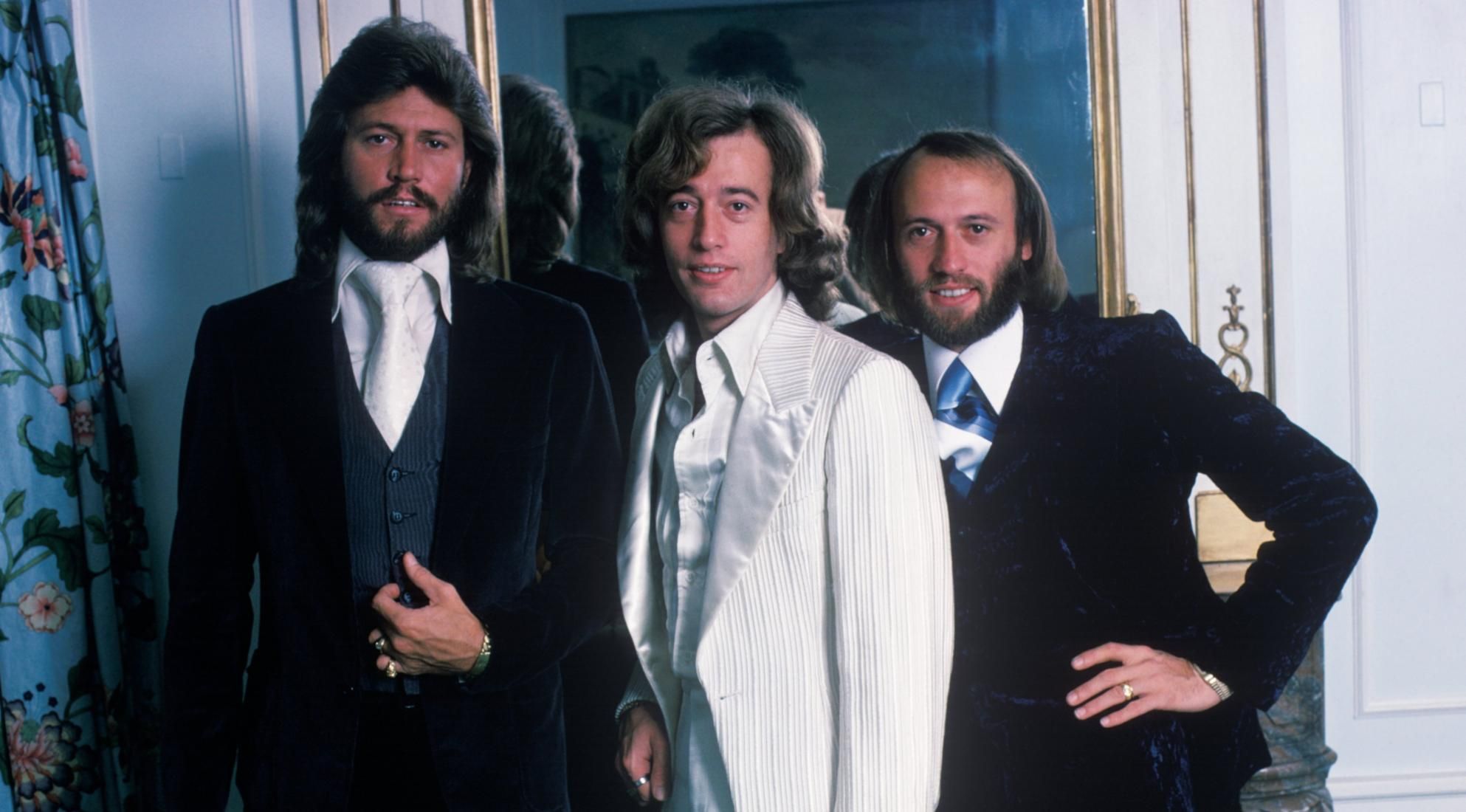
“Voice in the Wilderness” is the Bee Gees speaking through late-career storm clouds—an urgent, rock-leaning cry that feels like a signal flare: I’m still here… can anyone hear me?
By the time “Voice in the Wilderness” arrived, the world already thought it “knew” the Bee Gees—the falsetto era, the disco crown, the velvet harmonies that once seemed to pour out of radio speakers like warm light. Yet this song belongs to a different hour: the early 2000s, when pop had moved on, when the band’s legend was settled into museums of memory, and when the brothers chose—quietly but decisively—to make one more full album that sounded like a living, breathing present tense. “Voice in the Wilderness” closes that album, This Is Where I Came In (released April 2, 2001), the final studio album the group would release.
Because you asked for ranking and release context with accuracy: “Voice in the Wilderness” was not released as a charting single, so it doesn’t have a “debut” position on the singles charts. Its public “launch” is inseparable from the album it completes. This Is Where I Came In peaked at No. 6 in the UK and No. 16 in the US, while the album’s title-track single reached No. 18 in the UK—a respectable showing for a veteran act releasing new work in a radically changed musical landscape.
What makes “Voice in the Wilderness” so striking is its authorship and its placement. In the official track listing, it’s credited not only to Barry Gibb, but also to key members of the Bee Gees’ late-period recording circle: Ben Stivers, Alan Kendall, Steve Rucker, and Matt Bonelli—the very musicians who helped translate the Gibbs’ songwriting into a modern studio language without sanding off the band’s identity. The song runs 4:37, and as track 12—the album closer—it has the weighty job of being the last word the Bee Gees offered as a studio unit.
That “last word” isn’t nostalgia for nostalgia’s sake. The album’s background notes describe “Voice in the Wilderness” as having a strong rock theme, and you can feel that intention: it’s less about satin polish and more about muscle—guitar bite, forward motion, and a vocal stance that refuses to drift into sentimentality. This matters emotionally, because the title itself suggests isolation: a voice calling out where there may be no audience, or where the audience has wandered away. But the Bee Gees never sound like they’re begging for attention. They sound like they’re stating a truth: sometimes you keep singing because singing is how you remain yourself.
There’s an added poignancy in the timing. This Is Where I Came In was recorded across 1998–2000 and released in 2001, less than two years before Maurice Gibb’s death. Knowing that now, “Voice in the Wilderness” doesn’t feel like a mere album track; it feels like a lamp left on. Not dramatic, not prophetic—just human. The Bee Gees had always been masters of harmony as comfort, but here harmony also becomes testimony: the sound of brothers still working, still shaping, still arguing with time by refusing to stop.
The deeper meaning of “Voice in the Wilderness” is wrapped in that contradiction: it’s a song about being unheard, sung by artists whose voices once defined an era. That contrast gives it its sting. In youth, loneliness can feel like the world hasn’t discovered you yet. In later years, loneliness can feel like the world has already decided what you are—and stopped listening for what you’ve become. This track pushes back against that quiet erasure. It says: don’t confuse silence around you with silence inside you.
And perhaps that is why the song works best at the end of the Bee Gees’ final chapter. “Voice in the Wilderness” doesn’t try to rewrite history. It simply adds one more page—written in firmer ink than you might expect, with a rock edge and a reflective heart. When it ends, you don’t feel the theatrical “finale” of a career. You feel something subtler and more haunting: the sense of a voice fading down the corridor… not because it has nothing left to say, but because the room has grown quiet enough that the message finally lands.