
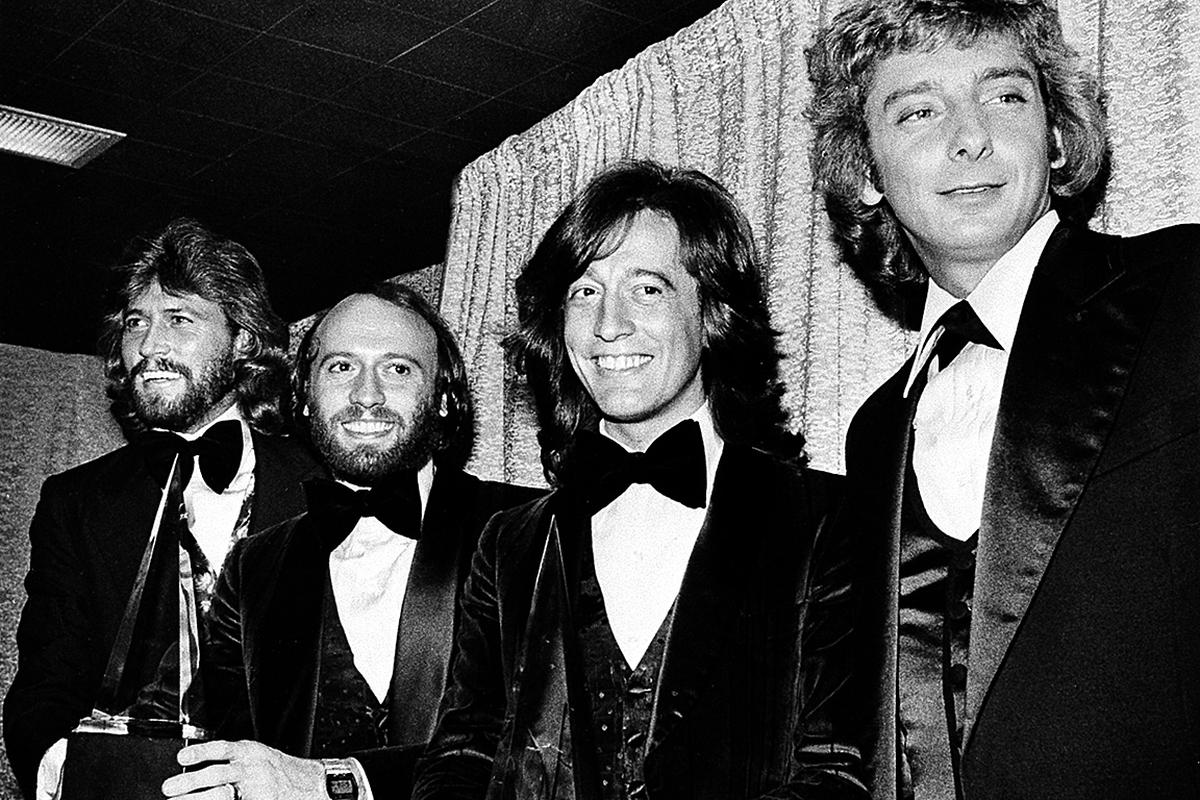
“Wine and Women” is the Bee Gees’ first small flare of ambition—youthful bravado on the surface, but underneath it, you can hear three brothers discovering the sound that would someday travel the world.
Before the stadium choruses, before the falsetto lightning, before the very idea of the Bee Gees became shorthand for an era, there was “Wine and Women.” It arrived quietly—released in Australia in September 1965 as a single by Barry Gibb and the Bee Gees, on Leedon Records, with “Follow the Wind” on the B-side. From a chart perspective, its debut story is modest but historically meaningful: the single reached No. 47 in Australia. Not a triumph in the big, obvious sense—yet it was enough to matter, enough to nudge the industry toward taking the brothers seriously, enough to point to something forming in real time.
Because “Wine and Women” isn’t just an early track; it’s an early identity. Written by Barry Gibb, recorded in August 1965 at Festival Studio, Sydney, it’s a record with the wide-eyed swagger of youth—those old pop ingredients of desire and restlessness—yet it also carries the unmistakable Bee Gees fingerprint: voices braided tightly, melody doing the emotional work, and a kind of dramatic seriousness that feels almost too large for the band’s age. Even the title has that youthful, slightly theatrical ring—like a boy trying on the language of adulthood and finding that it fits… at least for the length of a song.
What’s especially poignant is how many “firsts” are hiding inside these three minutes. “Wine and Women” marked the first time Barry and Robin traded lead vocals on a Bee Gees release—an early hint of the internal dialogue that would become their superpower: not one voice, but a conversation of voices. And in the instrumental pocket, there’s another early revelation: Maurice takes a brief lead-guitar break (on 12-string), a small flash of musicianship that reminds you the Bee Gees weren’t only singers or writers—they were a functioning, hungry band learning its own shape.
Then there’s the behind-the-scenes detail that quietly shaped their future: the track introduced Bill Shepherd in the producer’s chair—his first production credit with them—before he later followed the group to England and became central to the Bee Gees’ orchestral sound for years. It’s one of those historical threads that feels almost novelistic: an early studio experiment in Sydney that later connects to the band’s grand, international, symphonic pop ambitions.
Commercially, “Wine and Women” also helped open a door. The Bee Gees’ own broad history notes it as a minor hit in 1965 that led toward their first LP, The Bee Gees Sing and Play 14 Barry Gibb Songs. The song and its B-side were later included on that debut album, as well as on later archival collections of the group’s Australian recordings. And if you’ve ever explored the early catalog, you’ll notice how “Wine & Women” also appears in the tracklist tradition around Spicks and Specks releases—evidence of how these formative recordings kept being gathered, reissued, and reintroduced, like old photographs people couldn’t stop passing around.
So what does “Wine and Women” mean—beyond its era-specific bravado? It’s a song about wanting life to feel bigger, faster, more vivid than the ordinary day can manage. In that sense, it’s not merely a lyric about temptation; it’s an early Bee Gees declaration of appetite—an eagerness to step into the world, to be seen, to be heard. The performance carries that slightly breathless urgency: you can almost hear the band pushing forward, as if the future is waiting just past the end of the tape.
And perhaps that’s why it still carries a quiet emotional charge for listeners who love musical origin stories. “Wine and Women” isn’t the Bee Gees at their most famous; it’s the Bee Gees at their most becoming. It’s the sound of a career not yet polished into legend—raw edges, young confidence, and the first clear outline of something lasting. You press play and, for a moment, time folds: you’re back in 1965, hearing three brothers learning how to turn longing into harmony—already reaching, already dreaming, already singing as if the world might one day sing back.