
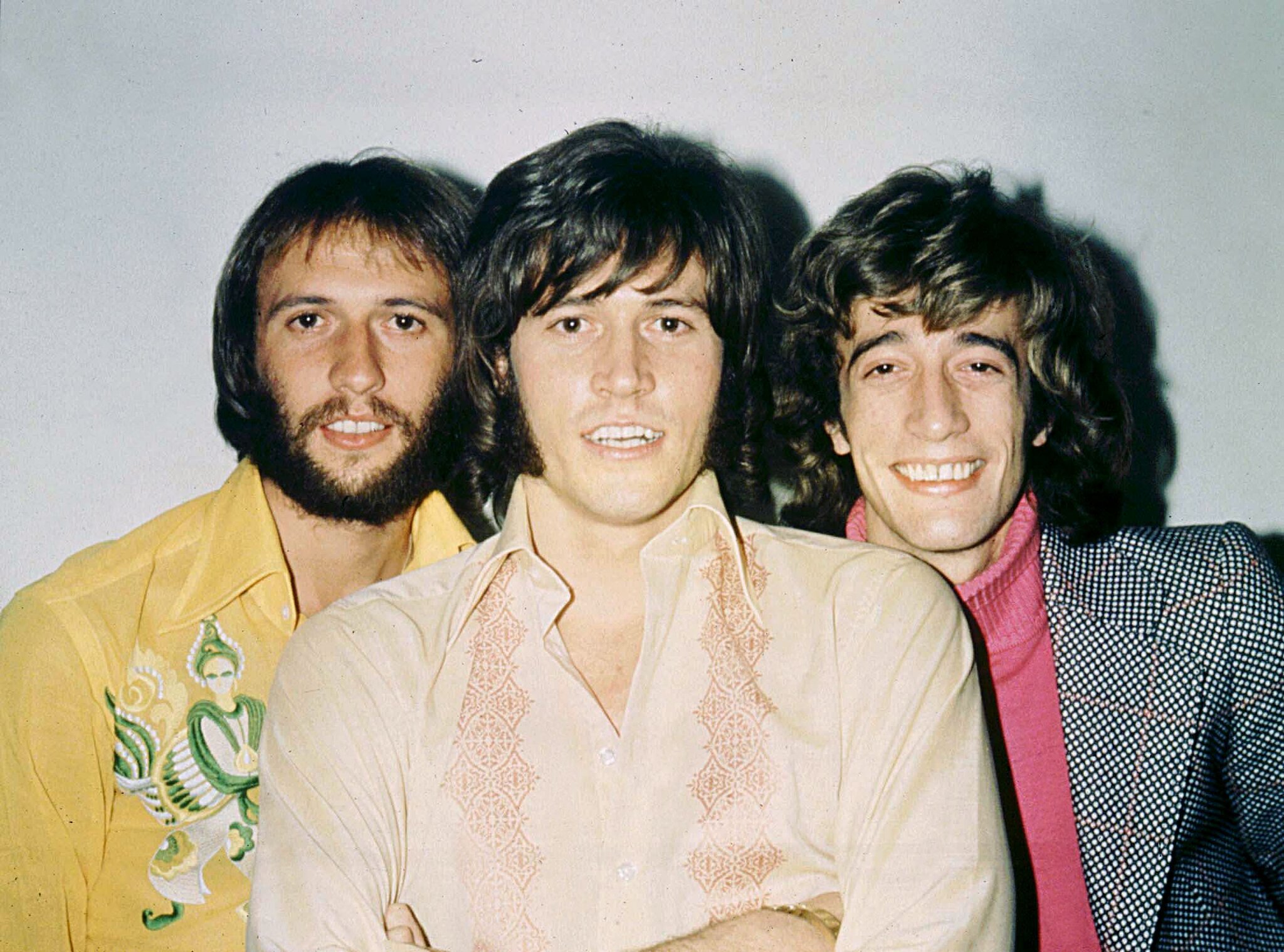
“Dearest” is a postcard from a tender, wounded moment—love remembered so vividly it becomes almost unbearable, the kind of sadness that feels like holding a photograph too close to the heart.
Before the Bee Gees became shorthand for dance-floor electricity, they were masters of the slow ache—songs that moved like curtains in still air, heavy with memory. “Dearest” belongs to that earlier world. It was written by Barry Gibb and Robin Gibb, recorded on March 23, 1971 at IBC Studios, London, and first released as an album track on Trafalgar (released September 1971 in the U.S. and November 1971 in the U.K.).
Because you asked for the chart position “at launch,” it’s important to be precise about what charted—and what did not. “Dearest” was not issued as a lead single, so it did not have its own debut or peak on major singles charts. Its commercial “arrival” is tied to Trafalgar, which peaked at No. 34 on the Billboard 200. The song did, however, gain a second life as the B-side of the Bee Gees single “Israel,” released in May 1972 (notably in Belgium and also in the Netherlands). In the Netherlands, “Israel” reached No. 22—and “Dearest,” riding quietly on the flip side, became a kind of hidden companion to that modest chart story.
What makes “Dearest” so affecting is how it frames love as memory first, reality second. Even the title sounds like the start of a letter you’re not sure you should send—formal, intimate, and trembling with things left unsaid. In the early-’70s Bee Gees universe, heartbreak isn’t always dramatic; sometimes it is simply polite, dressed in good manners and soft chords, trying not to disturb the room while it breaks apart inside.
The recording context deepens the mood. Joseph Brennan’s sessionography notes that, on March 23, 1971, the band returned to work on Trafalgar after touring—and that day produced “Dearest” as the only song from the session that made the album. Brennan’s own appraisal is sharply candid, calling it “so pathetically sad” that it can feel like parody—an opinion, yes, but revealing in its way: the song leans unapologetically into sorrow, risking sentimentality because the Bee Gees were chasing a very particular emotional perfume. They were never afraid of the tear-stained edge.
And that is the real meaning of “Dearest”: it is the sound of longing becoming an artifact. Not merely missing someone, but curating them—turning a person into an image, a scene, a keepsake that can be revisited but not repaired. In the Bee Gees’ hands, that kind of remembrance becomes almost cinematic. You can hear the way Barry and Robin share the emotional burden—voices that feel related not only by blood, but by the same private weather of melancholy. On Trafalgar, they were surrounded by other ballads and reflective pieces, but “Dearest” occupies a special corner: the moment when sadness stops telling a story and simply becomes a state of being.
It also stands as a reminder of how Trafalgar itself was positioned. The album lists Robert Stigwood and the group as producers, and it arrived in a period when the Bee Gees were rebuilding their identity—between eras, between public expectations, between the pop-world’s shifting fashions. In that in-between space, “Dearest” feels like a private confession left on a public record: not designed to win the week, but to outlast it.
If you return to “Dearest” now, it doesn’t demand attention the way later Bee Gees hits do. It waits. Like an old letter in a drawer, it only becomes loud when you finally pick it up—and suddenly the room is filled with everything you thought you’d already moved past.