
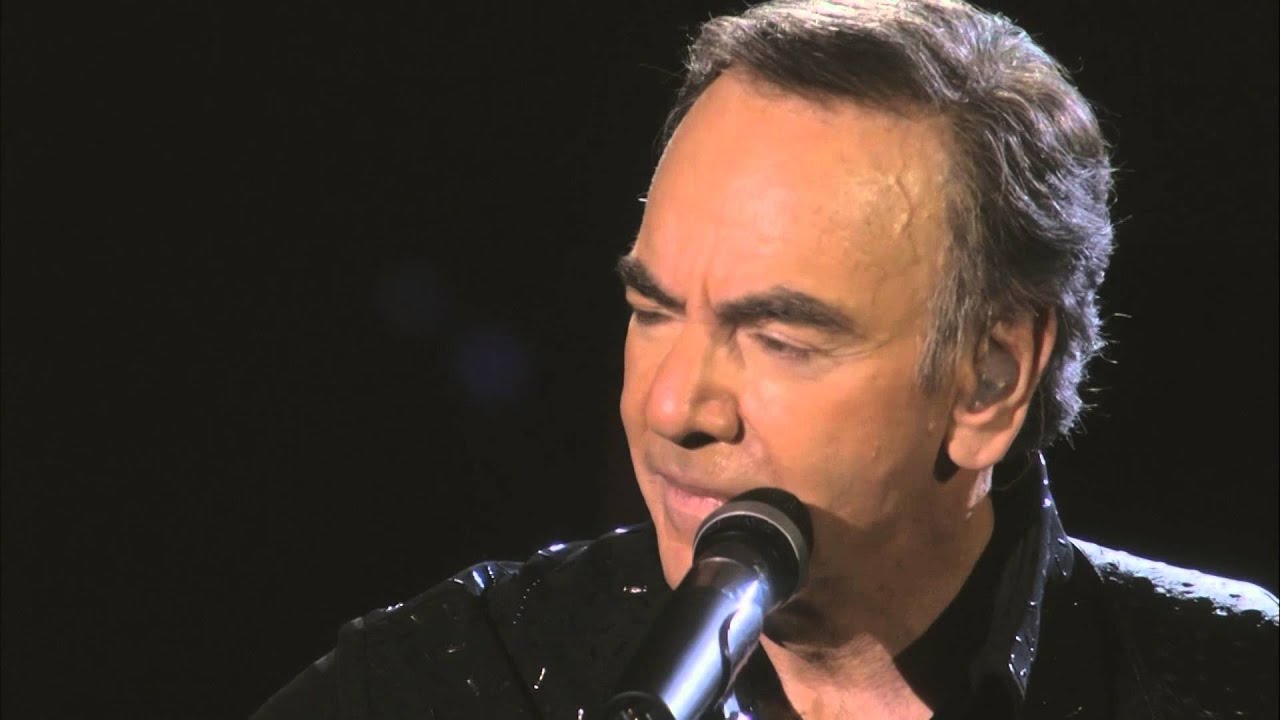
“Alone at the Ball” is Neil Diamond’s late-career portrait of the outsider in a crowded room—proof that you can be surrounded by music and still feel unheard, unless you learn to dance for yourself.
There’s a special kind of loneliness that doesn’t come from being physically alone. It comes from being present—in the middle of lights, laughter, and movement—yet feeling invisible, as if the room has mistaken you for background scenery. Neil Diamond captures that exact ache in “Alone at the Ball,” a song that doesn’t need melodrama to wound. It simply observes how easy it is to drift through life waiting for an invitation, and how quietly dangerous that waiting can become.
“Alone at the Ball” appears on Melody Road—Diamond’s 32nd studio album, released October 21, 2014, and produced by Don Was and Jacknife Lee. The track runs 2:56, lean and unsentimental in length, like a piece of advice given before pride has time to interrupt. It was not a headline radio single with its own chart “debut” the way Diamond’s classic era hits were; instead, it lives as an album cut—one of those songs you discover when you stop chasing the obvious and start listening for the truth tucked between brighter titles.
And yet the album that carries it arrived with real public weight. Melody Road debuted at No. 3 on the Billboard 200, selling 78,000 copies in its first week—an impressive showing for a veteran artist making new, original work deep into a legendary career. This matters because it means “Alone at the Ball” wasn’t whispered into a corner of the culture; it was released into a room that was still paying attention.
What makes the song linger is its tone: not bitter, not pleading—more like a hard-earned self-talk from someone who has “been there.” One detailed review of the album described “Alone at the Ball” as a pointed “word to the wise,” a reflective moment amid Melody Road’s mix of uplift and longing. That framing fits what you hear in the lyric’s posture: the narrator doesn’t glamorize failure, but he refuses to let shame become a life sentence. It’s the voice of experience speaking to the younger self who once believed that if you just stood quietly enough, the world would eventually notice.
Even the title image is quietly devastating. A “ball” is supposed to be communal—music designed for touch, for timing, for that small miracle where two people find the same rhythm. To be alone at the ball is to be out of step with the very purpose of the room. It’s the social version of being stranded at a celebration, watching everyone else seem fluent in a happiness you can’t translate. Diamond has always understood that pop music’s real power is not escapism, but recognition—and here he recognizes the listener who keeps their hands in their pockets while the band plays on.
There’s also a modern, almost practical spine inside the song’s melancholy. It isn’t only about romance. It’s about direction—about the fear of “no one answers” when you call out into the world, and the temptation to mistake that silence for fate. In that sense, “Alone at the Ball” feels like a companion to Diamond’s lifelong theme of the solitary self—only older now, less dramatic, more quietly urgent. You can hear the man who once gave the world big, declarative choruses choosing instead to offer something sterner and kinder: keep moving; keep your wits; don’t let the room decide your worth.
Fittingly, the song also received an extra layer of attention through an official behind-the-scenes video, a small confirmation that Diamond and his team understood its emotional pull even without a traditional single campaign. But the real “video” is the one the listener makes in their mind: a figure on the edge of the dance floor, feeling the music but not yet trusting it, then realizing—slowly—that the first step doesn’t require permission.
That is the song’s meaning, and its quiet gift. “Alone at the Ball” doesn’t promise that the world will suddenly become fair, or that every hand you reach for will reach back. It offers a tougher, more sustaining hope: that you can still choose motion over paralysis, song over silence, life over the frozen dignity of pretending you don’t care. In the end, Neil Diamond isn’t just describing loneliness—he’s asking it, gently but firmly, to loosen its grip.