
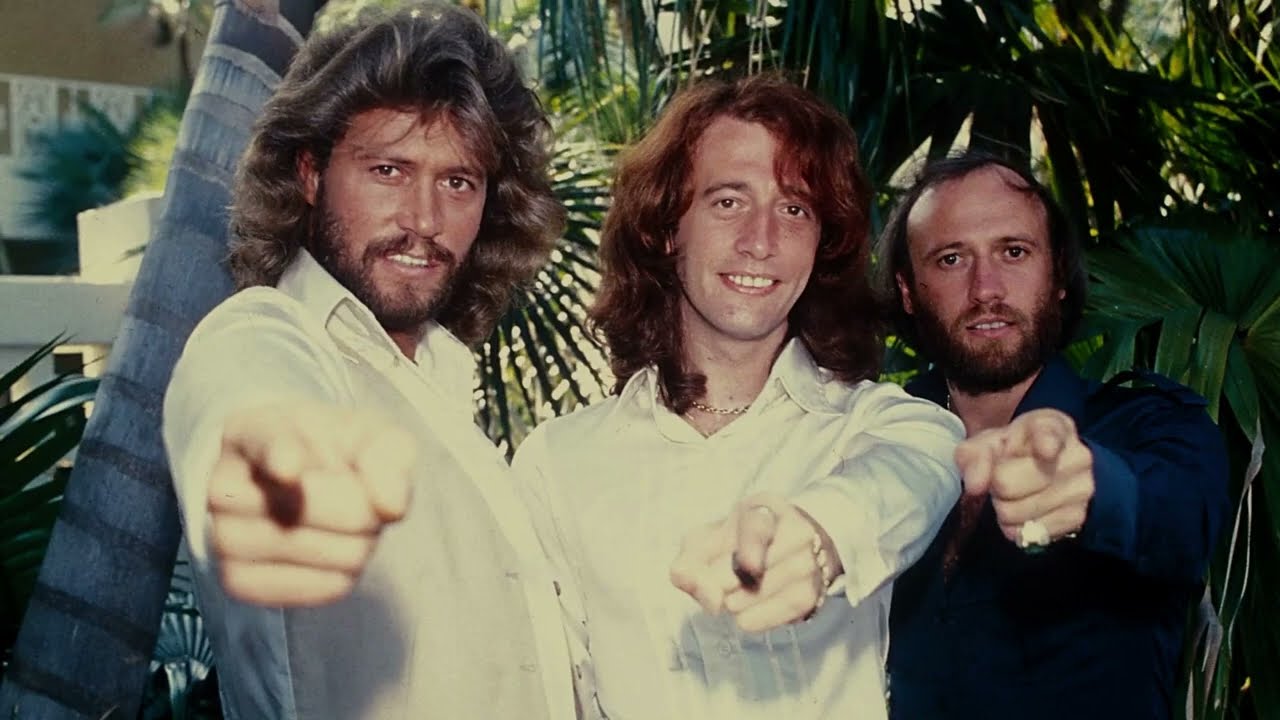
“Closer Than Close” is the Bee Gees choosing intimacy over spectacle—a late-career love song that, live in Las Vegas, feels like three brothers whispering through a stadium.
If you come to “Closer Than Close – Live at the MGM Grand” expecting the usual Bee Gees fireworks—falsetto flashbulbs, disco mirrors, the shout-along choruses—you’re met instead by something warmer and more private. This performance was recorded at the MGM Grand Garden Arena, Las Vegas, on November 14, 1997, during the concert later released as One Night Only. In the show’s running order, “Closer Than Close” is positioned early—track 7—as if the brothers wanted to pull the crowd nearer before the set became a full parade of classics.
The “ranking on release” needs to be said plainly, because accuracy matters: “Closer Than Close” did not have a major single debut with its own chart peak. Its first life was as an album track on Still Waters—the Bee Gees’ studio comeback released 10 March 1997 (UK) and 6 May 1997 (US)—an album that peaked at No. 2 on the UK Albums Chart and No. 11 in the United States. The song later appeared as a B-side to the single “Alone” in the UK, which tells you how the band and label framed it: a jewel for listeners who stayed for the second page, not the headline.
And yet, in a way, “Closer Than Close” is exactly the kind of song that should be protected from the wear-and-tear of overexposure. It was the last song recorded for Still Waters, and it features Maurice Gibb on lead vocal, produced by the brothers themselves. That detail is more than studio trivia—it’s the emotional key. Maurice had a particular gift: he could sound confident and tender at the same time, like someone who doesn’t need to raise his voice to be believed. When he sings “Closer Than Close” live at the MGM Grand, you’re not just hearing “a Bee Gees song.” You’re hearing the Bee Gees’ internal chemistry—how their harmonies can make desire sound gentle rather than demanding.
The studio version already leans into closeness as an idea—love not as conquest but as proximity, as permission, as that small ache to reduce the space between two people. Live, that theme becomes almost theatrical in its irony: a massive Las Vegas arena, and a song that keeps insisting on nearness. The crowd is there, the lights are there, the career-spanning celebration is there—yet “Closer Than Close” feels like the brothers briefly draw a curtain around themselves and sing as if the room is smaller than it is.
That’s part of what makes One Night Only so moving as a document. It was released later (Wikipedia lists 24 November 1998) as a captured moment from that 1997 night. By then, the Bee Gees had already lived several musical lives—early baroque pop, adult balladry, disco dominance, and a late-era return that proved their craft hadn’t dimmed. “Closer Than Close” belongs to that return. It doesn’t try to compete with the hits; it complements them, reminding you the Bee Gees were never only about chart muscle. They were about the sound of voices agreeing with each other.
And the meaning, in the end, is beautifully simple: the song is a plea for closeness that doesn’t sound like desperation. It sounds like knowledge—knowledge that time moves fast, that the world pulls people apart, that even love can become “polite distance” if you let it. So the chorus doesn’t merely flirt. It insists, softly: come nearer. Not for the camera. Not for the crowd. For the human need underneath everything.
In that MGM Grand performance, “Closer Than Close” becomes what late Bee Gees deep cuts often become: a quiet proof of endurance. Not the endurance of fame, but the endurance of feeling—still articulate, still melodic, still capable of making an arena feel, for a few minutes, like a room where the only important distance is the one you’re trying to close.