
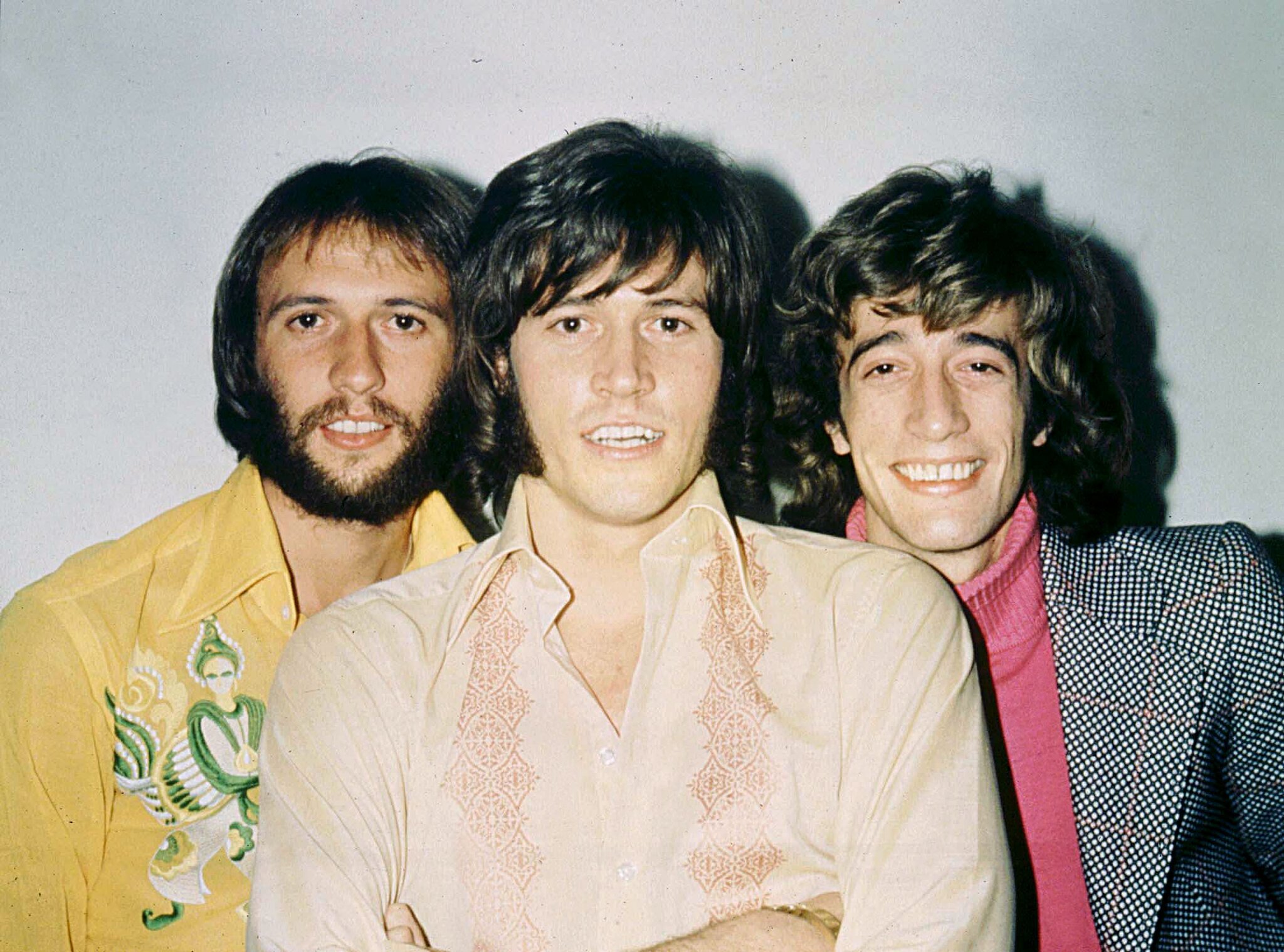
“Blue Island” is one of the Bee Gees’ quietest, most compassionate late songs—a meditation on innocence, sorrow, and the longing to imagine a gentler place beyond the cruelty of the world.
One of the most important facts to put first is that “Blue Island” is not a standalone hit single from the classic 1960s or disco years, but a later Bee Gees recording from their 1993 studio album Size Isn’t Everything. On the group’s official discography page, the song appears as part of that album’s original track list, and release data for the album places it in 1993, with the UK release on 13 September 1993 and the U.S. release following on 2 November 1993. The song was written by Barry, Robin, and Maurice Gibb, as reflected in album credit listings and song databases tied to the brothers’ catalog. Unlike “For Whom the Bell Tolls” or some earlier Bee Gees landmarks, “Blue Island” was not a major chart single in its own right; its chart context comes chiefly through the parent album, which reached No. 23 on the UK Albums Chart, while the album’s U.S. showing was far more modest.
That already tells us something important about the song’s place in the Bee Gees story. “Blue Island” belongs to the later, more reflective chapter of their career, when commercial dominance was no longer the point and the brothers seemed freer to follow tenderness, melancholy, and moral feeling wherever a song wanted to go. Size Isn’t Everything itself was described by the group as a return to a pre-Saturday Night Fever sensibility, turning away from the slicker dance-pop sheen of High Civilization and back toward a more song-centered, harmony-rich approach. In that setting, “Blue Island” feels deeply at home. It is not built to dazzle. It is built to ache.
The story behind the song is especially moving. Sources on the album’s background note that “Blue Island” was dedicated to the children of the former Yugoslavia, a dedication that places the song squarely in the emotional shadow of the Balkan wars of the early 1990s. That detail changes the way the song is heard. What might at first seem like a dreamy, almost otherworldly meditation becomes something more human and more painful: a lament shaped by compassion for children caught in violence they did not make. One widely circulated account of the song’s background also preserves a striking explanation attributed to Barry Gibb—that “blue island” suggests a kind of heavenly place, an image of peace beyond suffering. Even allowing for the fact that this part of the song’s mythology survives mostly through secondary sources rather than a major formal interview archive, the emotional logic fits the song uncannily well. It sounds like a vision of innocence protected in imagination when it cannot be protected in life.
And that, perhaps, is the deepest meaning of “Blue Island.” It is a song about refuge. Not refuge in the ordinary sense of a room, a home, or a country, but refuge as a spiritual idea—the hope that somewhere beyond fear, beyond war, beyond the terrible machinery of history, there remains a place of mercy. The Bee Gees had written many songs about love, heartbreak, desire, memory, pride, and longing, but “Blue Island” belongs to a rarer category in their work: the songs that feel almost prayerful. Its sadness is not theatrical. It does not collapse into melodrama. Instead, it moves with a kind of soft radiance, the way grief sometimes does when it has become too deep for loud gestures.
Musically, this restraint matters. Late-period Bee Gees records are often discussed in the shadow of their giant earlier successes, but songs like “Blue Island” remind us that the brothers’ finest gift was never fashion alone. It was emotional architecture. They knew how to build a song so that tenderness and sorrow could live in the same room. The melody here does not force its way forward; it seems to float, almost as if afraid to disturb the fragile feeling it carries. The harmonies, too, have that unmistakable Gibb quality—close, familial, sorrowing, yet somehow consoling. Even when the Bee Gees were no longer dictating the center of pop culture, they could still do something many younger acts could not: they could make gentleness unforgettable.
There is also something deeply admirable in the fact that the song was not fashioned as a grand charity anthem with obvious slogans or blunt declarations. “Blue Island” works indirectly. It chooses image over argument, atmosphere over rhetoric. That choice gives it dignity. Songs about suffering can easily become heavy-handed; this one remains light enough to haunt. And haunting is exactly the right word for it. The song stays with the listener not because it explains the world, but because it mourns the world’s failure without surrendering hope altogether.
So “Blue Island” stands as one of the Bee Gees’ most delicate late achievements: a song from Size Isn’t Everything, written by Barry, Robin, and Maurice Gibb, rooted in the pain of its era, and lifted by the brothers into something almost timeless. It did not become a giant chart event. It did something rarer. It offered consolation in a whisper. And for that very reason, it may touch the heart more deeply now than many louder songs ever could.