
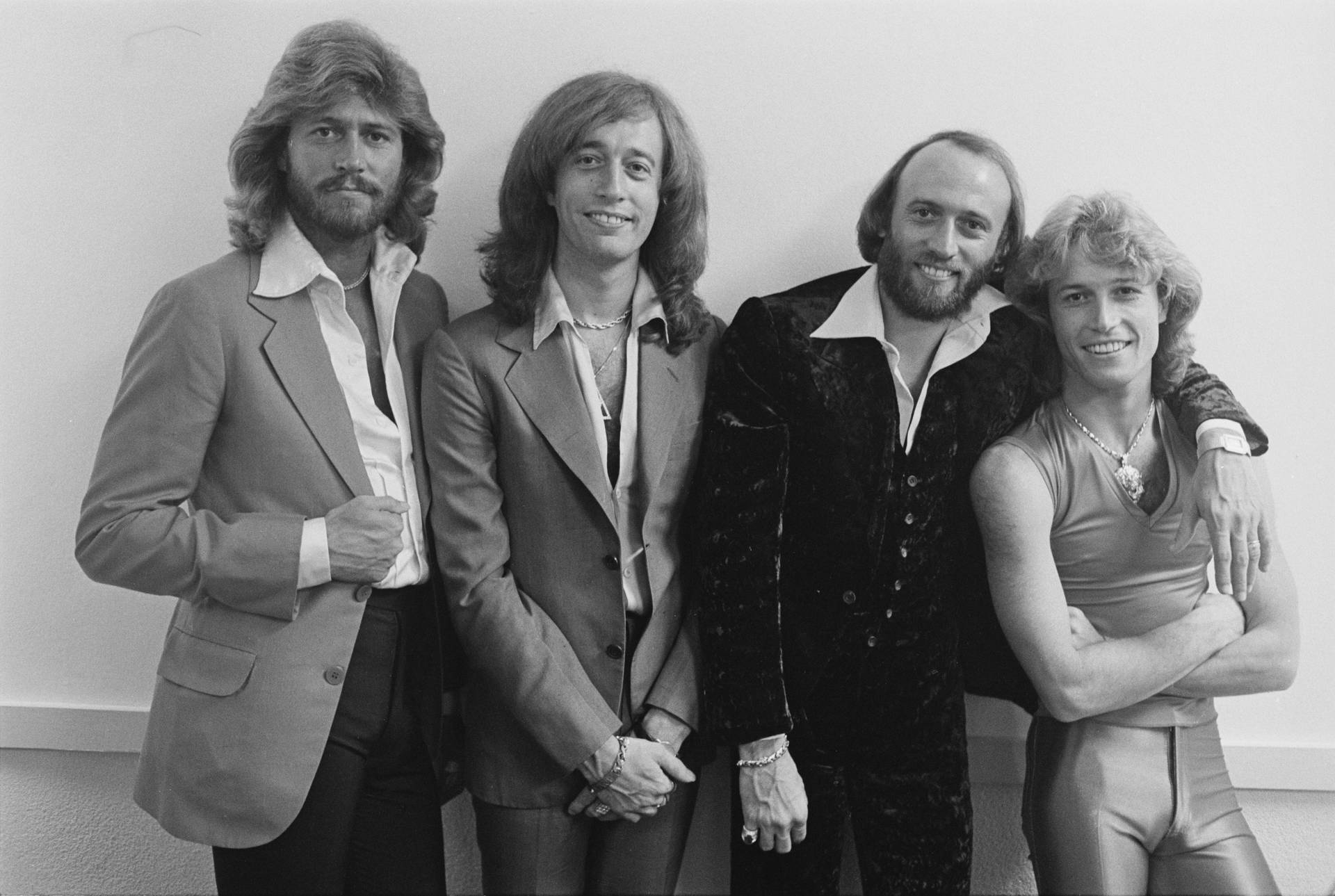
“New York Mining Disaster 1941 (Live at the MGM Grand)” feels like a message sent from two eras at once—1967’s anxious compassion, and 1997’s hard-won gratitude—three brothers singing into the dark so the trapped and the waiting are not alone.
When the Bee Gees first released “New York Mining Disaster 1941” on 14 April 1967, it didn’t arrive as a nostalgia piece or a deep cut—it arrived as their debut American single, the first real opening of their international story. The charts, even then, suggested that something unusually human had slipped into pop: it reached No. 12 in the UK and No. 14 on the U.S. Billboard Hot 100—a remarkable result for a band the wider world was only just meeting.
Three decades later, on November 14, 1997, the brothers brought it back onstage at the MGM Grand Garden Arena in Las Vegas, captured on the live album and video One Night Only—a concert that plays like a career-spanning letter to the audience who stayed with them through every reinvention. Hearing “New York Mining Disaster 1941” in that room—older voices, steadier phrasing, the song now folded into a greatest-hits celebration—changes its temperature. The fear remains, but it’s framed by survival: not only the miners’ imagined survival, but the band’s own long survival through the fickle weather of pop history.
The story behind the song is as haunting as its title. Despite its specificity, it isn’t a factual report of a 1941 New York event. According to the liner notes referenced in later retrospectives, the song was inspired by the October 1966 Aberfan disaster in Wales, when catastrophe struck a mining community—an event that left a scar on the public imagination. Robin Gibb later acknowledged that while there had been a New York mining disaster in 1939 (not 1941), he thought “New York” sounded more “glamorous,” a blunt pop-world admission that paradoxically makes the song feel even more sincere: the headline may be stylized, but the compassion is not.
What makes “New York Mining Disaster 1941” endure—especially in the Live at the MGM Grand performance—is its point of view. It doesn’t sing from the safety of the surface looking down. It sings as if you are down there, listening for footsteps that may never come, asking someone—anyone—if they can “see” you, if they can “hear” you, if they can carry a message to the people who will be left waiting. That’s the Bee Gees’ early gift in concentrated form: a pop melody that knows how to hold dread without turning it into spectacle.
There’s also a piece of Bee Gees lore that clings to this song like a blessing. Paul McCartney recalled that it was the “Mining Disaster” song—played to him by Robert Stigwood—that convinced him: “sign them.” Whether you hear that as a turning point or simply a famous endorsement, it captures what listeners sensed in 1967 and again in 1997: this was not just a clever record. It was a record with empathy.
On One Night Only (released in different regions across 1998), the song sits among later triumphs, but it functions like a quiet origin story—proof that the Bee Gees’ emotional intelligence was there from the beginning. The harmonies—always their signature—take on a different meaning live. Harmony, here, isn’t only musical beauty; it’s community. It’s the sound of more than one voice insisting, together, that someone’s fear matters.
So when you hear “New York Mining Disaster 1941 – Live at the MGM Grand,” you’re not only hearing a classic revisited. You’re hearing a song that has aged into a kind of moral memory: a reminder that even in pop’s bright machinery, there are moments when artists choose to look straight at ordinary catastrophe and answer it with tenderness. In 1967, that tenderness carried them into the charts. In 1997, it carried them back to the beginning—still singing, still reaching, still refusing to let the darkness have the last word.