
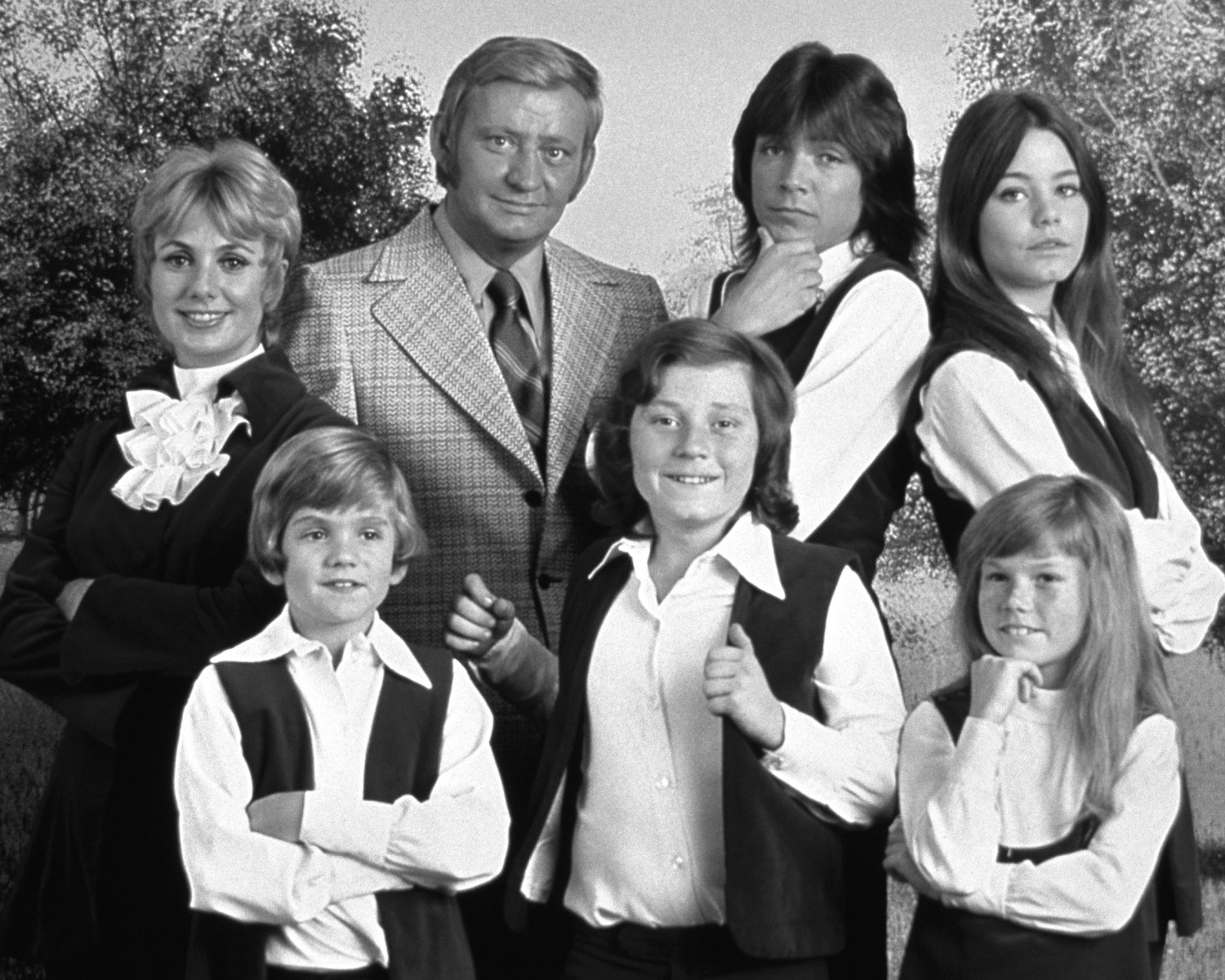
With “I’ll Meet You Halfway,” The Partridge Family turned a simple promise into something lasting: a love song about effort, longing, and the tender hope that two hearts might still find each other somewhere in the middle.
When The Partridge Family released “I’ll Meet You Halfway” in May 1971, they were no longer a novelty from a television hit. They were already a full-fledged pop phenomenon, and this single proved that their success could reach beyond first excitement into something warmer and more enduring. The song was issued on Bell Records as a single from the album Up to Date, with “Morning Rider on the Road” on the B-side. Written by Wes Farrell and Gerry Goffin, and produced by Farrell, it became another major success for the group, rising to No. 9 on the Billboard Hot 100 and No. 4 on Billboard’s Adult Contemporary chart in 1971. The parent album, Up to Date, also performed strongly, reaching No. 3 in the United States and confirming that the group’s hold on the public had not faded after the first rush of fame.
Those facts matter because “I’ll Meet You Halfway” was not just another pleasant tune tucked into the Partridge story. It arrived after “Doesn’t Somebody Want to Be Wanted” and helped give the group a second major Top 10 hit from the same album, which says a great deal about how deeply their sound had entered everyday American life by that point. In a culture already crowded with teen idols, sitcom smiles, and radio-ready love songs, this record still found a way to stand out. It did so not by shouting, but by offering a softer emotional center. Where some Partridge Family hits leaned into youthful urgency, “I’ll Meet You Halfway” carried a more patient promise. It suggested that love was not only desire, but willingness—willingness to move, to wait, to close the distance.
That is the secret of why fans still cannot shake it. The chorus rests on one of the gentlest ideas in pop music: I’ll meet you halfway. It is not a boast. It is not a demand. It is an offer. And perhaps that is why the song has lingered so beautifully in memory. So many love songs are built on extremes—complete surrender, complete heartbreak, complete certainty. This one lives somewhere more human. It understands that closeness often requires movement from both sides. In that sense, the title phrase becomes more than a romantic line. It becomes a small philosophy of devotion: love works best when pride softens and each person is willing to take a step.
Musically, the record suited The Partridge Family perfectly. Cash Box at the time praised it as the group’s “strongest to date,” and one can hear why. The arrangement carries a graceful polish, with strings and horns arranged by Mike Melvoin, but it never becomes heavy. It remains bright and accessible, with just enough sophistication to make the song feel a little more mature than the typical teen-pop confection. That balance was crucial. The Partridge Family always needed to sound youthful, but on “I’ll Meet You Halfway” they also sound reassuring, almost courtly in the old-fashioned sense. The result is pop music that still smiles, but with a touch more feeling behind the smile.
At the center of it all, of course, is David Cassidy. By 1971 he had become one of the defining teen idols in America, but records like this explain why his appeal went beyond posters and television exposure. There was a natural invitation in his voice, a sense that he was not merely performing at listeners but reaching toward them. On “I’ll Meet You Halfway,” that quality becomes essential. The song depends on trust. The promise in the title must sound sincere, and Cassidy gives it that sincerity. He does not oversell the sentiment. He lets the melody carry it, and in doing so he turns a modest line into something emotionally durable.
Within Up to Date, the song also reveals something important about where The Partridge Family stood in 1971. This was not merely the afterglow of “I Think I Love You.” The group was proving that it could sustain a run of genuine hit material. Up to Date yielded both “Doesn’t Somebody Want to Be Wanted” and “I’ll Meet You Halfway,” each reaching the Billboard Top 10, and that two-hit success helped solidify the group’s place in the early-1970s pop landscape. The record therefore belongs not to a fading phase, but to the heart of the Partridge Family phenomenon.
Its deeper meaning, though, lies beyond charts. “I’ll Meet You Halfway” speaks to that universal wish that love should not feel one-sided, that affection should not remain stranded in distance or uncertainty. There is something almost innocent in the way it imagines connection—not as conquest, not as drama, but as a shared journey toward each other. That emotional simplicity is part of the song’s enduring power. It captured the kind of hope people rarely outgrow: the hope that someone, somewhere, is willing to make the same effort you are.
And that is why the song still lingers long after its first radio season has passed into memory. “I’ll Meet You Halfway” was a hit, yes, but more than that, it was a promise set to melody. In the bright world of The Partridge Family, it became one of the warmest and most lasting expressions of romantic faith—a song that understood love not as a grand speech, but as two people moving toward each other with just enough courage to meet in the middle.