
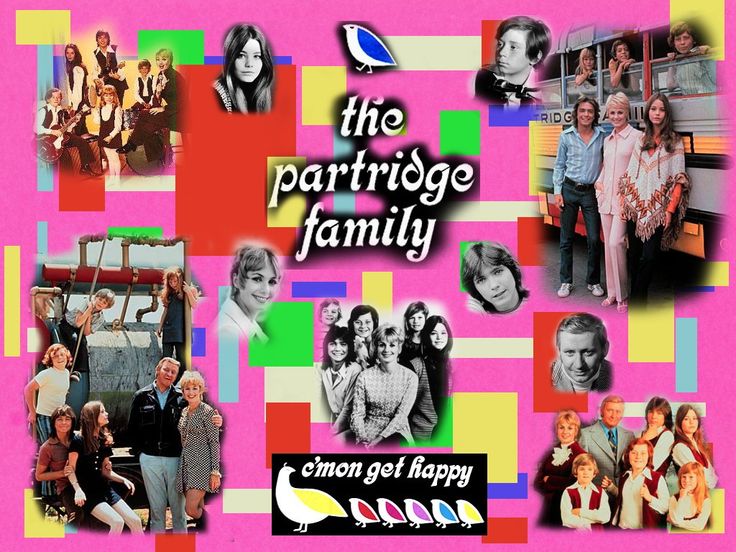
“Doesn’t Somebody Want to Be Wanted” hit a nerve because it gave teenage loneliness a bright pop melody—turning the ache of not being chosen into something millions could hum, feel, and quietly claim as their own.
When The Partridge Family released “Doesn’t Somebody Want to Be Wanted” in February 1971, it arrived at exactly the right moment to speak for a generation that often seemed surrounded by noise, television smiles, and youthful excitement, yet still carried a private hunger to be seen and loved. The song was issued on Bell Records, written by Mike Appel, Jim Cretecos, and Wes Farrell, and included on the group’s second album, Up to Date, also released in 1971. It quickly became one of the act’s biggest records, reaching No. 6 on the Billboard Hot 100, No. 1 on the U.S. Cash Box Top 100, and No. 1 in Canada. In other words, this was not just a familiar TV tie-in tune floating through the culture for a moment. It was a genuine mass success, one that connected widely and fast.
The title itself explains much of that connection. “Doesn’t Somebody Want to Be Wanted” asks a question so simple that it almost hurts. It does not hide behind complicated poetry or clever distance. It goes straight to the central ache of adolescence and young adulthood: the fear that one’s feelings are stronger than the world’s response, the fear of being visible yet somehow not chosen. That is why the song struck so deeply. In 1971, popular youth culture was full of bright surfaces—television families, pin-up faces, radio hooks, magazines promising romance just around the corner. But beneath all of that, many listeners were carrying the same old uncertainty: Am I wanted by anyone, really? The song gave that feeling a chorus.
It also mattered that the record came through The Partridge Family, because this was not an ordinary pop act. The group was part of a television fantasy—warm, cheerful, attractive, always together, always somehow safe. And at the center of it stood David Cassidy, whose fame in those years became so intense that he was less a singer than a national teenage fixation. When a voice that looked so admired, so desired, so publicly adored sang “Doesn’t Somebody Want to Be Wanted,” the emotional contradiction made the song even more powerful. It suggested that even inside glamour, even inside success, the longing to be truly wanted remained. That is one reason it traveled so far beyond the screen. It did not just flatter listeners. It joined them in their uncertainty.
There is another layer to the story, and it makes the song even more revealing. David Cassidy himself later said he despised the record, especially the spoken interlude in the middle, and fought against recording it that way. According to accounts preserved in later sources, pressure from the studio and record company eventually forced him to give in, and he remained embarrassed by the result. That backstage discomfort is striking because the record still connected so strongly with the public. In fact, one could argue that the very awkwardness Cassidy disliked may have helped the song touch listeners. It is not sleek. It is not cool. It wears its heart too openly. And that is often exactly what young listeners respond to most deeply—the absence of polish in a feeling they already know too well.
Within Up to Date, the song also helped define the Partridge Family’s second great wave. The album climbed to No. 3 in the U.S., even improving on the debut album’s peak, and it confirmed that the phenomenon was larger than one breakout hit. Alongside “I’ll Meet You Halfway,” “Doesn’t Somebody Want to Be Wanted” helped show that the group could keep turning the emotional language of adolescence into catchy, highly marketable pop. But this song cut a little deeper than some of the others. It was not merely about liking someone or dreaming about romance. It was about need. That is a more vulnerable subject. It asks not, “Whom do I love?” but “Will anybody choose me back?”
That is why it hit a nerve with an entire generation. The song understood that beneath teen culture’s bright posters and fast melodies was a more fragile emotional life. Many listeners were growing up in a world where mass media constantly sold attractiveness, popularity, and belonging as if they were available to everyone. “Doesn’t Somebody Want to Be Wanted” quietly admitted the opposite truth: that wanting often comes before being wanted, and that the wait for affection can feel like its own small heartbreak. The song did not solve that pain. It simply named it in a form simple enough to sing along with.
And perhaps that is why the song remains memorable now. It is easy to hear it as bubblegum pop, and in one sense it is. But good bubblegum pop was never only sugar. At its best, it smuggled real feeling into the most approachable forms. “Doesn’t Somebody Want to Be Wanted” did exactly that. It took loneliness, dressed it in a bright melody, and sent it onto the radio where millions could recognize themselves in it. That is not a small achievement. It is why the record lasted, why it climbed so high, and why it still carries an emotional sting beneath the shine. For all its teen-idol gloss, it told a truth that never really goes out of date: nearly everyone, at some point, is waiting to feel chosen.