
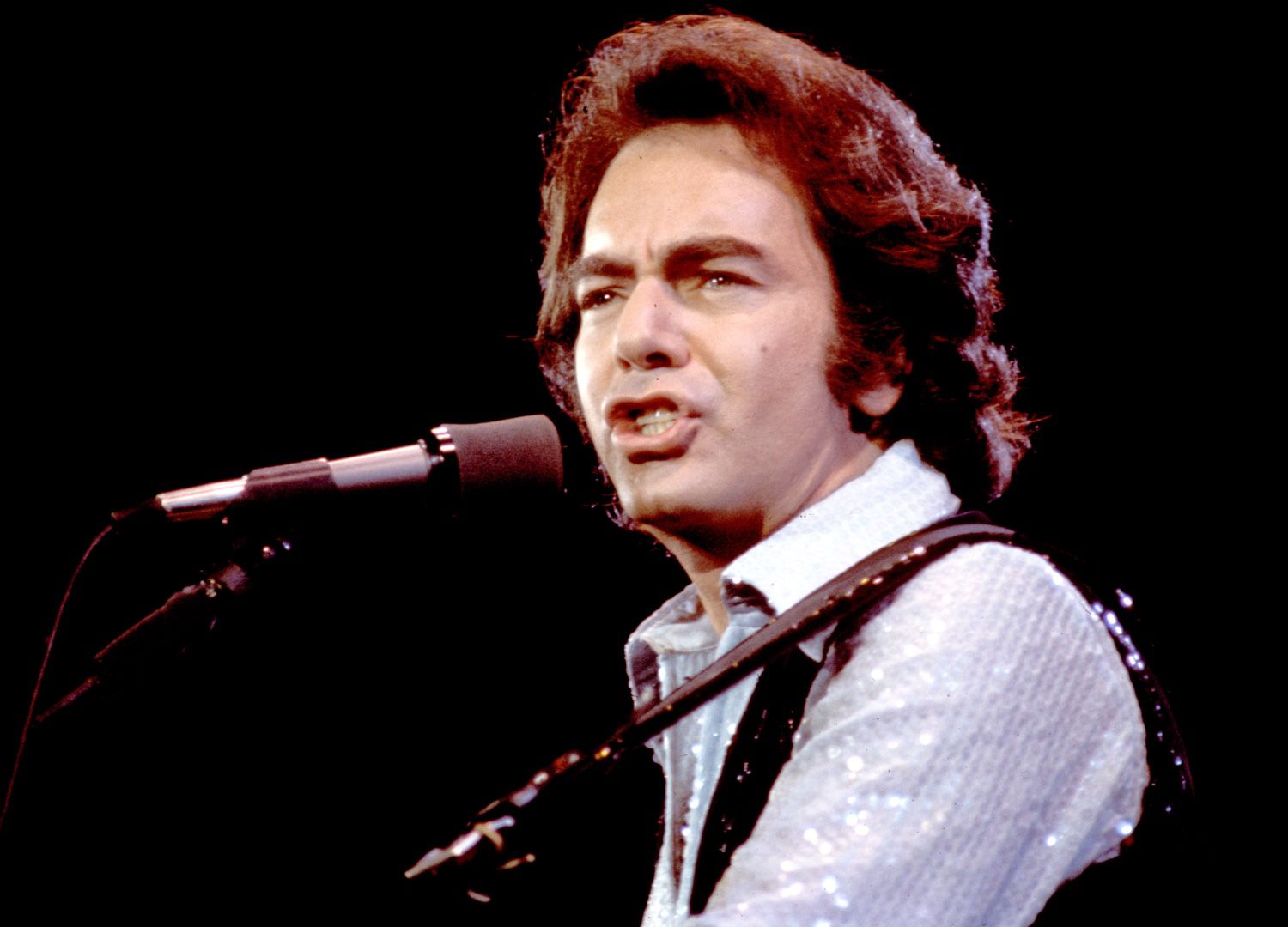
“Morningside” still startles people because it reveals a side of Neil Diamond many casual listeners never expect: not the hitmaker of romance alone, but a songwriter willing to stare directly at loneliness, neglect, death, and the terrible silence that can surround an ordinary life.
For listeners who think Neil Diamond lived mainly in the world of love songs, grand choruses, and warm radio companionship, “Morningside” can come as a genuine jolt. It is not built around flirtation, reconciliation, or the glow of remembered romance. It is a narrative song, almost a small moral fable, and its opening lines are among the starkest in Diamond’s catalog: an old man dies, no one cries, and the world simply turns away. That is not the Neil Diamond many people assume they know. It is a much darker, more literary figure—one who understood that a pop song could carry social sorrow, generational failure, and human neglect without ever ceasing to be melodic. The song first appeared on Moods, released in July 1972, where it closed the album, and that album itself was a major moment in Diamond’s rise, reaching No. 5 on the Billboard 200 and later earning Platinum certification in the United States. “Morningside” was not one of the album’s major hit singles, but it became part of the deeper artistic identity of that record.
That is the first reason the song still shocks people: it breaks the stereotype. Yes, Diamond wrote love songs—beautiful ones. But he also wrote character studies, parables, and songs with a novelist’s instinct for quiet tragedy. On Moods, “Morningside” sits beside more accessible titles like “Song Sung Blue” and “Play Me,” yet emotionally it comes from another room entirely. It is severe where those songs are inviting, grave where they are open-hearted. And because it arrives from a singer so often associated with warmth, its sadness lands even harder. The listener expects comfort and instead receives an elegy for a man who seems to have died almost erased.
The song’s story is devastating in its simplicity. The old man leaves behind a handmade table, carved “for my children,” and that detail changes everything. Suddenly the man is not just lonely; he is loving. He built something with his own hands, and in those hands there was pride, effort, memory, and hope. Yet the children, in the song’s cruelest turn, do not receive the gift as a blessing. They see only burden, only age, only inconvenience. That is where “Morningside” becomes more than a tale about death. It becomes a song about how easily love can go unrecognized when it arrives in humble form. No diamonds, no declarations, no dramatic gestures—only a table, handmade and meaningful. And still it is not enough. That kind of emotional economy is one of Diamond’s great strengths as a writer. He lets one object carry an entire life. The shock is not loud; it is cumulative. By the time the song has finished, the listener realizes they have not merely heard a sad story. They have been asked to examine what we owe the people who came before us.
The backstory makes the song even heavier. According to a widely cited account summarized by Songfacts and echoed in secondary discussions, Diamond said the song was about dying alone and was inspired by reflections on the solitary deaths of his grandparents; the same account says the image of the handmade table was sparked by something he saw in a London shop window. Another source focused on Neil Diamond’s work reports that arranger Lee Holdridge regarded “Morningside” as so important that he wanted the orchestral “Prelude in E Major” to prepare the listener, because the song demanded special attention. These sources are not primary-label notes, so they should be treated with some caution, but together they point in the same direction: Diamond did not write “Morningside” as a novelty or as mere fiction. He wrote it from a place of serious feeling about abandonment, mortality, and memory.
That seriousness helps explain why the song endured beyond the studio cut. Diamond performed “Morningside” on the landmark live album Hot August Night, where it occupies a prominent place in the set, and it was later included again in major retrospectives such as All-Time Greatest Hits and Neil Diamond 50. That continued presence suggests that Diamond himself understood its importance. He did not treat it as an obscure experiment to be left behind. He carried it forward as part of the core story he wanted told about his songwriting.
But perhaps the deepest reason “Morningside” still shocks is that it remains uncomfortably modern. The song is not really trapped in 1972 at all. Its sorrow belongs to any age in which older people are forgotten, handmade things are undervalued, and emotional inheritance is mistaken for clutter. Diamond understood that tragedy does not always arrive with thunder. Sometimes it arrives when a family cannot read the love carved into wood. Sometimes it arrives when a life’s work is seen too late, or not at all. That is why the song can unsettle even seasoned listeners: beneath its graceful melody lies an accusation. Not a cruel one, but a human one. It asks whether we have learned to recognize devotion before the room goes silent.
So no, Neil Diamond did not write only love songs. “Morningside” proves he could also write with the ache of a storyteller, the conscience of a witness, and the tenderness of someone who knew that the most painful losses are not always romantic. Some are familial. Some are moral. Some are simply the sound of a life not properly held. And that is why “Morningside” still feels so startling: it reminds us that beneath Diamond’s famous warmth there was always a writer unafraid of the darker rooms of the heart.