
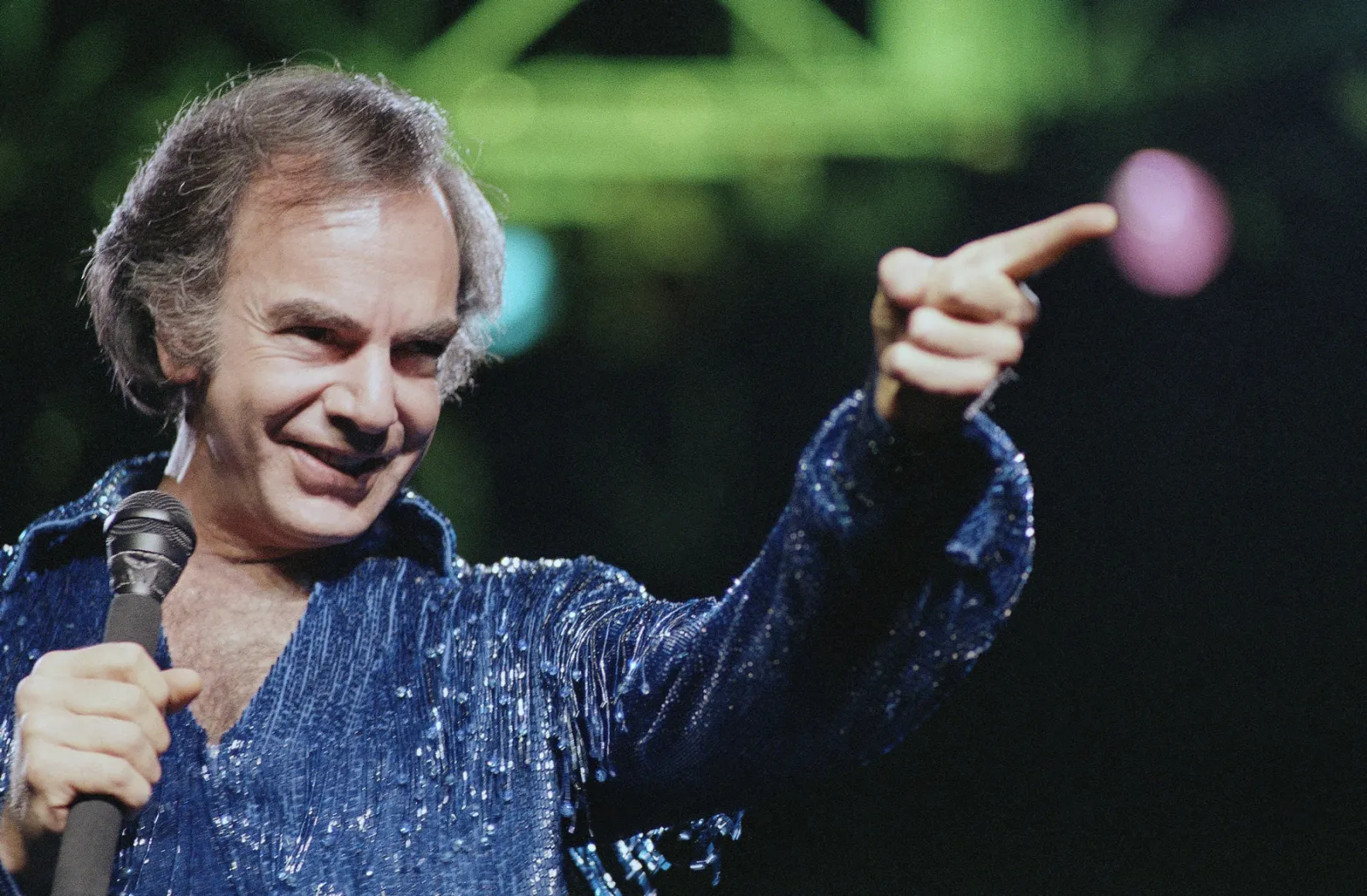
“Desperado” is a gentle hand on a stubborn shoulder—an invitation to lay down pride before loneliness becomes a lifelong address.
When Neil Diamond chose to record “Desperado” in 2010, he wasn’t chasing a trendy reinvention so much as returning to the kind of song that ages with you—quietly, faithfully, the way certain truths do. His version appears on Dreams (released November 2, 2010), a late-career album built almost entirely from covers Diamond described as personal favorites from the “rock era.” In that context, “Desperado” is less a borrowed classic and more a private selection placed carefully on the table, like a photograph taken out of a drawer.
In terms of chart history at the moment of release: “Desperado” was not issued as a single by Diamond, so it did not have an individual “debut position” on major singles charts. Its public “arrival,” instead, is tied to the album: Dreams debuted and peaked at No. 8 on the Billboard 200. That Top 10 debut matters—not as a trophy, but as a reminder that, decades into his career, Diamond could still draw a wide audience into a quieter, more reflective room.
Of course, this song carries its own long shadow. “Desperado” was originally written by Glenn Frey and Don Henley and first released by the Eagles on their 1973 album Desperado (the track itself released April 17, 1973). It’s one of pop music’s enduring curiosities that the Eagles’ recording was never released as a single, yet it became one of their best-known and most beloved songs anyway—proof that some melodies don’t need a sales pitch; they just need time and repetition in the world.
The story behind the composition is almost mythic in its simplicity: Henley had an earlier seed of the song, and when he and Frey decided to write together, they shaped it into what we now know—an early marker of their songwriting partnership. And in one of those musical domino effects that feel like destiny, Henley later credited Linda Ronstadt for helping popularize the song—her 1973 recording giving “Desperado” a new path into the mainstream imagination. That lineage matters when you hear Diamond sing it: he’s stepping into a well-traveled emotional narrative, not to overwrite it, but to inhabit it with his own gravity.
So what is that narrative? At its heart, “Desperado” is not really about the Old West, or outlaw glamour, or a romanticized loner riding into the sunset. It’s about the way a person can turn self-protection into identity—how pride can become posture, and posture becomes prison. The song speaks to someone who keeps their guard up so long they start mistaking the bars for architecture. It isn’t scolding. It’s almost tender in its firmness: a friend’s voice saying, this doesn’t have to be your whole story.
That’s why Neil Diamond is such a natural vessel for it. Even when he’s singing softly, his voice carries a familiar weight—like it has lived in the corners of arenas and kitchens alike, and knows how both kinds of rooms echo. On Dreams, he produced the album himself, and the overall concept is affectionate rather than flashy; the performances feel chosen with care. His “Desperado” (running 3:36 on the album’s track listing) doesn’t try to out-drama the Eagles’ original; instead, it leans into the song’s human scale—the confession beneath the cowboy silhouette.
Listening to Diamond’s reading is like watching a man speak to his younger self across a long hallway of years. The words land with a slightly different emphasis when they’re delivered by someone who has spent a lifetime chronicling longing—who knows, from the inside, how stubborn hearts bargain with themselves: one more night alone is safer; one more wall is smarter. In Diamond’s hands, the song becomes less a portrait of a lone “desperado” and more a quiet meditation on what it costs to stay unreachable.
And maybe that’s the secret of why this song keeps coming back through different voices and decades: because it isn’t merely advice. It’s mercy. “Desperado” offers the rare kind of emotional courage that doesn’t shout—just stands beside you, patient, waiting for the moment you finally decide to put the armor down.