
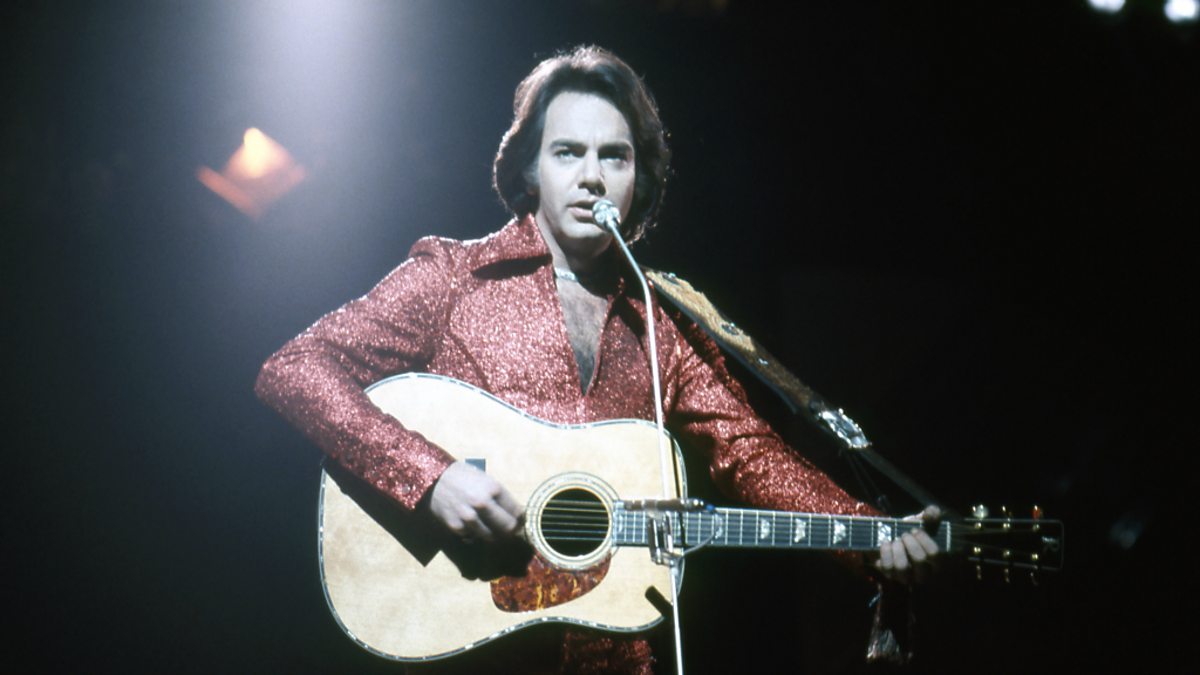
“Hell Yeah” hit older listeners so hard because Neil Diamond was not pretending time had stood still—he was facing the miles, the cost, the gratitude, and the stubborn flame of being alive, and saying out loud what many had carried in silence.
When Neil Diamond released “Hell Yeah” on his 2005 album 12 Songs, he was not offering nostalgia in the easy, decorative sense. He was doing something more difficult and, for many listeners, more intimate. The song appeared on November 8, 2005, as the second track on 12 Songs, the first studio album of his career produced by Rick Rubin. That album debuted at No. 4 on the Billboard 200, one of Diamond’s strongest late-career chart showings, and it was widely received as a serious artistic renewal rather than a simple legacy exercise.
That context matters, because “Hell Yeah” lands like the emotional center of that renewal. By 2005, Diamond was no longer the young Brooklyn striver of “Solitary Man” or the grand arena romantic of “Love on the Rocks.” He was a man in his sixties, singing from the far side of success, disappointment, weariness, survival, and memory. One contemporary CBS News piece described “Hell Yeah” as “an aging Diamond’s conversation with his audience,” and that is exactly why it reached people so deeply. It does not speak at listeners; it speaks with them. The song asks the question that so many people eventually ask themselves: was it worth the trouble, the damage, the losses, the compromise, the years? And Diamond answers not with polished philosophy, but with a rough, grateful affirmation.
That is why it struck older fans with such force. “Hell Yeah” is not really about celebrity, even though it comes from a famous man. It is about reckoning. The lyric voice knows life was not all applause. It knows the road was uneven. It knows there were prices paid. But it also refuses bitterness. That balance—between weariness and gratitude—is what gives the song its emotional authority. A younger songwriter might have turned the subject into either complaint or triumph. Diamond does neither. He sounds like someone who has learned that a full life is never clean. The bruises remain; so does the blessing. That is a rare emotional register in popular music, and it is one reason the song has lingered so strongly among listeners who heard their own lives inside it. This reading is interpretive, but it is strongly supported by the song’s lyric framing and by Diamond’s own comments about wanting to prove to himself that he remained “a vital, creative force” after four decades in music.
The Rick Rubin connection also helped the song hit harder. Rubin’s production on 12 Songs stripped away much of the heavier gloss associated with parts of Diamond’s later catalog and brought him back toward a more direct, acoustic, exposed sound. Reviews at the time repeatedly noted that intimacy. One review described the album as “autumnal, intimate and defiant,” while another emphasized its stripped-down emotional timbre. On a song like “Hell Yeah,” that sparseness mattered. The arrangement leaves room for age to be heard in the voice—not as weakness, but as evidence. The performance feels lived-in. Diamond does not sing like a man trying to sound younger than he is. He sings like a man who has stopped apologizing for the years.
There is another reason the song resonated so deeply: it gave dignity to the feelings that popular culture often flattens. So many songs worship youth, chase desire, or revisit memory only as sweetness. “Hell Yeah” does something braver. It acknowledges wear, mortality, and retrospective doubt, yet still insists on meaning. Even critics who were not fully won over by the song recognized what it was attempting: Pitchfork, in a skeptical review, still characterized it as a statement from a man conscious that time is running short, while uDiscoverMusic later described it as generous, good-humored, and full of advancing-age reflection. Those reactions differ in tone, but together they confirm the same core fact: “Hell Yeah” was heard, from the start, as a song about age, cost, and survival.
And that is why the song hit older fans so hard: Neil Diamond was saying what many of them felt but did not often hear expressed in pop song form. He was saying that life could be exhausting and still be cherished. That a person could be weathered and still feel lucky. That looking back did not have to mean surrender. In “Hell Yeah,” Diamond turns late-life reflection into something warm, proud, and unsentimental. He does not deny the hurt. He simply refuses to let hurt be the final verdict. That is what makes the song more than a deep cut from a comeback album. It feels like testimony. And for listeners who had lived enough to recognize the truth in it, that testimony did not just sound good. It sounded familiar.